
10 AI techniques to optimise a website
Summary (TL;DR)
Artificial intelligence is transforming SEO, bringing more precision and agility at each stage of the process. In this text we will bring AI techniques to optimise a website. We show AI tools help identify strategic keywords, structure complete briefings, produce optimised content, customize materials, review technical errors and analyze real-time performance data.
In this post we also explain how this technology makes it possible to continuously improve pages, adapt content for voice search and strengthen link building strategies more efficiently. By uniting these practices with human supervision, we guarantee quality, authenticity and consistent results, showing why the combination between SEO and AI is one of the most powerful ways to increase visibility, traffic and digital authority.
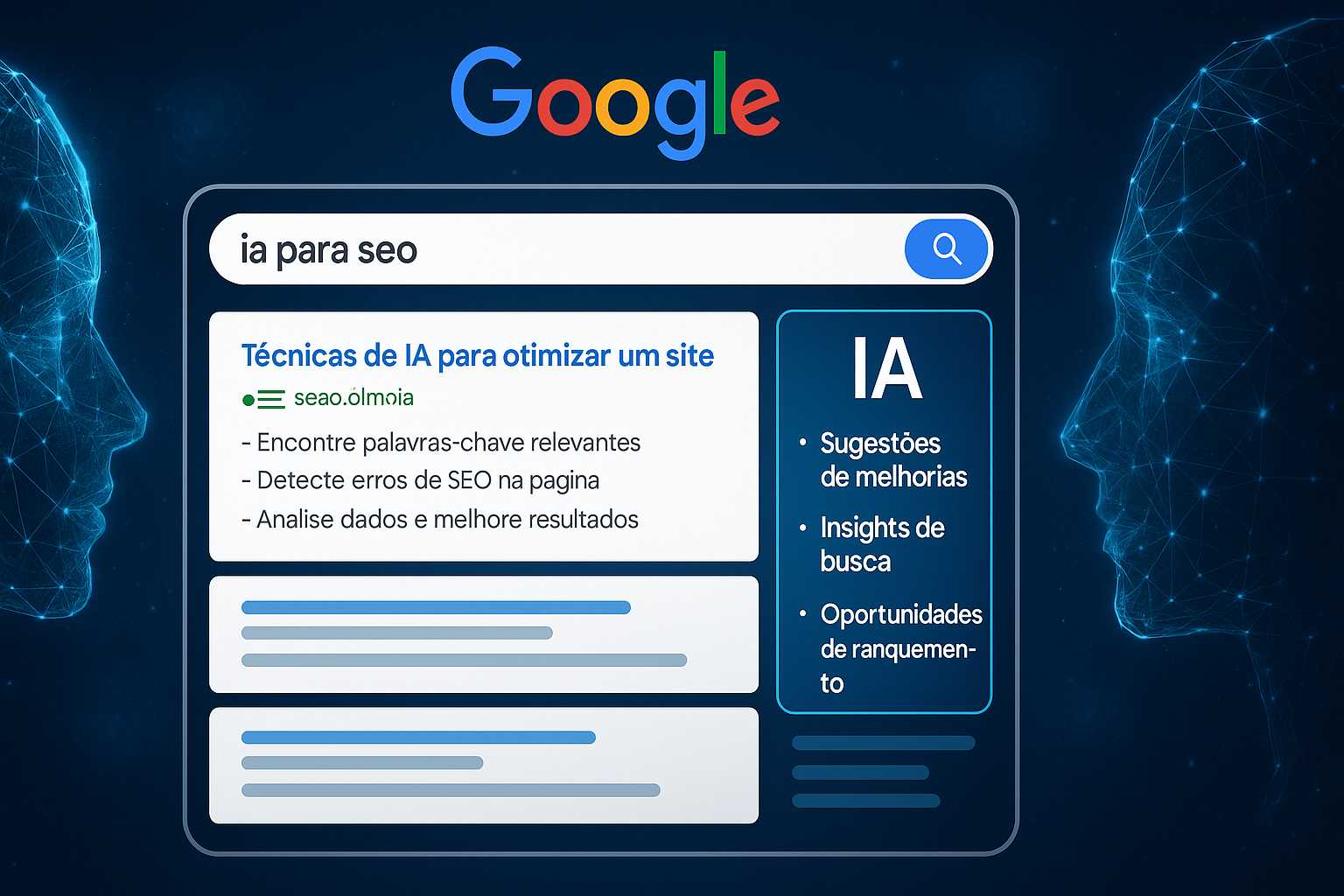
AI techniques to optimise a website are ways to use artificial intelligence in SEO tasks. The main ones are: search keywords, create briefings, produce and customize content, detect errors, analyze data, translate texts, optimise for voice search and plan link building. All of this works better with human supervision.
Artificial intelligence-based tools help analyze data in real time, suggest content improvements, predict trends and identify ranking opportunities with much more precision. This saves time and directs efforts to what really matters: deliver value to the user and be recognized by searchers as a reliable source.
If you still think SEO is a thing of the past, it's time to review your concepts. Artificial intelligence did not end the Optimization strategiesIt just changed the way they're made.
In this content, you will know the top 10 AI techniques that can transform the performance of your site and open new doors in the digital world. Check it out below!
What is SEO and what is its importance?
SEO is the acronym for Search Engine Optimization, that is, optimisation for search engines. This is a set of strategies used to improve the positioning of a site in the organic results of Google and other searchers, without relying on paid ads.
Main SEO techniques:
- Content optimisation: create relevant texts, with good keywords and clear structure;
- Link building: conquer links from other trusted sites pointing to yours;
- Local optimisation: focus on searches with geographical location, ideal for regional businesses;
- Technical optimisation (on page): improve speed, code, URLs, sitemap and usability.
Investing in SEO increases site authority and attracts more qualified visitors. Many users rely more on organic results than on sponsored. . Well positioned sites tend to have a higher conversion rate, as they appear for those who are really looking for that type of solution or service.
AI techniques to optimise a website
The AI techniques applied to SEO have become increasingly accessible, offering automation and intelligence to optimise tasks that previously took hours. Today, with few commands, it is possible accelerate from the choice of keywords to content production.
The key is to use these tools strategically, always with human supervision to ensure quality, originality and alignment with the objectives of the site.
1. Find keywords
Choosing good keywords is the first step to attract qualified visitors. They're the terms that the audience type in Google when looking for something. . The AI can analyze trends, search volume and competition to suggest the best options. Tools like the ChatGPT, are able to generate targeted lists of keywords for different niches.
For example, if you have a cosmetics store, the AI may indicate terms such as “Vegavian moisturizer for dry skin” or “best sunscreen for oily skin”, which are specific searches and with high potential of conversion.
On this basis, it is possible to direct all the content of the site to meet exactly what the public wants, increasing the chances of ranking and visibility.
2. Create briefings
The creation of briefings is an essential step to ensure alignment and efficiency in creative processes. And the AI can help a lot here. Based on keywords, personas and objectives of the page, AI tools You can do it. generate detailed briefings In a few minutes. This facilitates communication with writers, designers and developers.
Imagine that your team needs to create a blog post about “Fashion trends summer 2026”. . With the help of AI, it is possible to assemble a briefing with text structure, suggested topics, tone of voice, target audience and even suggestions for images.
The same goes for videos, landing pages And even advertising campaigns. With a good briefing, production flows faster and with less rework.
3. Produce optimised content
The AI can also speed up the SEO optimised content creation, suggesting attractive titles, magnetic introductions and even complete paragraphs with strategic use of keywords. Of course, the ideal is that this content is always reviewed by someone on the team to ensure quality, authenticity and connection with the brand's identity. O Google does not prohibit content made with AIBut it treats as spam what is generated only to manipulate the ranking.
For example, when using AI to write a story about “Content marketing benefits”, it can structure the main points, suggest intertitles and deliver a ready-to-edit base text.
This saves time and helps keep publishing frequency. . With constant and well-structured content, it is easier to cover the themes than your research audience.
4. Make custom materials
Artificial intelligence can be used for create rich and customised materials, such as eBooks, infographics, spreadsheets and interactive tables based on the target audience profile. These pieces serve as digital baits, strengthen the authority of the site and help capture leads. In addition, they deliver real value, with relevant content and adapted to the interests of those who visit the site.
For example, with few commands, it is possible to use AI to generate an eBook with practical financial organization tips, an infographic with industry statistics or even an automated worksheet for task control.
The differential is in the customisation: AI allows adapting the format and content according to user behavior and brand goals, making the experience much more efficient.
5. Detect and correct errors
The AI is also a great ally at the time of review content and detect errors which can impair the performance of a website. It can identify grammatical failures, spelling problems, broken links and even poorly organized repetitions or structures that affect reading and ranking in searchers.
In addition to finding the problems, AI can also suggest improvements. For example, if a page is badly ranked, the tool may indicate lack of header tags, excess keywords or absence of meta description.
This makes the review process much faster and more effective, raising the technical and editorial quality of the site with less manual effort.
6. Analyze the data and results
Another powerful technique is the use of AI for interpret data and generate intelligent reports on site performance. . Based on integrated tools, artificial intelligence can cross traffic information, user behavior, source of accesses and conversions to deliver accurate and valuable insights.
For example, instead of just presenting numbers, AI can show that a landing page has high rejection rate because it is slow or with confused layout. Or, it can indicate which content has better performance and which should be optimised.
Thus, it is possible to make strategic decisions based on real data without having to analyze everything manually.
To include AI visibility in this analysis, the AIScore evaluates 37 technical checks and shows the Quote Rate observed in a sample of AI responses, besides displaying the question and the sources found in the report.
7. Keep on getting better.
One of the greatest advantages of artificial intelligence is the ability to suggest continuous data-based improvements. . By monitoring the performance of the site and analyzing the behavior of users, AI points out pages with low performance, contents that need to be updated and even opportunities that have not yet been explored.
This continuous improvement process is essential to keep the site competitive. Instead of waiting for a drop in traffic or a technical problem to arise, the AI anticipates the necessary adjustments and allows quick action. This helps the site track changes in user algorithms and behavior.
8. Translate content quickly
AI can also be used for translate content in an agile and good quality way. . This is especially useful for companies that wish to reach international audiences or expand their presence in other regions of the country. With automated tools, you can translate articles, pages and even eBooks in seconds.
In addition to speed, AI has evolved greatly in understanding idiomatic contexts and expressions, which increases the naturality of translated content. Although human review is still important, AI drastically reduces the time needed to create multilingual versions of your site and broaden the range of the brand in digital.
9. Optimize for voice search
With the growing use of virtual assistants like Alexa, Google Assistant and Siri, optimise the website for voice search It's become essential. The AI can help the adapt the content to this new search form, suggesting more conversational phrases and focusing on direct questions that users usually ask.
According to IBGE, 98.7% of Brazilians aged 10 years or older who used the internet in 2025 accessed by mobile phone, and many use voice commands instead of typing. This reinforces the importance of producing objective content, with quick responses and natural language, making it easier for searchers to recognize and indicate their website as a reliable source.
10. Create a link building strategy
The AI can assist in creating link building strategies, analyzing which sites are relevant to your niche and suggesting opportunities for partnerships, guest posts or quotes. Based on its content and keywords, it identifies where it is worth winning backlinks to increase the authority of your website.
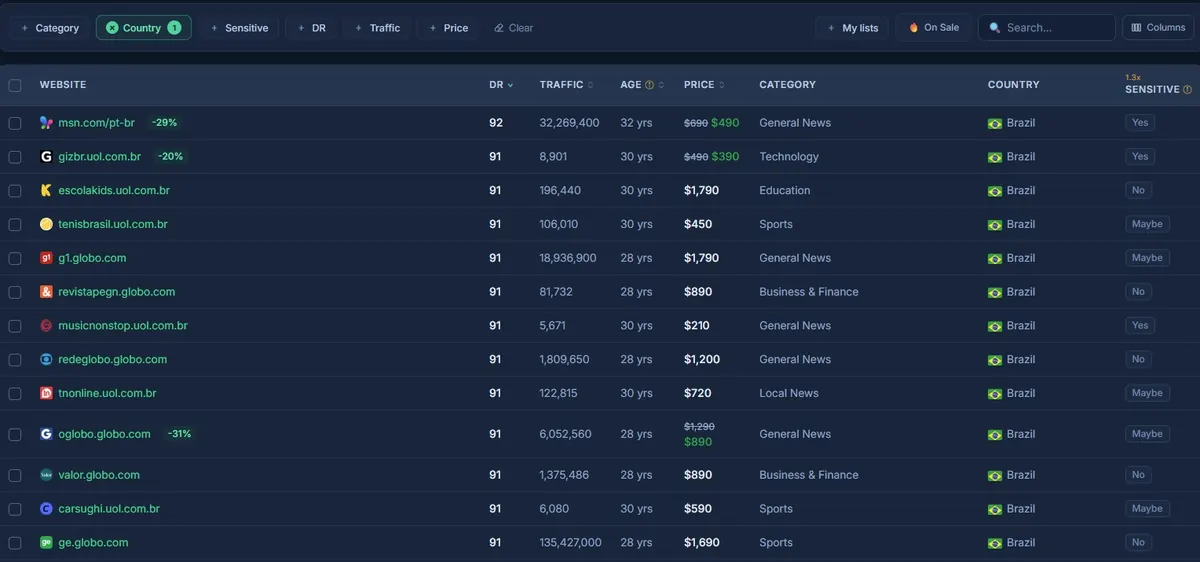
After identifying the site types and priority themes, the prospecting can be organized in the BlaaS, which allows filtering publishers by category, country, DR, traffic and price before the final curated. The AI helps in the analysis, but the final selection of vehicles continues to require human healing.
In addition, the AI helps monitor incoming links and check that they are active and performing well. This saves time and avoids common errors such as broken links or low-quality notes. With a good strategy of link building guided by AI, it is possible to significantly improve the ranking of the site in organic results.
The future of SEO has already begun
With so many possibilities, it is clear that AI techniques to optimise a website are no longer a distant trend, but an accessible and strategic reality. Using these tools with intelligence and critical vision helps improve how the site positions, communicates and converts.
Do you want to apply AI to your site SEO with the help of experts? Ask for an estimate from the button below.
Get a quote
FREQUENTLY ASKED QUESTIONS
Does artificial intelligence replace traditional SEO?
Nope. The AI does not replace SEO, but complements. It accelerates analytics, suggests keywords and creates optimised content, while traditional SEO ensures user strategy, quality and focus.
What SEO tasks can be optimised with AI?
AI helps in keyword research, creating briefings, content generation, technical review, data analysis and even identifying link building opportunities.
Does using AI in SEO guarantee better results on Google?
You don't guarantee it on your own. The AI offers speed and insights, but human supervision is required to validate data, maintain originality and align content with brand goals.
Is it safe to use artificial intelligence to produce content?
Yes, as long as the texts are reviewed and adapted. AI helps in structuring and optimisation, but human review is essential to avoid errors, repetitions and quality problems.
Is it worth investing in link building with AI support?
Yeah. AI facilitates the identification of relevant websites, monitoring backlinks and analysis of opportunities. However, the negotiation and curatorship must be conducted by experts.

Caio Nogueira is a SEO, GEO, link building and Digital PR expert and co-founder of WebSyd, website creation agency and SEO consulting founded in 2016. It acts with organic search strategies, digital authority construction and brand optimisation for search engines and artificial intelligence platforms. Throughout his trajectory, he participated in more than 1000 projects involving SEO, website development, content marketing and authority acquisition through backlinks and Digital PR. At WebSyd, it participates in the planning of strategies to increase organic visibility, lead generation and presence of companies on Google and AI-based search engines. As an author, it publishes content on SEO, GEO, website creation, link building and digital authority, sharing analyses, strategies and practical experiences related to organic growth of companies. Its contents and contributions have also been published in companies and vehicles of technology and marketing such as Wix, HostGator, Duda, Neil Patel, Locaweb and E-Commerce Brasil.
View all posts


 Estimate the cost

