
Backlinks: what they are and how they increase your website traffic
Summary (TL;DR)
In this post, we talk about backlinks, a term often used in SEO that can be confusing for beginners.
We explain that backlinks are links from one site to another and that they are fundamental to SEO because they work as recommendations between sites, helping in visibility and ranking when they are natural and relevant.
We address the importance of backlinks for successful SEO strategies, highlighting how they help in positioning search results, content discovery, reference traffic and brand recognition.
We discuss the different types of backlinks, how to identify the quality of links, and provide strategies to build high-relevant backlinks.
“Backlink, what are they?” Surely this is a question that occurs very often among people who are interested in SEO.
For many people, the lack of understanding about backlink is due to the fact that many SEO professionals specialised in web design or SEO consulting, they may have a bad habit: to use technical terms that the client does not understand.
One of these often misunderstood terms is “backlinks”.
If you’re not familiar with SEO, you’re probably wondering “what exactly are backlinks and why are they important to my website?”
In this article, we will address:
- What are backlinks
- What is its importance in a successful SEO strategy
- What different types of link
- How to build high-relevant backlinks
- How to check the quality of links
Continue reading and understand once and for all what backlinks are and why they are important to SEO!
What are backlinks anyway?
Very objectively, backlinks are links from one site to another. Usually the most visible backlink is when we link a word to a URL, like in this example here. . But the backlink can also be in images, buttons, among other elements.
Note that usually the backlink is underlined in blue. This is not a rule, because the color itself will depend on the aesthetic settings of the site.
However, the websites usually highlight links with a flashy color, to encourage users to click on the link and browse between the pages and to highlight them due to their importance.
Backlinks are an important part of SEO optimisation because they transfer authority from one site to another, besides being a source of direct traffic.
In practice, when a website A publishes an editorial link to site B, Google understands this link as an indication that the content of B is relevant. SEO Tools try to estimate this force with their own metrics, such as the DA (Domain Authority of Moz) and the Dr (Domain Rating) by Ahrefs, but attention: Google does not use these metrics. They are third-party estimates, useful for comparing websites, and not to predict ranking.
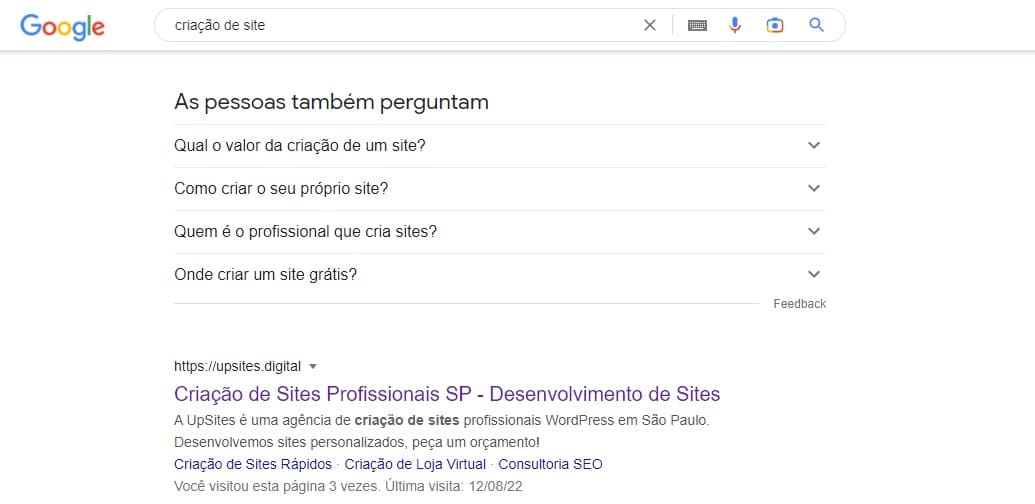
When we search for something on Google, such as “creation of websites”, we find several results on the subject.
Usually the first sites are sponsored via Google Ads and then organic results appear.
Note that the results of your searches are usually very assertive, because Google analyzes the content of each page and qualifies which is most relevant to the search for its users, and then it shows these results in the form of rankings, where the page considered most important, or with greater authority in the subject researched, appears before others.
Obviously it is not just the backlinks that guide search engines in ranking sites. The On Page optimisation of the site also counts a lot.
Criteria such as the user experience (UX) also weigh for you to have a good ranking.
Why are backlinks important for an SEO strategy?
Let's take a look at some examples of why you should care about the backlinks on your site:
- You want to position your site first in Google searches
- You want to increase traffic to your website/blog
- You want to improve the recognition of your brand
- You want to gain authority within your niche
- You want to attract new customers
- You want to improve conversion rates
All the above items are reasons why you need great SEO and although there are literally hundreds of rating factors, backlinks play a huge role.
Understand better to follow what are the factors that make backlinks so important for an SEO strategy.
1. Search Positioning
When it comes to positioning, that is, ranking your site at the top of Google results, the backlinks each site has are one of the strongest criteria for determining which position you will be in search.
But what counts is quality, not quantity: few editorial links from relevant sites are worth more than many weak links. We'll talk more about evaluating a link right below.
Google understands a natural backlink as a kind of recommendation between sites. Links created only to manipulate rankings can be ignored by Google and, in serious cases, generate a manual action against the site.
2. Discovery
Another reason the backlinks are important is that they help people discover their content. If you want to have a good positioning in organic searches, you need to ensure that your content is found.
Search engines use backlinks as a way to measure the popularity of a page. Most popular pages are tracked more frequently than unpopular ones. Therefore, obtaining links from popular websites can help search engines find their pages and index them more quickly.
3. Reference traffic
If you want to direct many visitors to your site, backlinks are an essential tool.
You can use them to direct people to their content, to promote their shareable resources, such as e-books, etc. Backlinks can be a powerful way to get reference traffic.
4. Recognition of the mark
Last but not least, the backlink has the power to improve the authority and recognition of your company's brand. Quality links from respectable websites can help you attract new customers and increase conversions.
In other words, when people read what others say about you or what you have to offer, they rely more on your brand and are interested in what you do for their business.
Types of backlinks
Backlinks, like most things in SEO (and in general life), are not “single size”.
Understand below what types of backlinks there are.
High authority links
They are links coming from relevant and recognized sites in your niche, such as large portals and specialised vehicles. They are the most disputed, including by those who research as buy backlinks. . It is worth remembering: when there is payment for publication, the link must be marked with rel=”sponsored” (or nofollow), according to Google policies.
The advantage is that an editorial link of these sites usually brings visibility, qualified traffic and credibility to your brand. The disadvantage is that they are difficult to achieve and require content that really deserves to be cited.
Low authority links
Links that have low authority do not necessarily harm your SEO. In fact, a good link building strategy should contain a variety of links with high and low authority.
Sites with new domain or that receive few relevant content tend to have a lower authority. This means that for search engines the relevance of these domains are not high and then their indications (links to other sites) do not convey much authority either.
How to identify the authority of a domain?
Now that you know there are high and low authority links, you must be wondering: how do I know if a link has low or high authority?
Tools like Ahrefs and Moz show metrics such as DR and DA, which help to compare websites with each other. Just remember that they are not used by Google. So look at what matters most: if the site is your theme, if you have real traffic, if you publish editorial content (and not just articles to sell links) and if the link makes sense to those who are reading.
Sponsored or paid links
Paid links, such as publieditorials and sponsored posts, are accepted by Google as advertising, provided that marked with rel=”sponsored” (or rel=”nofollow”). Without that appointment, they violate the link spam policies Google. Therefore, the value of a sponsored link is in the brand exhibition and in the qualified traffic it brings, not in passing authority to your website.
Links NoFollow
Since March 1, 2020, Google has treated the attributes rel=”nofollow”, rel=”sponsored” and rel=“ugc” as tips, not as orders: it may or may not consider these links. The recommendation is to use sponsored for paid links, ugc for links in content generated by users (such as comments and forums) and nofollow for other links you do not want to endorse. Even so, nofollow links help diversify your backlink profile and can bring traffic.
In addition, a nofollow link from a high-authority website with a lot of traffic can be as (if not more) beneficial than a dofollow link from a low authority site.
DoFollow Links
“Dofollow” is just the popular name for a common link, without any of these attributes. It is the type of link Google can normally use as a sign of relevance (the famous “link juice”).
These links are extremely beneficial because it indicates to the search engine algorithm that if the X site is linking to your domain, it means that that site considers its authority in the subject addressed in the text, which gives you more credibility.
Toxic links (non-natural links)
That kind of link is what search engines like Google want you to stay away from.
Basically, it's about manipulated or forced links, for example: if your website is about technology, and a fit revenue site, even if well-conceived, inserts a link to your site in the middle of a recipe, without context, the trend is that Google's algorithm understands that you are forcing this link, and can even be penalized for it.
What makes these types of backlinks bad is the fact that they don't look natural, and harm you in search engines.
There are also sites that do a lot of spam, and a link of them is also bad and may harm you.
When a search engine perceives backlinks with spam in its link profile, what it does is devalue the pages from where these links are coming from and what this means for your site is to decrease visibility and ranking.
In most cases, Google systems such as SpamBrain (see the 2021 spam report), simply cancel out the value of these artificial links. In serious cases, the site may receive a manual action, which appears in Google Search Console and can drop pages or the entire site in the results until the problem is fixed.
How to measure the quality of backlinks?
For a link to be considered good and of quality, it is necessary to come from a site that has great content and offers a high-level user experience.
So if in part you have metrics to analyze via tools, there is also a context that you need to know where you are getting the link from.
To help you understand better, we separate some criteria for you to use as a base whenever you measure the quality of a backlink:
- Use metrics as a reference, not as a rule: DA (Moz) and DR (Ahrefs) help compare websites, but are third-party estimates and are not used by Google. There is no magic minimum note: a smaller site, but from your niche and with real audience, can be worth more than a generic portal.
- Understand your context: See if the site you are linking to is from a similar niche, such as technology, sport, news, health, etc. If the text in which your link is inserted has nothing to do with the keyword and content of your website, this link has no quality.
- Domain type: The domain extension (.gov, .edu, .org) does not give extra weight on Google. What counts is the relevance and editorial quality of the page that links. And since Wikipedia's links are nofollow, the biggest benefit of showing up there is visibility and traffic, not authority.
- Link Position: The most recommended is that your link appears as soon as possible in the text of the page. If you're a blogpost, choose to enter it in the first paragraphs.
With all this in view you will be able to identify if the backlink is of quality and useful for your SEO strategy.
How to build backlinks?
There are several ways to conquer backlinks. The most sustainable ones are creating content that deserves to be cited (studies, own data, tools and guides), doing Digital PR (digital press advice), closing partnerships guestpost and, when it makes sense, invest in sponsored publications (see the prices charged to our backlink hiring study).
For you to understand, let's explain each of these strategies:
Guestpost
This strategy is a manual prospecting, which consists of searching for niche sites that are interesting for your business.
If you have a company that sells beauty products, then you should look for websites that address this issue or similar.
After finding a good website, your theme, with real audience and editorial content (tool metrics like Moz and Ahrefs help in this comparison), it's time to contact and talk about a partnership.
You can offer your partner the production of quality content for his blog. In this way you send a well written and optimised text, and within that text you insert a backlink to your website.
This is a common process in the SEO world for get backlinks from relevant websites. . Just be careful with one detail: if the publication involves payment or exchange, the link must be marked with rel=”sponsored” (or nofollow).
What is PBN (and why we do not recommend)
PBNs (Private Blog Networks, or private blog networks) are web sites created only to generate links to other websites. Google classifies this practice as link spam: links can be ignored by Google systems or generate manual action against the site. Therefore, we do not recommend and do not use PBNs.
Link building with professional support
Another way to gain scale is to rely on a team specialised in SEO to plan content strategy and link building, map relevant niche sites and take care of the prospecting of editorial partnerships.
At WebSyd, this work is part of SEO consulting, which makes the process simpler and faster.
If you want to increase the authority of your site and gain good positions in major search engines like Google, come and see our SEO consulting.
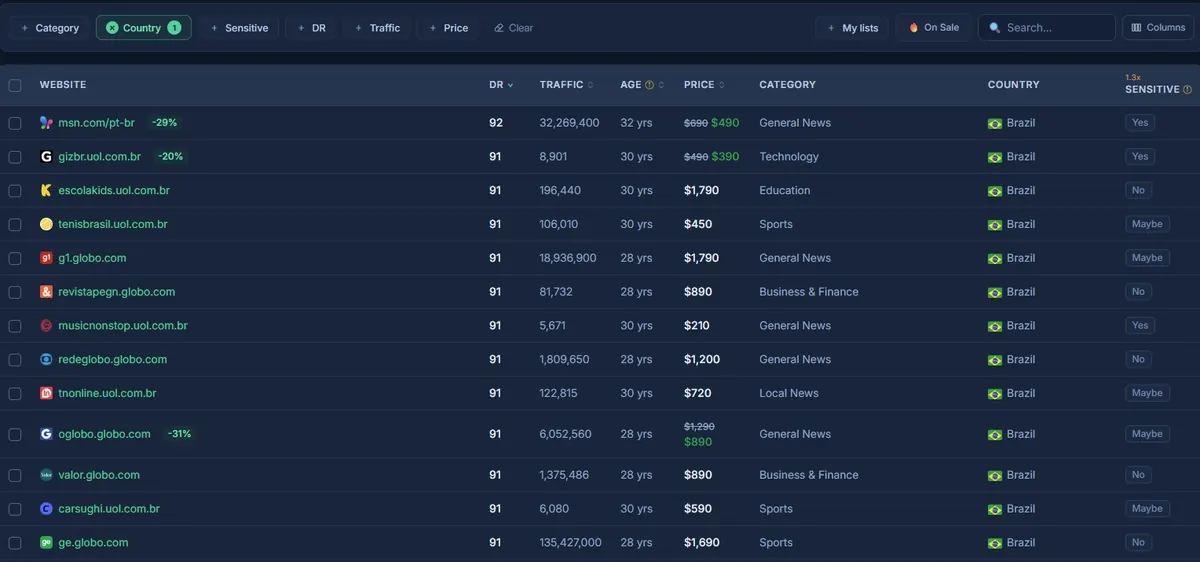
When the strategy involves active prospecting, one way to gain scale is to work with a catalogue of publishers that allows comparing sites by theme and metrics. O BlaaS catalogue, WebSyd' own platform for content strategies and link building, gathers this information into a single interface to support the selection of opportunities.
Is it good to receive many links in a short period of time?
There is no link limit per day. Second Google John Mueller, the speed at which a site gains links is not a problem in itself: a content that viralizes or a news about your company can generate many links at once, totally natural.
What matters is the nature of the links. A peak from buying unmarked links, mass exchanges or artificial site networks can be ignored by Google or even generate a manual action.
That's where the terms Black Hat and White Hat come in. Here's a summary:
Black Hat
It is the techniques that violate the Google spam policies, like PBNs, purchase of links that pass authority without rel=”sponsored”, excessive exchange of links (“I link you, you link me”) and automated links in comments, forums and low quality directories.
Links inserted without context, on sites that have nothing to do with your theme, also enter this list, because they make no sense to the reader.
White Hat
It is the practices aligned with Google guidelines, and it is the path we recommend. A new and little-known company can also link like this: just have something that deserves to be quoted and show it to the right people.
The sustainable strategy combines content that attracts links (own data, studies, complete guides and tools), Digital PR, editorial partnerships and relevant guestposts. When payment is made, the link must have rel=”sponsored” or rel=“nofollow”.
What about Gray Hat?
Gray Hat is the name given to tactics that try to make artificial links “look organic”, for example, buy unmarked links and mix metrics and types of link to disguise. For Google, there is no middle ground: if the link was created to manipulate the ranking, it remains a spam link. That's why we don't recommend this path.
How can I check the backlinks of a website?
Checking backlinks can be beneficial for any site planning or evaluation of links to competing websites.
You can find out how many backlinks your websites receive through Google Search Console, but you need to learn more details to understand the profiles of other sites.
Using Google Search Console to understand your link profile
Google Search Console shows the links profile of your own website (but not that of competitors). To see, enter your property in Search Console and open the Report Links, on the side menu.
There you will find the main sites and pages that link to you, the most linked pages and anchor texts most used, as well as internal links. Remember that the report shows a sample of the main links, not all.
You can also use other paid tools, such as Ahrefs or Semrush, to search for links not only on your own site but also on other websites.
These tools can provide detailed information about each link, which can help you identify artificial links to your own website.
Is it possible to position your site on Google without backlinks?
You can rank your website on Google without getting backlinks. But besides being much harder, you will face a very strong competition for the key words that are interesting to you.
If you choose to rank without using backlink strength, you will have to search for low-competition keywords. These words tend to have:
- Low Search Volume: which means that they do not generate much traffic.
- Low value: which means that even if they bring traffic, visitors are not qualified.
If you plan to segment this type of strategy, you don't necessarily need backlinks. However, if you want to sort your site for more competitive keywords, you will have difficulty doing it without links.
Apart from the backlinks, what else influences?
Google undoubtedly uses the backlink profile of a site or page as part of its classification algorithm. Although it is an important classification factor, it is not the only classification factor.
No one knows all the factors that algorithms of major search engines, such as Google, consider important.
However, most people agree that some OnPage optimisation criteria (i.e. on their website) can help achieve a good ranking of search engines.
To rank, you need to ensure that your website is well optimised and provides a good user experience.
We have separated some important points:
Does the page you're trying to rank match your search intention?
The intention of the user's search when using Google or another search engine is undoubtedly an important sorting factor for your pages.
And it's easy to see why: Google wants to provide the most relevant results for those who use your search platform
If your page does not include the information you are looking for, it is very unlikely that it will be sorted, no matter how many backlinks it has.
When creating content, you should consider whether your page contains information that someone who searches will probably find useful.
OnPage Optimization
You should also optimise your site as a whole. The main optimisation factors include:
- Use the terms your audience uses, naturally and without forced repetition (repeat over keywords is considered spam);
- Cover the whole theme for the intent of the search. Google does not have an ideal text size: the content should be the size needed to answer the question well;
- Use H2 headers (H3) correctly;
- Have optimised images that weigh little;
- Have a quick and responsive website.
There are many other factors that make a difference, but these five are a good starting point for having a good performance in search engines.
All of this is so that your website promotes a good experience to the user who is accessing it.
Google likes to promote websites that offer a good user experience, and so the search engine has been using since 2021, the Vitals Web Core as one of the signs to measure the experience that a site offers.
It is a set of three metrics, measured with actual user data (field data), that evaluate the loading, responsiveness and visual stability of a page:
- LCP (Largest Contentful Paint): the time until the largest visible element of the page (an image or text block) is displayed on the screen. The ideal is up to 2.5 seconds.
- INP (Interaction to Next Paint): how quickly the page responds to user interactions, such as clicks, taps and keys. The ideal is up to 200 milliseconds. The INP replaced the FID (First Input Delay) in March 2024.
- CLS (Cumulative Layout Shift): visual stability, i.e. how much elements (images, buttons, texts) change place while the page loads. The ideal is up to 0.1.
Each metric is classified as “good”, “needs improvement” or “bad,” and you can track the results in Google Search Console’s Core Web Vitals report and PageSpeed Insights. The score from 0 to 100 shown in PageSpeed Insights comes from Lighthouse: if your site gets 90 or more, it's a great score.
If you combine great backlinks with the three points above, it will probably not take long for your site to be ranked.
WebSyd Success Cases
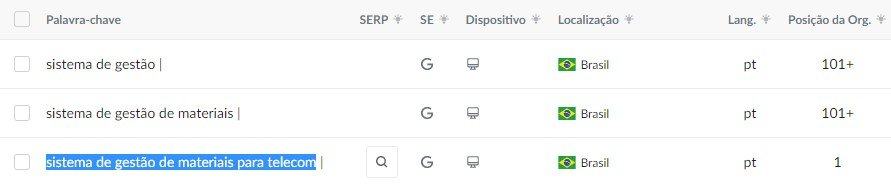
We conduct SEO consulting, with content strategies and link building supported by BlaaS, our own platform. See two examples of clients attended by our consulting (records from 2022):
Our client Sal Solutions, after three months of consulting, has reached first position for a long tail keyword (“long tail”):
Another client who improved positioning after consulting was the Courses Languages:
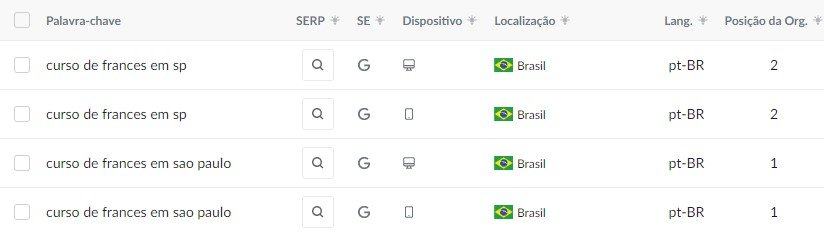
These results show how a good SEO optimisation, combined with a healthy backlink profile, can strengthen your site's presence in the search.
If you want to improve your positioning and receive much more organic and qualified traffic, Come and talk to us..
How many backlinks does my site need?
There is no minimum number. What counts is the relevance of who links: few editorial links to your theme sites are worth more than many weak links. Compare your link profile with the pages that are ahead of you on Google for the same search.
Therefore, it is always good to get professional help while seeking to create links to boost your site's SEO.
Keep in mind that editorial links, coming from sites relevant to your theme, increase your chances of getting better positioning. Volume itself does not solve, and links created just to manipulate rankings can be ignored by Google.
Also remember that there are backlinks that are viewed as poor quality and that may harm your site's positioning. So if you have any questions about how to get backlinks, look for help from qualified professionals such as WebSyd.
If you want help with link building, ask for a budget.
FREQUENTLY ASKED QUESTIONS
What are backlinks and why are they important to SEO?
Backlinks are links from one site to another. They are important to SEO because Google uses links as one of the signals to discover pages and understand their relevance, in addition to bringing reference traffic. But what counts is quality: few editorial links from relevant sites are worth more than many weak links, and links created just to manipulate rankings can be ignored by Google.
What are the different types of backlinks?
There are several types of backlinks, including:
- High authority links: They come from relevant and recognized sites in your niche and bring visibility and credibility, but they're hard to get.
- Low authority links: They come from sites with less relevance, but can still be useful in a diverse link building strategy.
- Links NoFollow and DoFollow: Common links (“dofollow”) can be used by Google as a sign of relevance. Since 2020, nofollow, sponsored (for paid links) and ugc (for user content) attributes have been treated as tips. They're all part of a healthy backlink profile.
- Spam links: are links purchased or exchanged to manipulate the ranking. According to Google's spam policies, they can be ignored and, in case of links scheme, lead to a manual action.
How can I check the quality of backlinks?
Tools like Ahrefs and Moz show metrics such as DR and DA, which help compare websites but are third-party estimates and are not used by Google. In addition, evaluate if the home site is your theme, whether you have real traffic and editorial content and whether the link makes sense to the reader. The domain extension (.gov, .edu) does not give extra weight on Google.
What are some strategies to build high-relevant backlinks?
Some strategies to build high-relevant backlinks include:
- Guest posting: Write articles to relevant blogs or websites in your niche. If there is payment for publication, the link must be marked with rel=”sponsored”.
- Partnerships and collaborations Working with other companies or influencers to get links from their websites.
- Creating high-quality content: Produce content that other websites want to link, such as case studies, infographics or full guides.
- Participation in forums and communities: Contribute with valuable answers and, when really helping those who are reading, quote a content from your site (these links are usually marked as ugc or nofollow).

Caio Nogueira is a SEO, GEO, link building and Digital PR expert and co-founder of WebSyd, website creation agency and SEO consulting founded in 2016. It acts with organic search strategies, digital authority construction and brand optimisation for search engines and artificial intelligence platforms. Throughout his trajectory, he participated in more than 1000 projects involving SEO, website development, content marketing and authority acquisition through backlinks and Digital PR. At WebSyd, it participates in the planning of strategies to increase organic visibility, lead generation and presence of companies on Google and AI-based search engines. As an author, it publishes content on SEO, GEO, website creation, link building and digital authority, sharing analyses, strategies and practical experiences related to organic growth of companies. Its contents and contributions have also been published in companies and vehicles of technology and marketing such as Wix, HostGator, Duda, Neil Patel, Locaweb and E-Commerce Brasil.
View all posts


 Estimate the cost

