
Link Building Statistics: A Search With Over 100 SEOs
Summary (TL;DR)
In this post, let's talk about the results of Marketing Lad link building research, carried out in early 2025, which brought together more than 100 SEO professionals to understand the most relevant strategies, tools and challenges in the area.
We approach from the costs of backlinks, tactics still used (including those that violate guidelines), to the importance of customisation in disclosure and the growing role of tools such as Ahrefs and Semrush.
We conclude by highlighting that, even with the advancement of artificial intelligence and changes in Google's guidelines, link building remains essential.
The scenario requires more strategy, creativity and accuracy than ever before, and understanding how experts are acting today is the way to get real and sustainable results in SEO.
In early 2025, Marketing Lad conducted a survey to better understand the scenario of link building, what's working, what's changing and where the sector is going. In this article, we gather the data of Marketing Lad survey (2025), translated and commented by WebSyd.
The objective of the research was simple: to gather true data based on information provided directly by SEO professionals, freelancers and agencies responsible for link building.
With responses from more than 100 SEO professionals from various sectors and functions, the research highlights the challenges, costs, tools and tactics that will define link building strategies in 2025.
Despite constant debates on its long-term value, link building remains a fundamental pillar of SEO . . Download high quality backlinks it is still one of the most effective ways to improve visibility in search engines, generate organic traffic and increase domain authority.
Main Conclusions of the 2025 Link Building Survey
Based on the responses of more than 100 SEO professionals, it was clear that although the link building strategy continue to evolve, it remains an essential pillar of successful SEO, requiring strategic thinking, patience and the right tools.
Here are the main data from Marketing Lad research:
Link building is still difficult, and it's getting harder.
Most SEO professionals no longer consider link building to be the most challenging part of SEO, but many expect it to become more difficult in the next 5 years. With AI tools, Google’s tougher guidelines and saturated input boxes, obtaining high-quality links will require even more creativity and accuracy.
Disclosure still works, but it's a challenge.
Cold email disclosure remains a central strategy, but most SEOs report success rates below 25%. Common reasons for being ignored include bad subjects for the public, irrelevant emails and spam-loaded inboxes. Personalized value-focused disclosure is fundamental.
The budgets reflect the value of the backlinks.
SEOs are willing to invest in quality. Most consider from $250 to $1,000 or more, a fair cost for a single high-quality backlink, whether purchased directly or obtained through digital PR. At the same time, SEOs monitor ROI using metrics such as organic traffic growth and reference domains.
Some tactics are risky, but they still work.
Despite violating Google's guidelines, tactics like PBNs, guest posts paid and link exchanges are still used successfully. SEOs balance risk and reward, often by entering links into well-known link sales sites, if quality and relevance justify.
Ahrefs and Semrush dominate the tool set.
- Ahrefs is the number one tool for link building data, DR/UR metrics and backlink audits.
- Semrush is the complete SEO package preferred for broader campaigns and integrated reach.
- Moz and Majestic still appear in cases of use of nicheBut they're no longer dominant.
Power metrics are important, but the context is fundamental.
The Ahrefs Domain Classification (DR) is the preferred metric, followed by the Semrush Authority Score. Moz's DA, though known, is less reliable. Still, most SEOs agree: no metric tells the full story: relevance, traffic and editorial context have the same weight.
But the game is evolving fast.
With the emergence of tools with AI, the increasing influence of digital public relations and Google’s increasingly strict link quality guidelines, link creators today face a scenario that requires more creativity, accuracy and adaptability.
In this publication, we detailed the main findings of Marketing Lad's research, revealing how SEO professionals are addressing link building strategies in 2025 and are generating results.
What changed in the 2026 survey?
To compare, the 2026 research from Editorial.Link, with 518 SEO professionals, confirms the trends: 91.9% believe that competitors buy links, the average price acceptable for a quality backlink was US$ 508.95, 48.6% point out PR digital as the most effective tactic and 73.2% think that backlinks influence the chance of appearing in AI responses. The Ahrefs follows as the most cited tool (59.1%).
Interviewee Demography
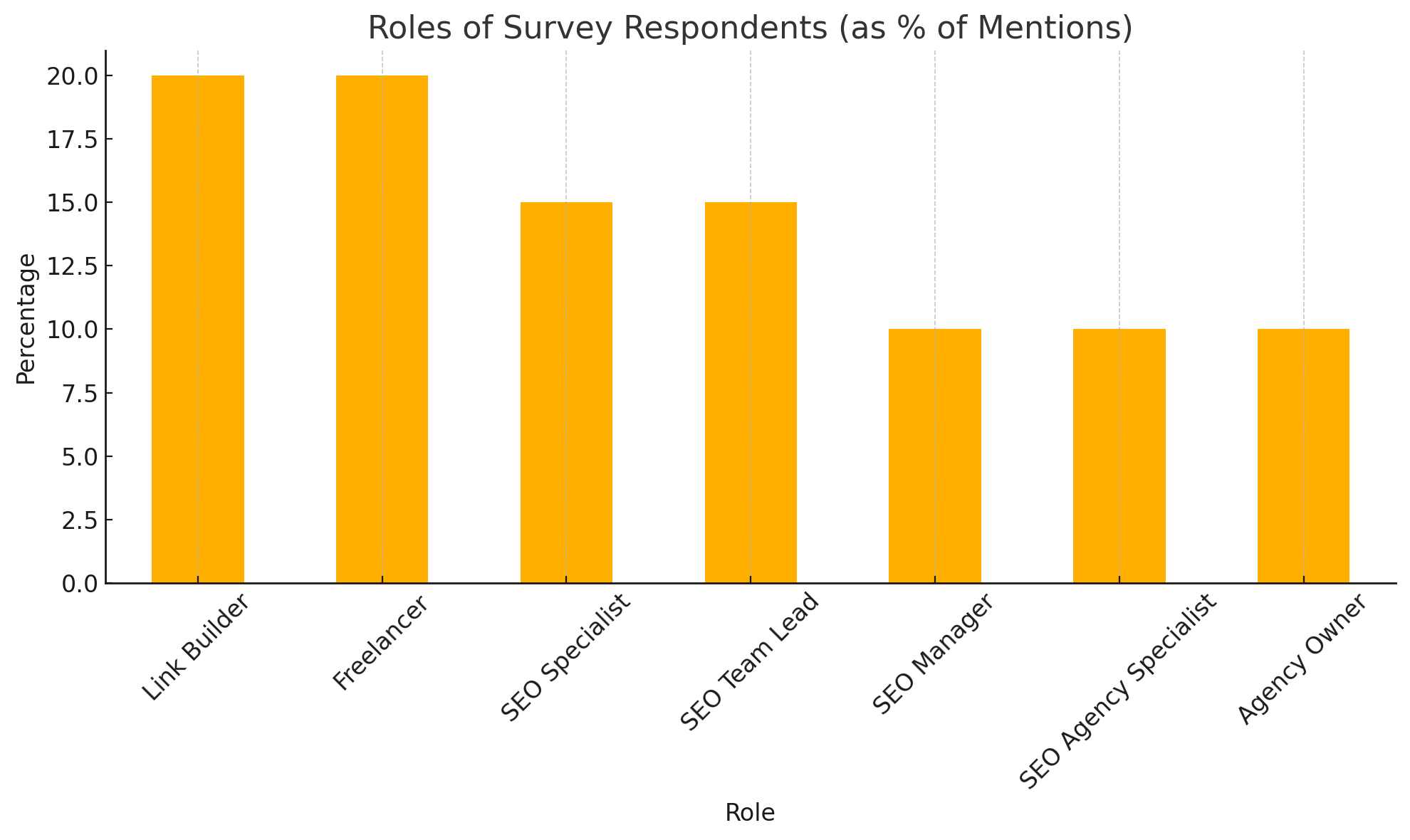
To capture a realistic view of the link building overview, the survey featured a balanced team of respondents which included freelancers, internal SEO experts, SEO team leaders, agency professionals and SEO managers.
When asked about their professional functions, many identified with more than one, reflecting the dynamic nature and often multifaceted of SEO work.
For example, someone can be a “Freelancer” and an “Set Specialist”, and both functions are counted properly.
The graph above shows the distribution of functions based on the frequency with which they were mentioned:
Most of the interviewees acts in several sectorsincluding e-commerce, SaaS, health, finance and marketing affiliates, which makes this research relevant to several sectors. Whether working alone, internally or as part of a larger agency team, your experiences form the basis for trends we will explore in the next sections.
Link Building Statistics in 2025: Challenges and Trends
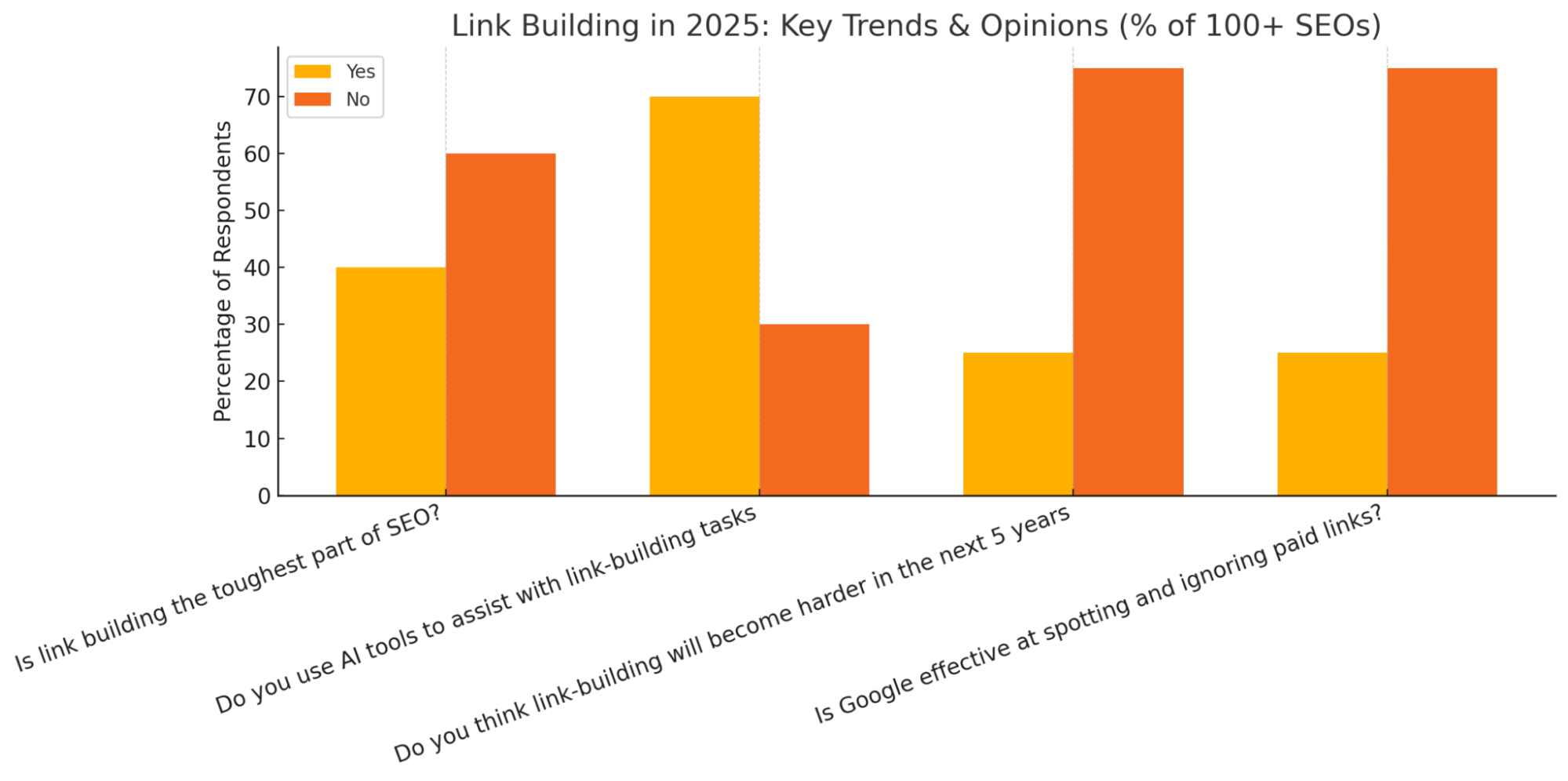
Although SEO continues to evolve, link building remains a tactical battlefield, and marketing Lad research with SEO professionals confirms that the game is becoming increasingly complex.
Is building links still the hardest part of SEO?
Surprisingly, most SEOs said “no”, suggesting that although the link building is difficult, it is no longer seen as the most challenging part of SEO. . This can be a result of the advancement of available tools, more refined disclosure processes or broader experience in the area.
Will link building become more difficult in the next 5 years?
Despite optimism, many respondents expect that the link building becomes more complex. . With search engines restricting quality standards and content generated by AI flooding the web, getting true backlinks is becoming increasingly competitive.
The AI is already refurbishing link construction
Many SEO professionals already use AI tools to assist in tasks such as prospecting, email dissemination and content ideation. This trend reflects a change towards the efficient expansion of disclosure without sacrificing personalization.
Do SEOs rely on Google's ability to detect paid links?
There is still a remarkable level of skepticism. Many respondents do not believe that Google identifies and devalues paid links effectively, which may explain why specific “gray hat” tactics continue to occur without being noticed.
Backlink Disclosure and Acquisition
Getting backlinks still depends a lot on how well SEOs can launch, persuade and build relationships, and respondents revealed some valuable data about their disclosure process in 2025.
Disclosure still plays an important role
Many SEOs said that active reach is responsible for most of your backlinks, affirming the importance of personalised and targeted email campaigns, in addition to building relationships.
Most SEOs handle building links internally
When asked if they outsource link building tasks, most stated that he manages the scope internally, through internal teams or dedicated freelancers. However, a considerable portion depends on hybrid agencies or models, depending on the scope and scale of the campaign.
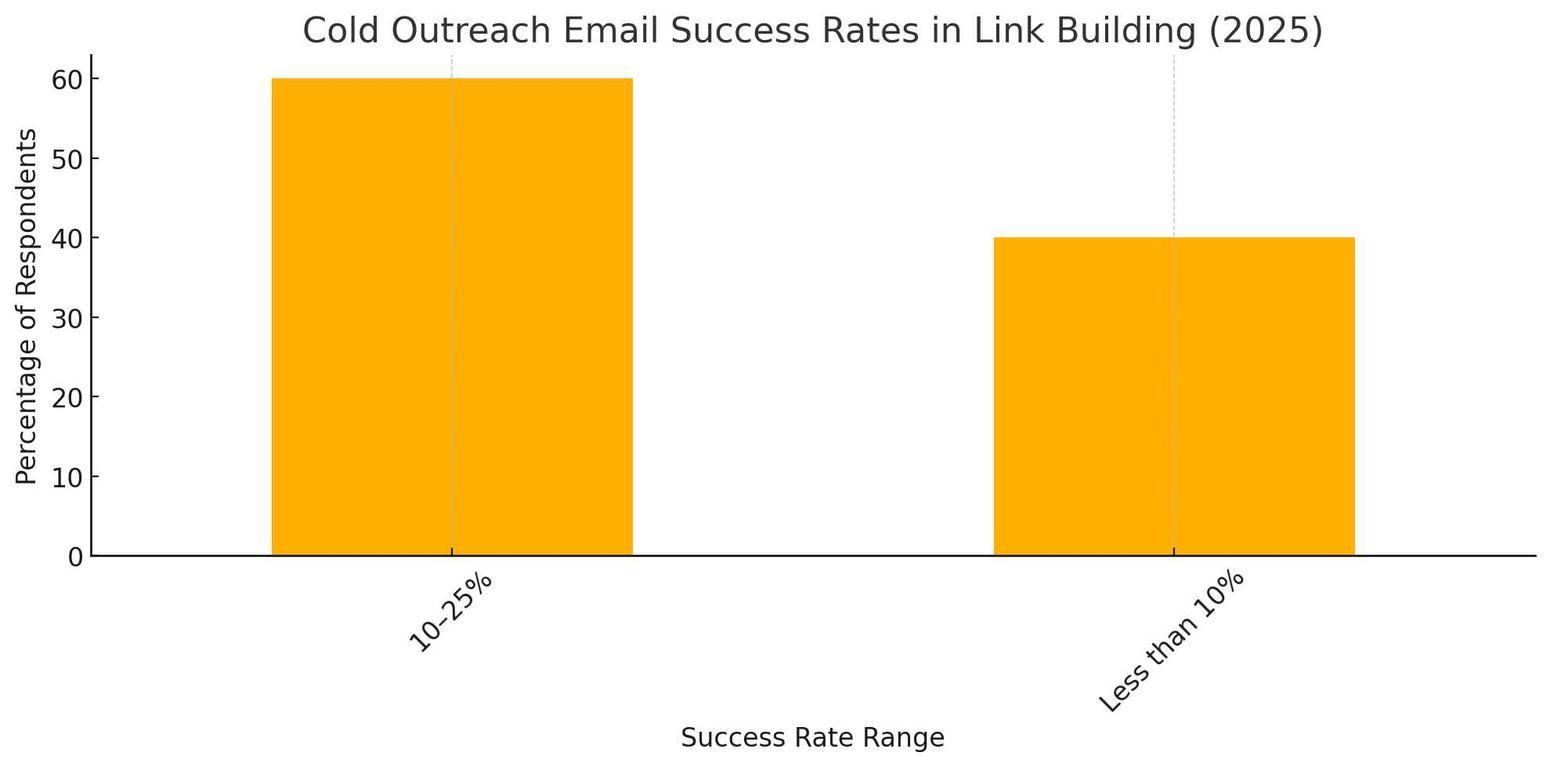
Cold outreach still has a low success rate
Even in 2025, the Cold outreach success, or cold disclosure, remains low, with most SEOs reporting success rates of 10% to 25%. This highlights how much volume, creativity and monitoring are needed to ensure quality backlinks.
Why Disclosure Is Ignored
The research also asked SEOs what they believe makes their Disclosure emails are ignored. . The most common answers were:
- Unrelevant contacts
- Lack of clear value in disclosure content
- Overcrowded inboxes
This shows that customisation and segmentation are more important than ever in competition for attention in someone's inbox.
Yes, competitors are buying links
One of the most revealing data is that most SEOs believes that its competitors are actively buying backlinks, even when paid links are risky according to Google guidelines. This reflects the continuous tension between the ideals of white hat and competitive pressure.
Link Building Internal vs. Outsourced
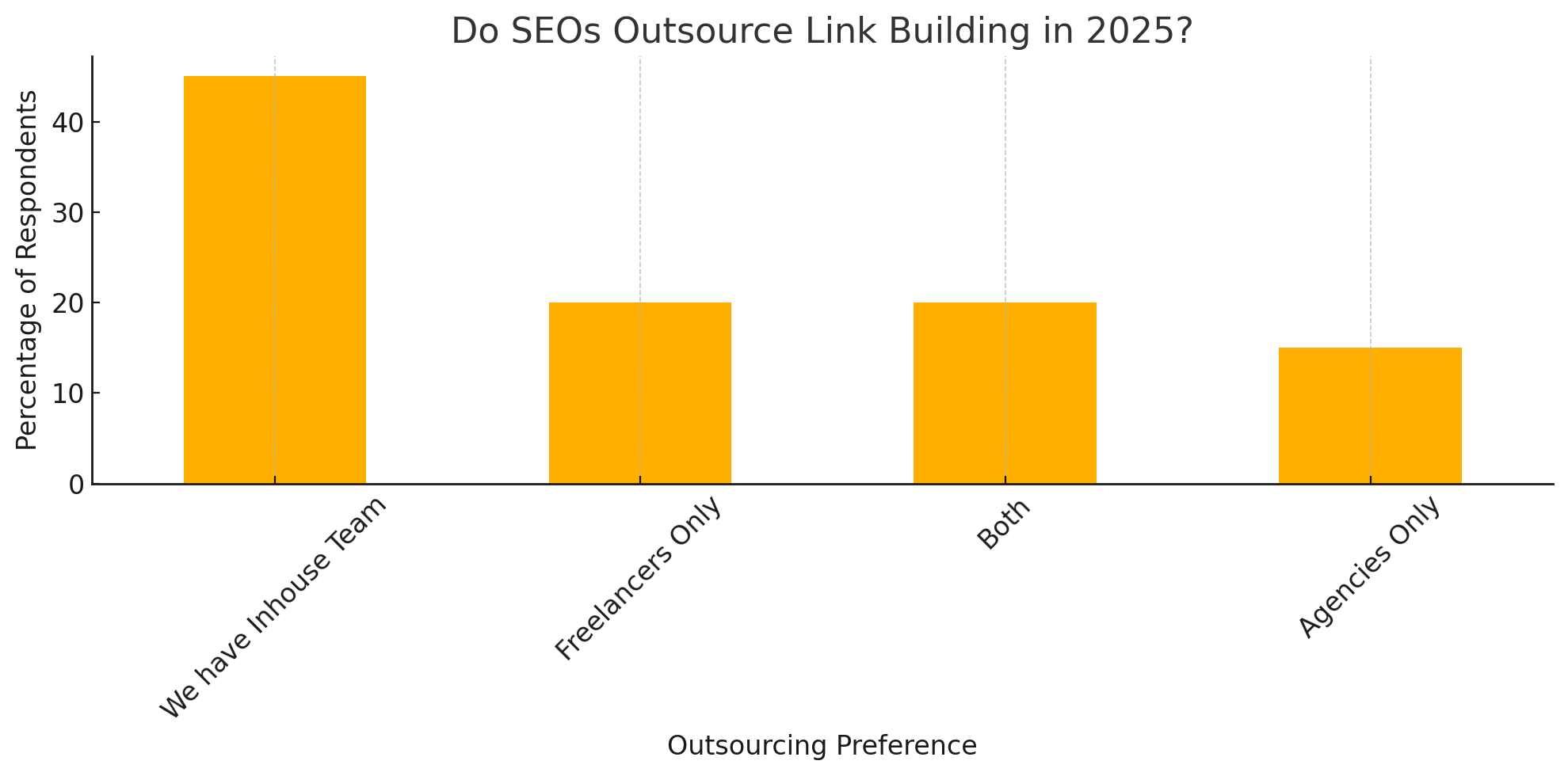
When asked about how they manage link building tasks, most SEOs heard in the survey said prefer to deal with it internally, through internal teams or trusted freelancers. However, a significant portion also reported using agencies or a combined model, depending on the scale and complexity of their campaigns.
Budget and ROI on Link Building
Understanding the return on investment in link building campaigns is key to SEO teams. The research asked SEO professionals how they approach budgeting and measuring the effectiveness of their efforts, and the data revealed a mix of pragmatism and thinking focused on performance.
How much is a high-quality backlink?
There is no universal price, but most of the respondents said they were willing to invest between $250 and $1,000 or more by a single high quality backlink, either through direct acquisition or digital PR actions. The cost generally depends on the authority, relevance and value of positioning a website link.
Do SEOs actively measure ROI?
Interestingly, not everyone has a solid structure to measure success. Some SEOs admitted that they did not actively monitor the ROI, while others pointed metrics as:
- Increased organic traffic
- Growth in the domain authority (DA/DR)
- Number of reference domains or backlinks
This range shows how ROI measurement can vary widely depending on commercial objectives and reporting requirements.
How long does it take to see results?
Most SEOs agree that link building is a long-term investment. . Many say they expect results within 1 to 4 months, although some allow longer deadlines depending on the project and niche.
Tactics That Work (Even if Risked)
Although most SEOs prefer to follow Google guidelines, not all effective tactics are technically “safe”. The research reveals that many professionals still rely on methods that exceed the limits, or they go beyond them completely, because they still generate results.
Paid links: an open secret
More than 75% of SEOs They believe their competitors are buying backlinks, a sign that the purchase of links remains disseminated even if done discreetly. This demonstrates the tension between maintaining compliance and staying up to date in competitive niches.
Would you use a known link vendor?
Interestingly, when asked if they would put a link on a website that sells links (e.g. listed in a link market), many SEOs said yes , suggesting that the context, quality of the site and editorial control can still make these positions seem “valuing risk”.
What Grey Hat tactics still work?
Although technically contrary to Google's guidelines, some tactics are still seen as effective:
- Posts of guests with exact match anchors
- Link exchanges or reciprocal links
- Purchase of backlinks directly
- Some SEOs have stated that they strictly follow white-hat methods, but are minority.
What about the rejection of links?
The data also shows that the link rejection is still used, but not aggressively. . Most SEOs reject it when necessary (e.g. after a penalty or spam peak), rather than as a regular maintenance task.
Quality and Evaluation of Backlinks
Not all backlinks are created the same, and in 2025 SEOs are paying more attention than ever to the relevance, context and intention of the link. . The survey asked the interviewees how they evaluate the quality of backlinks and what types of links prioritize their strategies.
Are the nofollow links still important?
Although Google claims that links nofollow do not directly influence rankings, some SEOs yet believe that they play an indirect role, by means of reference traffic, visibility of the mark or algorithmic interpretation. The answer was mixed, demonstrating the ongoing debate on its real value.
Brand names not linked: a hidden factor?
Most stated that mentions to the brand without links (i.e. quotes without link) may impact the organic rankings. . This reflects the growing role of entity-based SEO and how Google can evaluate brand authority in broader search signals.
Which pages deserve more links?
When asked about what types of pages they focus on for link acquisition, the answers included:
- Long blog posts;
- pages of products or services;
- Tools and resources;
- Many have also said that they create links evenly in all types, showing a balanced approach to the distribution of authority.
Priorities of the anchor text
In terms of anchor text strategy, most SEOs prefer:
- Brand anchors (e.g. “WebSyd”)
- Partial matching keywords phrases
- A blend of all kinds to maintain a natural link profile
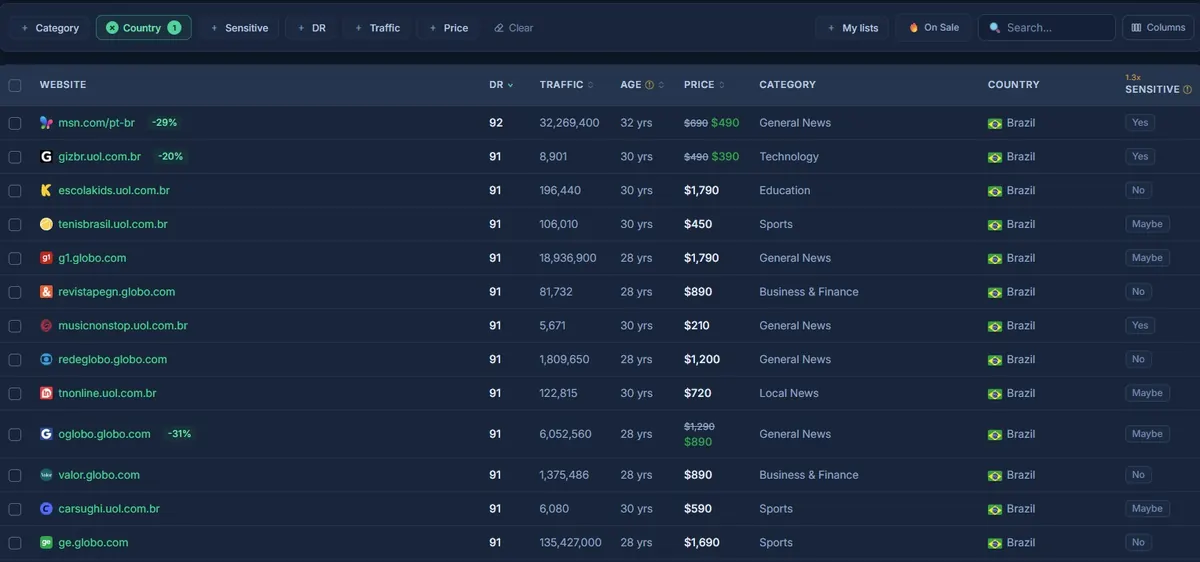
These same criteria can be applied to the prospection. No BlaaS publishers catalogue, it is possible to filter and compare sites by DR, traffic, category, country and price before mounting the list of opportunities.
Tools and Metrics: What SEOs Use to Measure Link Power in 2025
With regard to the success of link building, tools are important and in 2025 SEOs are more opinative than ever on which platforms and authority metrics they trust most.
The survey asked SEO professionals what tools they rely on to obtain complete SEO capabilities, backlink accuracy and authority assessment, and their responses revealed a clear hierarchy in the tools they use daily.
Best full SEO tools
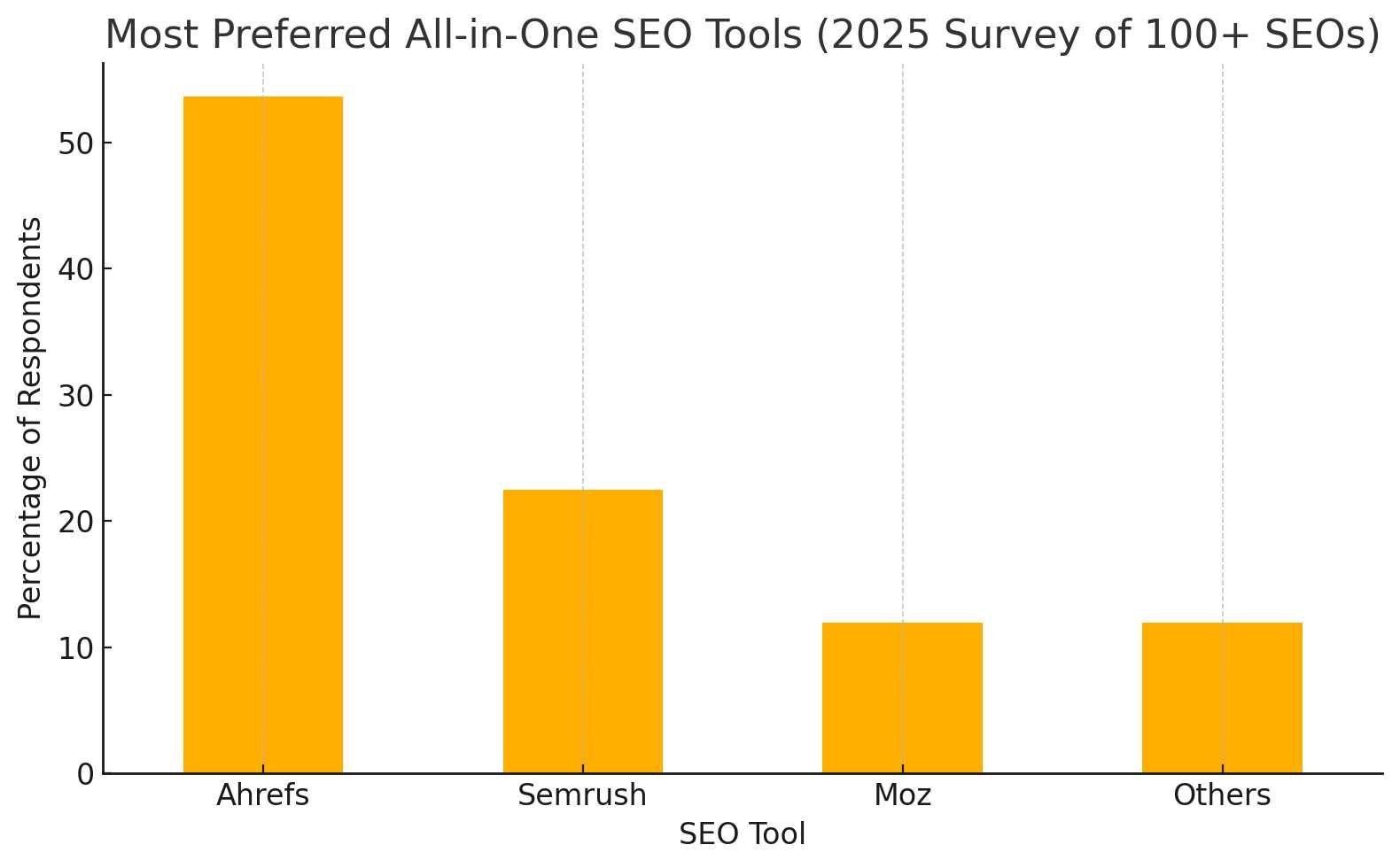
The Ahrefs remains the undisputed favorite among SEOs. . In Marketing Lad's 2025 survey, he led the list as the most reliable SEO platform, specifically for backlink data, competitor link analysis and link search.
Its clean interface, real-time updates and deep backlink index make it the ideal tool for SEOs that prioritize link quality and technical accuracy. Whether to perform a backlink audit, find links gaps or analyze anchor text, Ahrefs remains in the lead.
Meanwhile, the Semrush was often mentioned as a complete and robust platform. . Many SEOs value it for their wide range of SEO resources, including keyword tracking, site audits and an integrated CRM for dissemination campaigns. It is the ideal tool for those who manage full funnel SEO strategies, as well as link acquisition.
Some have mentioned the Moz, mainly by its Domain Authority (DA) metric, but it is no longer the main choice among those focused on serious link building strategies.
Main indications for SEO tools complete:
- Ahrefs: the best choice for backlink analysis and link building
- Semrush : versatile and complete SEO platform
- Moz: interesting tool but with limited resources
More accurate backlink data
For raw backlink data, Ahrefs was the favorite, winning the majority of votes as the tool that offers backlink analysis more precise and comprehensive.
Some SEOs also mentioned the IF Ranking as an affordable alternative and efficient, while others continued to favour the Semrush for its integration and integrated resources similar to a CRM.
The trend was clear: Ahrefs remains the gold standard for link discovery and data update.
More reliable for backlink accuracy:
- Ahrefs (dominant)
- Semrush
- SE Ranking (growing alternative)
Preferential Authority Metrics
SEOs value the Domain Classification (DR) and URL for its real-time updates and alignment with the visibility of the research. A Semrush Authority Score was also mentioned as a modern metric that considers more than just links, but came second, behind the Ahrefs metrics.
The Moz Domain Authority (DA) it was notably absent from most responses, indicating a change towards newer metrics and faster update, with greater relevance of SEO perceived in 2025.
Higher Authority metrics (single choice allowed):
- Ahrefs DR/UR: the preferred
- Semrush Authority Score (AS): second place
- Moz DA: almost not mentioned
Finally, the link building from 2025 started to be defined by smarter tools, more precise SEOs and more fierce competition. Although best practices evolve, the fundamentals remain: building genuine relationships, offering real value and ensuring real links from relevant and reliable sources.
Frequently Asked Questions
What is the average cost of a high quality backlink in 2025?
Based on marketing Lad research with over 100 SEOs, most professionals feel comfortable spending between $250 and $1,000 or more by a single high quality backlink, either acquired through direct disclosure or digital PR.
Which link building tools are most trusted by SEOs in 2025?
The Ahrefs has been classified as the most reliable tool for data and backlink analysis, followed by Semrush as the preferred multifunctional SEO platform. Tools like Moz, Majestic and SE Ranking have also been mentioned, but are less used.
Do SEOs still use tactics that violate Google guidelines?
Yeah. Many SEOs admit that tactics such as paid links, link exchanges, PBNs and guest posts with exact matching anchors still generate resultsEven if they technically violate Google's guidelines.
How long does it take to see results from building links?
Most SEOs heard in Marketing Lad survey reported seeing results from 1 to 4 months after starting a link building campaign, although the deadlines may vary based on niche, competition and content quality.
What is the most preferred domain authority metric in 2025?
In 2025, the Ahrefs Domain Classification (DR) is the preferred metric among SEOs, followed by the Semrush Authority Score. The Moz Domain Authority (DA) is still recognised, but much less used for serious link assessments.
Needing to boost SEO on your site? Ask for a quote right now with our SEO team. Click on the button below:
FREQUENTLY ASKED QUESTIONS
What is link building and why is it important for SEO?
Link building is the practice of conquering backlinks, i.e. links from other sites pointing to yours. This strategy is crucial for SEO because it helps to increase domain authority, improve positioning in search engines and attract more qualified traffic.
How much does a quality backlink cost on average?
The cost of a quality backlink may vary greatly, but many professionals consider values between $250 and $1,000. as reasonable. The value depends on the authority and relevance of the site that offers the link, as well as how the link is obtained (direct purchase, guest post, digital PR, etc.).
Which tools are most used for link building strategies?
The tools most used by SEO experts include Ahrefs and Semrush, which offer advanced resources for backlink analysis, competition, authority metrics and prospecting. Other options such as SE Ranking, Moz and Majestic can also be useful depending on the need.
Are paid links penalized by Google?
Google treats purchased links to manipulate ranking as a violation of spam policies. Paid links are allowed when marked with rel=”sponsored” or rel=“nofollow”. Even so, research shows that many SEOs still use paid links without marking, assuming the risk of losing the value of these links or a manual action.

Caio Nogueira is a SEO, GEO, link building and Digital PR expert and co-founder of WebSyd, website creation agency and SEO consulting founded in 2016. It acts with organic search strategies, digital authority construction and brand optimisation for search engines and artificial intelligence platforms. Throughout his trajectory, he participated in more than 1000 projects involving SEO, website development, content marketing and authority acquisition through backlinks and Digital PR. At WebSyd, it participates in the planning of strategies to increase organic visibility, lead generation and presence of companies on Google and AI-based search engines. As an author, it publishes content on SEO, GEO, website creation, link building and digital authority, sharing analyses, strategies and practical experiences related to organic growth of companies. Its contents and contributions have also been published in companies and vehicles of technology and marketing such as Wix, HostGator, Duda, Neil Patel, Locaweb and E-Commerce Brasil.
View all posts


 Estimate the cost

