
IA Applied to Semantic SEO: How AI is Changing the Keyword Strategy
Summary (TL;DR)
In this post, we talk about the role of Artificial Intelligence (IA) in Semantic SEO and how it transforms the way to understand and apply keywords in optimisation strategies.
The AI, with its advanced understanding of language and context, allows to identify the intention of user research, providing more accurate search results and more relevant content. With the prediction that most online content will be generated by AI by 2026, it is clear that Semantic SEO is an essential trend to improve website visibility and performance in search engines.
We also address the benefits and challenges of AI in SEO, including increased organic traffic, content customisation, and the need for high-quality data to optimise results.
Despite the difficulties, such as data quality and the need for AI training, the use of AI-based algorithms makes SEO more efficient by finding keywords with high engagement potential and aligned with user intent, ensuring that companies are ahead of search trends.
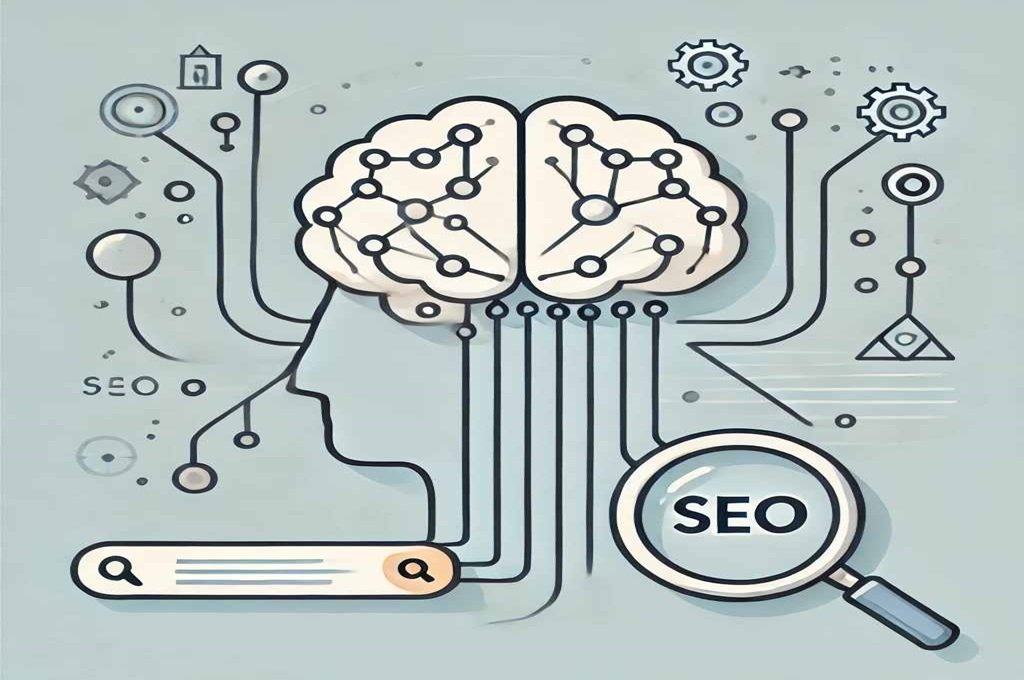
Quick answer: Semantic SEO is optimizing content by meaning and intent of search, not by repeating keywords. The AI helps to group keywords by intention, find questions and related entities and review the coverage of the theme. Google accepts content made with AI as long as it is useful and revised; using AI to generate valueless mass pages goes against the guidance on content generated by AI.
The archaic method of overloading web content with the association of keywords simply ceased to be sufficient. The bombing of keywords has come to an end.
Instead, Semantic SEO leverages the power of AI to distinguish the genuine underlying intent from user research by offering more relevant results. AI significantly reduces search time by keywords, improving content relevance and increasing overall effectiveness of SEO ventures.
Due to its ability to understand the context, semantics and user intent, AI increases the accuracy and personal adjustment of research results, considerably refining the user's overall experience.
In this article, we will do the stimulating investigation of Semantic SEO, immersing itself in the innovative way with which AI continues to reformulate keyword strategies.
What is Semantic SEO
Although the world of SEO is a constant target of drastic changes due to AI, keyword research remains important. Today, the goal is to promote engaging interactions and make your voice heard amid a large volume of information available.
The Semantic SEO it is a strategy that emphasizes the meaning and underlying intention of user search queries, rather than focusing only on key word entries. He uses AI techniques and natural language processing (PLN) to make search mechanisms understand the contextual meaning and semantics of content. This approach offers more relevant and highly accurate research results.
Semantic SEO: Benefits and Challenges of AI Use
In short, AI makes it easier to understand what users want, allowing you to better customize their content and stand out in the search engine results.
Positive AI Use AI Aspects in Semantic SEO
- Biggest On-Line Presence. You can extend the scope of search queries where your content appears and increase your online visibility. Understanding user intent and context will allow you to attract more organic viewers and boost your ranking in search engines.
- Improvement in User Experience. Understanding the underlying reasons for research allows search engines to offer more personalised and appropriate results. This feature improves users' experience, as it helps them find the exact information they seek without relying on precise keywords.
- To the Front of Future Trends. By focusing on the general topic and user intent, not specific keywords, you ensure that your website maintains relevance and visibility in search results.
- Higher ratings. Semantic SEO helps search engines to understand the content of the web page accurately. The provision of the search mechanisms for structured data marking and adequate semantic signs increases the chances that your site will have the highest classification in relevant research results, as well as increasing the overall visibility of the research.
- Increased Organic Traffic. Semantic SEO increases organic traffic directed to your website when aligned with the user's intention and context. This attracts users who are truly engaged with their content, resulting in better engagement and conversion rates.
- Increase in Content Quality. Incorporating semantic research requires a combination of data analysis and empathic writing. By changing the focus of mere keywords to their meaning and intention, Semantic SEO generates high-quality content that responds effectively to user queries. With the help of AI it would be much easier to write content for blogs- For example.
Despite these advantages, understanding the limitations of AI is essential to the effectiveness of its use.
AI in Semantic SEO: Difficulties in Use
Keyword Search Quality. The AI provides keyword ideas that actually do not have sufficient classification potential. Therefore, it is more effective to conduct keyword searches with SEO-specialised software such as the keyword generator SE Ranking, which has comprehensive databases and advanced data processing algorithms.
In addition to gathering similar keywords related to the relevance score, it quickly shows the search volume, the difficulty score of keywords and the cost-per-click (CPC) of keywords in several locations for a better understanding of the real need to use them and how you should use them in your strategy.
- Data Quality. For the effectiveness of its operation, AI needs data. However, if the data is not accurate or high quality, the AI cannot create good results. SEO strategies. . It is important to ensure that the data is reliable.
- AI training. To understand the intention and context of the user, training in AI is necessary. This requires time, data and specialised knowledge. Companies need to invest in AI training to ensure content creation with your help. However, 71% executives claim that the AI and machine learning are revolutionary, making the investment worthwhile.
How the AI Is Changing Current Words Strategy
As they evolve and become more sophisticated, AI-based algorithms allow search engines to decipher and understand the subtleties of human language, such as analysis of feelings. This transition promotes a more human-centered approach during the process of research requests.
In response to this development, greater emphasis is placed on key words strategies that are not only sophisticated but contextually significant.
Content Optimization with AI
AI-based algorithms are transforming the keyword strategy into SEO, allowing a more intelligent and natural approach to content optimisation. The AI exists to provide contextually appropriate synonyms and related phrases.
In accordance with the guidelines set out in Google Search Essentials, previously known as Webmaster Guidelines, the main recommendation is to provide quality and meaningful content to the end user, whether it's AI sales content or an AI blog post.
With its versatile technology, AI ensures that the content meets two main purposes: First, content is optimised for search engine algorithms. Secondly, the content remains enveloping, cohesive and attractive to readers. By harnessing the potential of AI in SEO together with systems such as C.R.A.F.T., companies find an effective balance between the relevance of keywords and improving user experience.
Finding Best Performance Keywords
The AI is excellent in identifying keywords. This is due to your understanding of topics and content themes, not just the combination of keywords.
Semantic AI-based SEO is one step beyond the characteristic keyword analysis. It analyzes the context of keywords, their relevance to user surveys and how they connect with the topic of the site or content as a whole. In this way, he not only finds popular short-tailed and long-tailed keywords, but those that effectively engage the target audience and meet his research intention.
- The AI verifies several data sources in its analysis, including search engine results, user interaction data and competition content strategies.
- AI perceives trends in user behavior, recognizing which keywords generate traffic and engagement and the reasons.
- AI takes into account factors such as click rates, page time and user interaction.
With this information, the AI in Semantic SEO identifies keywords that, besides attracting visitors, encourage meaningful interactions. This leads to a more strategic method of keyword optimisation, which focuses on keywords that really connect with the public and increase the credibility and relevance of the site in its field.
Key Words Classification by Research, Competition and Relevance Volume
The AI in Semantic SEO investigates the deeper meanings and connections between words rather than focusing only on keywords themselves. It makes use of the PNL to understand the context and semantic relations between terms. By studying the content in this way, AI can identify the direct relevance of keywords and their related concepts and topics.
PNL analysis leads to a more complex and effective grouping of keywords based on their real relevance, and not just the frequency of the terms of the research.
The AI can assess the search volume and the competition of each keyword. SEO Tools based on AI make use of historical data to predict the volume of research, helping to identify user behavior patterns. To assess competition, AI analyzes factors such as the number and quality of other web pages that compete for attention, giving a complete view of the difficulty of classifying a specific keyword.
By combining semantic understanding with these quantitative metrics, the AI in Semantic SEO enables a more comprehensive and effective classification of keywords.
Intent of Research and User Behavior Forecast
One of the main advantages of using AI in SEO to formulate keywords strategies is its ability to predict user intent and subsequent behavior. The AI effectively predicts what information the user is seeking when analyzing user data trends, previous search patterns and query history. This allows companies to synchronize their content with users' needs, resulting in the delivery of highly relevant and valuable data.
When they understand the user's intention, companies can create content that is not limited to satisfying the search engine algorithms but which connects firmly with the target audience.
Conclusion: AI Applied to Semantic SEO
In short, the AI is revolutionizing the universe of keyword strategy by providing smart and data-based insights to companies. Through the careful optimisation of content, AI ensures that keywords are naturally inserted into the content and appropriate context, benefiting the classifications in search engines and user reading experience.
SEO tools with AI technology help companies identify the most successful keywords and predict user search intent, thus allowing them to generate content that perfectly meets the user's needs. Considering the rapid advances in AI, its integration to the key words strategy will become increasingly essential for companies that want to maximize their visibility in search engines and reach their target audience effectively.
In addition to optimizing content and search intention, it is already possible to follow a specific layer of presence in generative mechanisms. O AI visibility diagnosis AIScore combines technical checks with a Quote Rate observed in an AI response sample.

Caio Nogueira is a SEO, GEO, link building and Digital PR expert and co-founder of WebSyd, website creation agency and SEO consulting founded in 2016. It acts with organic search strategies, digital authority construction and brand optimisation for search engines and artificial intelligence platforms. Throughout his trajectory, he participated in more than 1000 projects involving SEO, website development, content marketing and authority acquisition through backlinks and Digital PR. At WebSyd, it participates in the planning of strategies to increase organic visibility, lead generation and presence of companies on Google and AI-based search engines. As an author, it publishes content on SEO, GEO, website creation, link building and digital authority, sharing analyses, strategies and practical experiences related to organic growth of companies. Its contents and contributions have also been published in companies and vehicles of technology and marketing such as Wix, HostGator, Duda, Neil Patel, Locaweb and E-Commerce Brasil.
View all posts


 Estimate the cost

