
The role of design in user experience on websites
Summary (TL;DR)
In this text, you will find information about the importance of design in creating efficient and attractive websites, highlighting how it guides the user experience.
The graphical design and user experience (UX) are addressed, emphasizing clear navigation, visual hierarchy and responsive design.
The text also presents good design practices, such as knowing the target audience, using colors strategically and ensuring accessibility.
Design trends and the importance of emotional design are discussed to improve user experience and digital inclusion.
Quick answer: the design defines how the visitor finds the information, understands the offer and decides to act on a website. Clear visual hierarchy, simple navigation, contrast and readable sources, layout responsive and fast loading are the points that weigh most in user experience (UX) and, consequently, in conversions.
Design is a key element in creating an efficient and attractive website. It helps guide and influence the user experience, making it more enjoyable, efficient and satisfying.
Theoretical basis
The design involves the creation and development of solutions to problems, with the aim of meeting the user's needs in a functional and aesthetic way. It can be present in several fields, such as graphic, industrial, fashion, interior, among others. The graphic design, in particular, is responsible for creating visual elements that communicate a message and make information more accessible and attractive, with colors, layout, images and interactivity.
User experience (UX) is the way a user perceives and interacts with a product or service. In the case of websites, user experience includes from ease of browsing to usability and pleasantness of design. It directly influences user satisfaction and loyalty, as well as business success.
Importance of design in user experience on websites
There are several ways of design to influence user navigation on a website, such as: a clear and organized design, having a visual hierarchy that helps the user understand the relationship between different information and elements of the site. A consistent and coherent design and a responsive design, which adapts to different screen sizes such as mobile devices.
Sites like Airbnb, Dropbox and Apple are good examples of websites with a good design, intuitive and provide good experience to users.
And a good experience can bring many benefits to companies, such as customer loyalty, improvement in the company's image and can increase the chances of conversion, i.e., that the user performs a desired action by the company, such as making a purchase.
Good design practices to improve user experience on websites
To create an efficient website design, it is important to follow some recommendations such as: get to know your target audience well. This includes understanding your needs, preferences, behaviors and expectations, using colors strategically and creating a clear visual hierarchy, highlighting the most important information. Avoid excess information and visual elements, as well as pop-ups, and make sure the site has a fast loading time.
A good example is the Google website (www.google.com.br), known for its simple and minimalist design, with legible typography and well-chosen images. Another is the Stripe website (stripe.com), which uses minimalist design, with clear visual hierarchy and strategic use of colors.
The importance of accessibility in site design
Accessibility on websites is the practice of making the content and functionality of a website available and usable by all people, including those with visual, hearing, physical, cognitive or other special needs. A good contrast of colors between text and background (the guidelines WCAG ask for a ratio of at least 4.5:1 for common texts) can help people with low vision to read the content of the site more easily, as well as the font size, description of images, use of subtitles and access by keyboard.
The importance of accessibility on websites allows people with disabilities to access and use the content and features of the site, increasing the inclusion, expansion of the target audience and diversity, attracting new users and increasing brand visibility.
Want a design site designed for your client's experience?
Design trends for user experience on websites
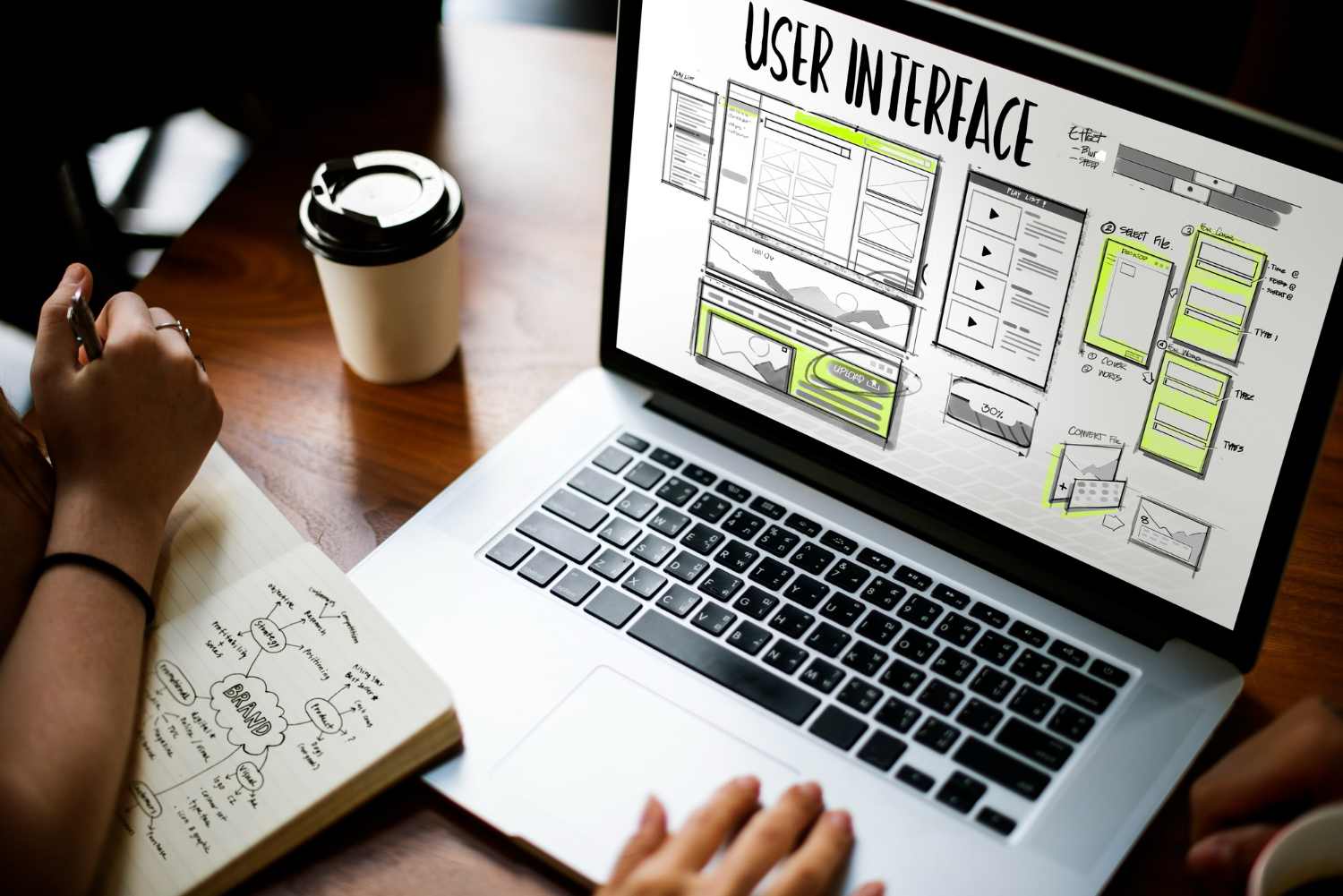
Website design trends are constantly evolving, and some of the latest include: a clean and minimalist design, with lots of blank space and simple elements, the use of illustrations and animations, the use of creative and personalised sources, as well as responsive design, an important trend. All of this, can improve the user experience by making the site more attractive and facilitating navigation.
The Canva website is a good example of a site that uses design trends efficiently, which uses subtle animations and interactions to make navigation more interesting, while clean and minimalist design highlights the main functionality of the product. Another example is the fun and relaxed design of Slack's website, which is reinforced by the use of illustrations and creative typography.
There are also tools that offer a series of illustrations for you to use on your site, such as the Tabler illustrations. . Here you have access to well-made illustrations and are always implementing novelties in the tool.
Responsive Design: what it is and how to do
Design responsive is a design approach that seeks to create websites and digital interfaces that automatically adapt to different devices and screen sizes, providing a consistent and enjoyable experience for users. With the increasing use of mobile devices, such as smartphones and tablets, to access the internet, having a responsive design has become essential to ensure usability and user satisfaction.
The importance of responsive design is directly related to the diversity of devices and screen sizes used to access the web. In the past, sites were developed with a focus on desktop monitors, which resulted in viewing and usability problems when accessed on mobile devices.
However, with responsive design, sites are created flexibly, adjusting automatically to the size and resolution of the screen they are viewing.
There are several reasons why responsive design is essential:
- Improved user experience: With responsive design, users can access and browse a site intuitively and smoothly on any device, whether it's a smartphone, tablet or desktop. Adapting the layout, elements and content of the site provides a consistent and enjoyable experience regardless of the device used.
- Increase user retention rate: A website that offers a responsive experience is more likely to keep users engaged, as they do not face difficulties browsing or viewing problems on the mobile phone. With this, people tend to explore more pages and return to the site.
- Improvement in site performance: Responsive design prevents the need to create separate versions of the site for different devices. This simplifies site maintenance and update, saving time and resources, and improves your mobile experience. Speed depends on optimisation (images, code and server) and can be measured by Core Web Vitals, experience metrics that Google also considers in search.
- Reach out to a wider audience: With the variety of devices currently available, it is essential to ensure that your website can be accessed and used by all users regardless of the device they are using. One responsive design allows the site reach a wider audience, including mobile users, thus increasing visibility and business potential.
- Meeting the expectations of users: Modern users expect to have a consistent and fluid experience when browsing the web, regardless of the device they are using. A responsive design shows that you value the user experience and worry about providing a functional and accessible website regardless of the device.
In short, the responsive design is key to ensuring that a website Provide a high quality experience in different devices and screen sizes. By adopting this approach, designers and developers can create flexible, usable and visually attractive websites that meet user expectations and contribute to the success of online business.
Emotional Design
Emotional design is an approach that seeks to evoke emotions and create an emotional connection between users and a website or digital interface.
He recognizes that emotions play an important role in the way people perceive, interact and remember a digital experience.
When designing based on emotions, the goal is to create a memorable and impactful experience for users.
Emotional design recognizes that humans are emotional beings and that their decisions and behaviors are influenced by emotions.
By designing a website focused on emotional design, designers seek to create an atmosphere that stimulates specific feelings such as joy, trust, empathy or excitement.
These positive emotions can generate a deeper and more lasting connection with users, leading to positive results for the site or business.
There are several ways design can evoke emotions and create an emotional connection with users:
Choice of colors and visual palette: Colors have a significant impact on people's emotions. For example, hot tones like red and orange can evoke energy and enthusiasm, while cold tones such as blue and green can convey calm and tranquillity. Careful selection of colors and visual palettes can create an emotionally engaging atmosphere and convey brand personality and values.
Visual and aesthetic elements: The visual appearance of a site, including images, illustrations, typography and layout, can arouse emotions in users. Attractive and well-designed aesthetic elements can generate feelings of aesthetic pleasure and enchantment. On the other hand, using authentic images that portray real people can help establish an emotional connection and empathy with users.
Narrative and storytelling: Tell stories It's a powerful tool to evoke emotions. By creating an engaging narrative on your site, designers can arouse interest, curiosity and even empathy in users. A well-told story can create a deep emotional connection and make the user experience more memorable.
Interaction design: The way users interact with a website can also evoke emotions. Microinteractions, such as subtle animations and visual feedback, can create a sense of gratification and pleasure during interaction. In addition, interactive elements that respond intelligently and intuitively to users' actions can generate feelings of satisfaction and control.
Customization and relevance: A design that adapts to individual user preferences and needs can create a stronger emotional connection. Personalization of content and recommendations based on browsing history or user preferences can generate a sense of relevance and personalised care, which increases the likelihood that users will feel emotionally connected to the site.
Conclusion
We talk about the importance of design for user experience on websites, presenting tips and recommendations to create an efficient and enjoyable design as well as examples of sites that use design trends efficiently. In addition, we highlight that accessibility on websites is an important aspect to be considered in design, since it makes the accessible website to a wider audience.
Design is a crucial element for the web design efficient and providing a good user experience. It is important to invest in a quality design to achieve better results in terms of loyalty and conversion. It must always be updated with trends to provide the best possible user experience.

FREQUENTLY ASKED QUESTIONS
What is the importance of design in creating websites?
Design is crucial to creating efficient and attractive websites. It guides and influences user experience, making browsing more enjoyable and efficient, which can increase customer loyalty and conversion.
What is the user experience (UX)?
The user experience (UX) refers to how a user perceives and interacts with a product or service. On websites, it includes easy browsing, usability and pleasant design, directly influencing user satisfaction and loyalty.
What are some good design practices to improve user experience?
Some good practices include knowing the target audience well, using colors strategically, creating a clear visual hierarchy, avoiding excess information and ensuring that the site loads quickly. Accessibility is also fundamental.
What is responsive design and why is it important?
Responsive design is the approach of creating websites that automatically adapt to different devices and screen sizes. It is important because it ensures a consistent and enjoyable experience for all users, regardless of the device used, increasing usability and satisfaction.

Caio Nogueira is a SEO, GEO, link building and Digital PR expert and co-founder of WebSyd, website creation agency and SEO consulting founded in 2016. It acts with organic search strategies, digital authority construction and brand optimisation for search engines and artificial intelligence platforms. Throughout his trajectory, he participated in more than 1000 projects involving SEO, website development, content marketing and authority acquisition through backlinks and Digital PR. At WebSyd, it participates in the planning of strategies to increase organic visibility, lead generation and presence of companies on Google and AI-based search engines. As an author, it publishes content on SEO, GEO, website creation, link building and digital authority, sharing analyses, strategies and practical experiences related to organic growth of companies. Its contents and contributions have also been published in companies and vehicles of technology and marketing such as Wix, HostGator, Duda, Neil Patel, Locaweb and E-Commerce Brasil.
View all posts


 Estimate the cost

