
Why and When to Update the Site and Your Content? [2026]
Summary (TL;DR)
In this post, let's talk about importance of keeping your website up to date to ensure relevance and good user experience.
We will address the main reasons for updating the site as improve ranking on Google, optimise design and adapt to new technologies.
We'll also discuss signs that your site needs updating, how outdated content and performance problems, as well as practical tips to make these improvements efficiently.
In the end, you will understand how regular updates can strengthen brand credibility and increase organic traffic.

Quick answer: update the site when there is outdated information, drop of clicks or positions in Search Console, outdated design or navigation, slow mobile or CMS and expired plugins. An audit every quarter helps pick up those signals. For Google, what counts is the page becoming more useful and correct, not the publication frequency or the date change.
Know when to update the site is one of the most important actions to ensure that it remains relevant and effective. User experience is essential for the success of any online page. One outdated site, with old content or outdated design, can harm navigation and consequently the visitor's satisfaction.
In addition, Google values useful and reliable content. In searches that ask for novelty (news, prices, events), updated pages have the advantage; already changing the date without improving the text does not help.
The site update is a way to show visitors that your brand is active and committed to providing the best information and features. This goes from the renovation of the design (such as the site redesign), the update of relevant content, the inclusion of new features and adaptation to new technologies.
Why Update the Site and Your Content?
There are many reasons why updating the site and its content should be a priority for any business. It is not just about maintaining the aesthetic appearance, but of ensure that the site continue functional, relevant and optimised for the new demands of users and search engines.
The update of the site directly impacts the search ranking, user experience and even business performance of the company. Check out the main reasons for performing these updates.
Improves User Experience
When the site is constantly updated, it becomes easier to use, with more relevant information and optimised browsing. By investing in design improvements and content, you facilitate the user's journey, which results in greater engagement and satisfaction.
The user experience is a critical factor for retaining visitors, and an outdated site can be frustrating and lead users to leave the page quickly.
Increases Visibility in Search Engines
The update also helps maintain visibility in searchers. Google does not favor a site just by publishing frequently, but pages with correct, complete and easy-to-use information tend to better meet the search and maintain positions.
Pages that get outdated usually lose clicks to competitors with better answers. That's why it's worth following the performance and reviewing what fell.
Follow-up of the New Design and Technology Trends
Website redesign is one of the most effective ways to update the appearance and functionality of a page. Design trends and digital technologies are constantly evolving, and your website needs to keep up with these changes in order to remain competitive.
An outdated website may seem old-fashioned and compromise the image of your brand. On the other hand, a modern site that incorporates the latest innovations in design and functionality transmits professionalism and reliability, which can attract more visitors and generate more conversions.
Strengthens Brand Credibility
Regularly updating the content and design of the site demonstrates that your brand is active and engaged in offering the best to its users. When the site is not updated, visitors may notice that the company is no longer committed to quality or has no more presence in the market.
This could damage the credibility of the brand. Maintaining relevant and up-to-date content creates an image of professionalism and trust, showing that your brand is always willing to adapt to the needs and interests of your customers.
Optimizes Site Performance and Speed
The update also has a direct impact on page performance and loading speed. Slow Sites can be frustrating for users and harm the browsing experience. In addition, Google considers loading speed as one of the ranking criteria.
By optimizing your website and keeping your code clean and efficient, you ensure that it loads faster, providing a more user-friendly experience. Improving performance not only helps to retain visitors, but also improves the conversion rates, as users are less likely to leave the site due to long waiting times.
Signs That Your Site Needs Update
There are several signs that indicate It's time to update the site and its content. . Keeping an eye on these signals can help keep your site relevant and optimised, as well as ensuring that the user experience is always positive. Check out what they are:
- The site design seems outdated;
- Page loading time is slow;
- The information on the website is no longer up to date;
- The content of the site is not aligned with current trends;
- The site is not responsive on mobile devices;
- The pages are not optimised for SEO;
- The site is not generating enough organic traffic;
- The site has no integration with social networks or other tools;
- Content is not being shared or commented on digital platforms;
- The site has frequent technical problems.
See an example of outdated website:
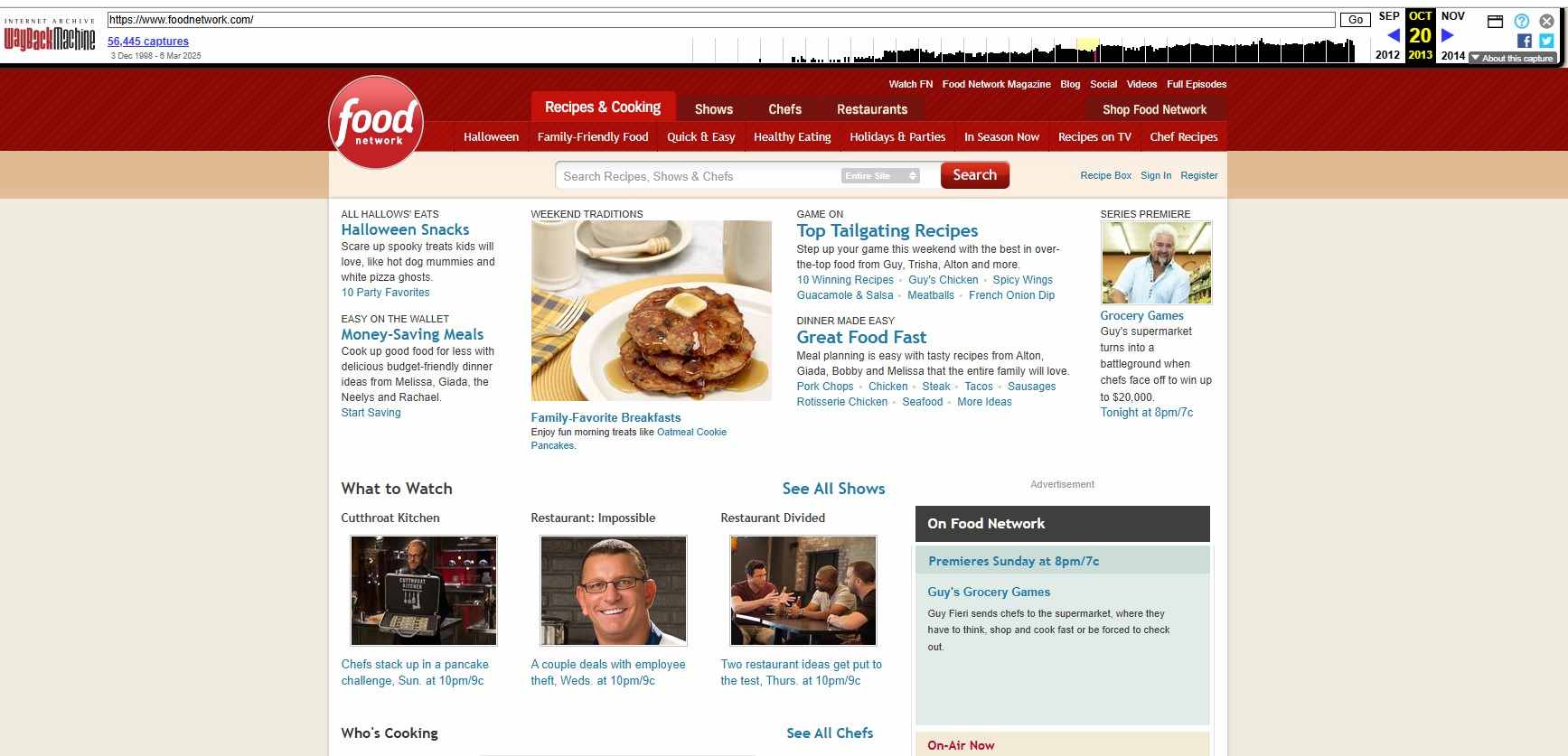
Notice how there are several informations thrown and emboldened on the page. Besides retro design nothing intuitive, and without any accessibility. This site was on the air between the 1990s and early 2000. You can check more images of him and other old sites in the collection web.archive.org.
In short, updating the site is essential to ensure your competitiveness and market relevance. . Ignoring these signals can harm the performance and user experience, as well as negatively affecting your SEO and brand image.
How does Update Impact on SEO?
Upgrading content helps in SEO when it makes the page more useful for those looking for: corrected data, more complete answers and better experience.
A revised page that responds better to the search has more chance of winning clicks and positions; one that only changed the date, no.
In addition, a site with updated content, a well-organized structure and good SEO practices tends to have a higher User retention rate. . This means that visitors stay longer on the pages and interact more with content, which is a good sign for search algorithms.
The content update also impacts the indexing of pages. When reviewing and optimise your content regularly, you facilitate indexing of pages by search engines, which may result in better ranking.
When to Update the Content of the Site?
There's no rule about when to update the content of the site, but a good practice is perform periodic audits to identify pages that need renewal.
Some pages, such as price comparison or event information, of course need to be updated more frequently. The content, in turn, “evergreen“ (temporal content) may have a longer interval between updates.
The important thing is to audit your content regularly to identify pages that are no longer performing well or may be out of date.
Check out the following one step by step to carry out this audit and find the pages that need updating.
1. Audit Your Content
The first step to keep your website up to date is to perform a content audit. This involves compiling all the pages on your site and critically analyzing them. Check the relevance, accuracy, engagement (such as views and page time) and their performance in SERPs.
Identifying pages with low performance or obsolete information is a good start to know where to start the update.
2. Check for Out-of-date Information
When auditing the content, look for information that may have been outdated over time. Statistics that have changed, dates or events that have passed or any reference to products, services or technologies that have been discontinued or changed deserve attention.
Keeping these details up to date is critical to ensuring that your content remains relevant and useful to the public.
3. Performance Metric Analysis
Tools like the Google Analytics and Google Search Console are essential to analyze the performance of each page of your website. From these tools, you can identify pages that are with low traffic, reduced conversion rates or low engagement rate.
If a page has these signals, it may be time to review their content and make it more attractive for users and search engines.
4. Make a Rating Review
In addition to analyzing performance metrics, it is important to review your site's search engine ratings. Whether some pages have fallen in the ranking or are no longer ranking for the right keywords, it's time to invest in updates.
SEO is a continuous process, and periodic updates can help keep your site well positioned, increasing visibility and organic traffic.
5. Monitor Competing Sites
An efficient way to know if your content needs updating is by monitoring the performance of competitors. Analyze whether they are covering topics in a more current, deeper or more relevant manner. By using Google Search Console data, you can identify which pages are receiving more clicks and compare with the pages of your own website.
If you notice that you are losing clicks or positions, it may be time to update your content to regain visibility and attract more visitors.
How to Update Your Website Efficiently?
Efficiently updating your site requires a number of strategic steps that ensure not only maintenance of appearance and functionality, but also continuous optimisation for SEO and user experience.
Site update strategies are essential to ensure that it remains relevant, attractive and competitive. Check out some important steps to perform an effective update:
1. Do a Site Audit
The first step to an effective update is to perform a detailed audit of your website. For that, create a report or spreadsheet with all the pages of your site, identifying those that need improvements, content updates or technical adjustments.
Evaluate the relevance of each page based on factors such as SERP performance, engagement rates and outdated content. For example, if a page has few views, you may need to review it by updating the content or structure of the page.
Tip: include columns for last update date and performance metrics, so you can easily track progress over time.
Use tools like Google Analytics and Google Search Console to get data on the pages that need attention. This will help focus on the most important pages with greater potential for improvement.
With an organized report, it is easier to prioritize updates, improve browsing and performance of your website. Each page should be reviewed based on its value and importance for your business objectives, ensuring that you are investing in what really impacts the success of your website.
2. Improve Visual Elements
The visual elements of your site have a great impact on the user experience and on the perception of your brand. Swap old images, rearrange text blocks and make buttons more visible are just some of the actions that can revitalize the appearance of your site.
Adding dynamism to the design, for example, with microinteractions (subtle movements of elements that respond to click or scroll) can also make navigation more interactive and enjoyable.
A reorganization of the homepage or key pages, focusing on user experience, is also fundamental. Improvements in design are made with changes in photos, graphics and videos, making the site more modern and visually attractive.
See this example of WebSyd' own home. See how intuitive and well presented menus are:
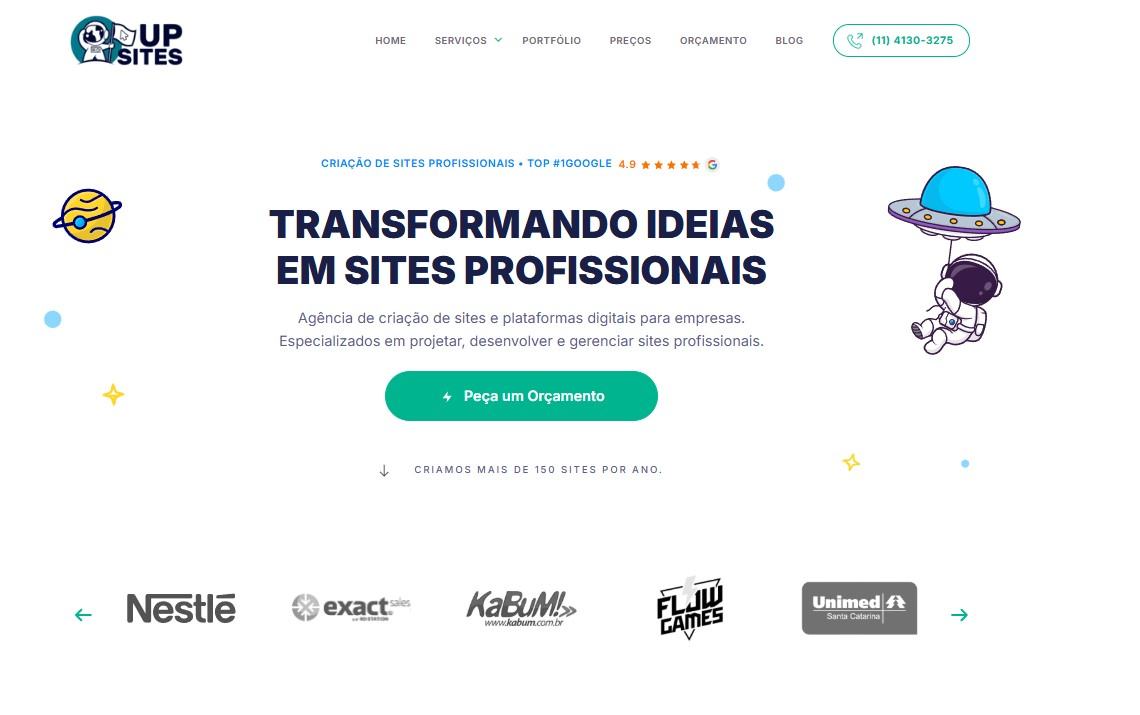
Visual improvement should not be limited only to aesthetics. It is important that usability is always considered. The structure navigation must be intuitive, and visual elements should guide the user clearly and efficiently, facilitating interaction with content and conversion.
3. Defining a Content Strategy
In addition to updating the content, it is essential define a content strategy to ensure that your website remains relevant in the long term. Organize not only the necessary updates, but also all regular maintenance that should be done to keep the site up to date.
Having an editorial calendar is very important to plan new content and revisit old ones, keeping a constant flow of fresh information for users and search engines.
To do this effectively, follow this step by step:
- Brainstorm: manages content ideas for updates and improvements topics;
- Plan: create a roadmap for updates, scheduling them all in your content calendar;
- Production: run updates continuously, reviewing and improving content;
- Publication: launch the revised content, according to the planning;
- Maintainer: after a while, review the content for new updates;
- Repeat: run this process continuously, keeping the content always fresh.
This strategy not only ensures that your site is always optimised, but also contributes to a continuous SEO because pages with correct and useful information tend to remain well positioned.
4. Update Theme, Plugins and CMS
In addition to updating the content, site maintenance and SEO also involves updating the theme, plugins and CMS (Content Management System). . These components are essential to ensure that your website works efficiently and safely.
Regular updates help prevent security breaches, improve the website performance and maintain their compatibility with new technologies and resources.
Do not update plugins or the CMS may result in security vulnerabilities that put at risk important data from your site and users. In addition, the latest versions of plugins and themes usually include performance improvements, new features, and adjustments to track browser updates and operating systems.
5. Bring New Things to the Content
To keep your site relevant, it is important to bring news to your content, such as updating existing content, add internal links, change the layout of a page, or even a complete redesign of the site. Upgrading content can range from small text edits to significant changes in their structure or appearance.
These are some ways to bring news:
- Add new topics or expand existing articles;
- Change images or add new videos to make pages more dynamic;
- Reorganize browsing or change layout to improve user experience;
- Redraw the site based on current feedback and trends to ensure that it is always attractive.
The important thing is to ensure that updates meet the user's search intent by offering the content he really seeks, in an optimised and enjoyable way.
How often do you update the site?
Keeping your site up to date is a continuous and fundamental process to ensure that it remains competitive, relevant and optimised. Through an audit and planning, you can improve user experience and keep your site optimised for SEO.
Do you want to update or redo your website? Get a quote.
FREQUENTLY ASKED QUESTIONS
How often should I update my website?
A good practice is to do a audit by quarter to find outdated pages, technical errors or performance drops. Pages with prices, dates or data change faster and need more frequent review.
What are the signs that my website needs an update?
Some common signs that your website needs to be updated include: outdated design, outdated content, slow loading time, low conversion rate and Drop in organic traffic. . Besides, pages that aren't responsive or have safety problems indicate the urgent need for adjustments.
How do site updates impact SEO?
Updating helps in SEO when it makes the page more useful: correct information, more complete response and better experience. Google does not favor a site only by publishing frequency, and exchanging the date without improving content does not help. In searches that ask for novelty, such as news and prices, current content has an advantage.
What is more important: update the content or design of the site?
Both are important, but the priority must be update the content with relevant information and SEO optimizations. Then adjust the design to improve the navigation, loading speed and user experience ensures that visitors stay longer on the site and perform more conversions.

Caio Nogueira is a SEO, GEO, link building and Digital PR expert and co-founder of WebSyd, website creation agency and SEO consulting founded in 2016. It acts with organic search strategies, digital authority construction and brand optimisation for search engines and artificial intelligence platforms. Throughout his trajectory, he participated in more than 1000 projects involving SEO, website development, content marketing and authority acquisition through backlinks and Digital PR. At WebSyd, it participates in the planning of strategies to increase organic visibility, lead generation and presence of companies on Google and AI-based search engines. As an author, it publishes content on SEO, GEO, website creation, link building and digital authority, sharing analyses, strategies and practical experiences related to organic growth of companies. Its contents and contributions have also been published in companies and vehicles of technology and marketing such as Wix, HostGator, Duda, Neil Patel, Locaweb and E-Commerce Brasil.
View all posts


 Estimate the cost

