
Digital platforms and traditional websites: what are the differences and what is best for your business
Summary (TL;DR)

Quick answer: a traditional website presents the company (who is, what does, how to talk to it) and has few interactions. A digital platform is a web system that performs processes: online sales, customer area, registration, integrations with CRM or ERP. If the goal is to be found and generate contacts, an institutional website resolves. If business needs to sell, automate or connect users, the choice is a platform.
So, what is the best option for your business: a traditional website or a digital platform? What distinguishes them both? And more importantly, how will this choice affect the growth and sustainability of your enterprise?
The following are the definitions of the two models, the functionalities, limitations and a table that compares cost, scalability and customisation.
What is a traditional website?
A traditional website is a collection of interconnected web pages, generally accessible by the domain of a company or organization.
These pages contain basic information such as who you are, what you do, products or services you offer, and how to contact.
In its simplest form, a traditional website is static, which means that the content does not change unless it is manually updated by a specialised professional or webdesign / web development company.
Features:
- Online Presence: Offers a digital presence basic to the company.
- Information: Ideal for providing static information such as contact details, company history and list of products or services.
- Low Cost: Usually cheaper to set up and maintain.
Limitations:
- Little Interaction: Provides limited opportunities for engagement and interaction with the visitors.
- Manual Updates: The update of content may require technical intervention.
- Limited scalability: Hard to adapt or scale to more complex features such as e-commerce or customer relationship management systems (CRM).
Common business use cases
- Small Enterprises: Ideal for small companies that just need a basic online presence.
- Portfolios: Artists, photographers and freelancers can use traditional websites to display their work.
- Landing Pages: Used for specific marketing campaigns where the goal is simple, such as capturing emails or providing information about a particular product.
- Blogs: It can be used for simpler publications that do not require advanced functionality.
In short, the site creation traditional can be a viable option for businesses and entrepreneurs who have simpler and more direct online needs.
However, for those who are seeking more functionality, more dynamic interactions with users and greater scalability, digital platforms may be more appropriate, as we will see in the next section.
What's a digital platform?
Digital platforms are more complex and dynamic online environments that go beyond content presentation. They allow interactions and transactions between multiple users, including customers, suppliers and business partners.
Generally built with more scalable and robust architectures, these web platforms can include a range of features such as e-commerce, customer relationship management systems (CRM), API integrations, and more.
Features:
- E-commerce: Ability to conduct online business transactions.
- API Integration: Integrations with other software and services.
- CRM: Customer relationship management to improve the user experience.
- Automation: Automated workflows for more efficient operations.
Expandable capabilities:
- Scaleability: Easily adaptable to business growth.
- Customization: Ability to offer personalised experiences for different types of users.
- Data Analysis: Data collection and analysis for business insights.
Common business use cases
- Online Stores: Companies that sell products or services directly to consumers.
- Marketplaces: Platforms that connect buyers and sellers, such as Airbnb and Uber.
- Corporate Social Networks: Online environments to improve communication and collaboration within a company.
- Management Systems: Companies that need integrated systems for inventory management, sales, and customer relationship.
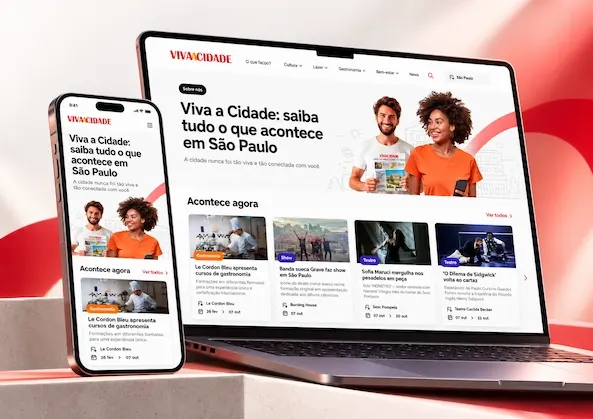
In contrast to traditional websites, digital platforms offer a much wider range of features and are built with scalability in mind.
They are especially useful for companies that have a more complex business model, need dynamic interactions with their users or have quick expansion plans.
The next section compares the two models side by side.
Direct comparison: digital platforms x site

To offer a clearer view of the differences between a traditional website and a digital platform, we will explore a number of critical factors that you should consider before making your decision.
Here is a comparative table to facilitate understanding:
| Criteria | Traditional Site | Digital Platform |
| Initial Cost | Low to moderate | Moderate to high |
| Maintenance Cost | Low | Moderate to high |
| Flexibility | Limited | High |
| Customization | Low to moderate | High |
| Scaleability | Limited | High |
| Features | Basics (Information, blog) | Expansible (E-commerce, CRM) |
Initial and Maintenance Cost
- Traditional Site: The initial and maintenance cost is generally lower, making it an attractive option for small businesses or startups.
- Digital Platforms: Requires higher initial investment and continuous maintenance costs, but offers a ROI potentially longer in the long run.
Flexibility and Customization
- Traditional Site: It offers limited flexibility and personalization. You have less control over the design and user experience.
- Digital Platforms: Highly flexible and customizable, allowing you to create a unique user experience tailored to your business needs.
Scaleability
- Traditional Site: Limited in terms of scalability. Significant expansions or additions of new features may require complete reconstruction.
- Digital Platforms: Built to climb, these web platforms can grow along with your business by adding new features and capabilities as needed.
Available Features
- Traditional Site: Features are usually limited to providing information, blogs and perhaps a contact form.
- Digital Platform: It offers a wide range of expandable features such as online stores, customer relationship management (CRM) systems, and API integrations.
We hope that this comparison will help you better understand the implications of choosing between a traditional website and a digital platform, and make the choice more aligned with your business needs and goals.
Advantages of a traditional website
Each model has its own advantages. These are the main features of a traditional website:
Low initial cost
One of the main advantages of a website traditional is the relatively low initial cost. With fewer features and a simpler structure, traditional sites usually require less resources to be developed.
This makes this option particularly attractive for small businesses or startups that may not have a large budget for digital investments.
Click to know how much a website costs
As a reference: At WebSyd, custom-made sites start at R$ 5,000 and are ready in about 45 business days; online stores take about 60 days. Platform projects, with business rules and integrations, are budgeted on a case-by-case basis.
Ease of configuration
Traditional sites are easier and faster to set up. Often, prefabricated models and site building platforms allow even individuals with little technical experience to establish an online presence in a short time.
This is a significant benefit if you need a quick solution and do not have the infrastructure or technical knowledge to manage a more complex project.
When a traditional site can be enough
For companies that do not need complex or advanced features, a traditional website may be more than enough. If the main objective is to provide information about the company, a portfolio of products or services, and means of contact, then a basic website can suit your needs.
Companies that do not plan to sell products online or manage large volumes of customer data may find a traditional website to be a suitable solution for their online operations.
In short, while a traditional website may not offer the range of functionality and scalability that a digital platform offers, it can still be the ideal option for companies that have more basic needs. Ease of configuration and lower cost make it a pragmatic choice for small businesses and entrepreneurs.
Advantages of a digital platform
Although web platforms may require higher initial investment and are more complex to manage, they offer a number of advantages that can be crucial for the success and growth of a business. Let's explore some of these benefits in detail:
High level of customisation
One of the biggest advantages of a digital platform is the degree of customisation it offers. Unlike traditional websites that can be restricted in terms of design and functionality, digital platforms allow you to create unique user experiences.
This may include custom interfaces, user streams, and even specific features that are highly tailored to your target audience's needs and preferences.
Scalability and Growth
Digital platforms are built with scalability in mind. This means that as your business grows, the platform can grow along with it. This is extremely advantageous for companies that have expansion plans or want to add new features over time.
You can start with a basic set of features and then add more features as the business evolves without the need to rebuild the entire site.
Integration with other systems and automation
Another significant benefit of digital platforms is the ability to integrate with other systems. This may include customer relationship management (CRM) systems, inventory management systems, e-commerce platforms, marketing tools and more.
Automation is often easier to implement on a digital platform. This can lead to more efficient operations and a better user experience, from customer onboarding to after-sales.
In short, while digital platforms may require greater investment in both time and financial resources, they offer a high degree of customisation, scalability and integration potential that can be invaluable for companies seeking to grow and optimise their online operations.
Important considerations for decision-making

Three questions help decide: what kind of business you have, where you want to be in two or three years and what features are indispensable from the start.
Business Type
The first step in decision-making should be a careful assessment of the type of business you operate. For example, if you have a local service company that depends mainly on customers in your immediate geographic area, a basic website may be sufficient.
However, if you have a company that sells products across the country or even internationally, a digital platform with e-commerce capabilities may be more appropriate.
Short and long-term objectives
Consider also short - and long - term goals.
Whether you are planning a significant expansion in the coming years or want to diversify your products or services, a digital platform can offer the flexibility and scalability that you need.
If your needs are more modest and immediate, a traditional site may be more than appropriate.
Specific needs such as e-commerce, CRM, etc.
The specific features you need also play an important role in decision making.
If you require advanced features such as a customer relationship management system (CRM), integration with other business systems, or robust e-commerce capabilities, a digital platform is almost certainly the right choice.
These systems are designed to integrate perfectly with a variety of other platforms and offer a level of customisation that a traditional site can hardly match.
In short, the decision between a traditional website and a digital platform should be based on a careful assessment of the specific needs, objectives and type of business you have.
With the right choice, you will be well positioned to maximize your online presence and achieve success in the digital market.
Conclusion: traditional website or digital platform?
A traditional website costs less, gets ready first and meets well those who need online presence and generation of contacts. A digital platform asks for more investment, but allows you to sell, automate processes and integrate systems. Many companies start with a well-made institutional website and evolve to a platform when the business model requires.
If you want help defining the right scope for your case, ask for a budget WebSyd.

FREQUENTLY ASKED QUESTIONS
What is a traditional website and for whom it is ideal?
A traditional website is a collection of interconnected web pages, accessible through the domain of a company. It is ideal for small companies, freelancers and professionals who need a basic online presence to provide static information such as contact details, company history and list of products or services.
What are the main advantages of a digital platform compared to a traditional website?
The main advantages of a digital platform include a high level of customisation, scalability and integration with other systems. Digital platforms can offer advanced features such as e-commerce, CRM, and automation, allowing companies to grow and optimise their operations more efficiently.
When should a company opt for a digital platform instead of a traditional website?
A company must opt for a digital platform if it has complex needs, such as performing online transactions, integrating customer relationship management (CRM) systems, or planning to significantly expand its services and functionality in the future. Companies with dynamic business models or requiring frequent interactions with users also benefit more from a digital platform.
What factors should be considered when deciding between a traditional website and a digital platform?
Evaluate the type of business, short- and long-term goals and indispensable features (virtual shop, client area, CRM, integrations). Compare also the initial and maintenance costs. At WebSyd, custom-made websites depart from R$5,000 and take about 45 business days; platforms with their own business rules are budgeted on a case by case basis.
Can you start with a website and then migrate to a platform?
Yeah. Many companies start with an institutional website and evolve to a platform when they start selling online or need integrations. Planning the site with a flexible CMS and good URL structure facilitates this migration and preserves conquered SEO.

Caio Nogueira is a SEO, GEO, link building and Digital PR expert and co-founder of WebSyd, website creation agency and SEO consulting founded in 2016. It acts with organic search strategies, digital authority construction and brand optimisation for search engines and artificial intelligence platforms. Throughout his trajectory, he participated in more than 1000 projects involving SEO, website development, content marketing and authority acquisition through backlinks and Digital PR. At WebSyd, it participates in the planning of strategies to increase organic visibility, lead generation and presence of companies on Google and AI-based search engines. As an author, it publishes content on SEO, GEO, website creation, link building and digital authority, sharing analyses, strategies and practical experiences related to organic growth of companies. Its contents and contributions have also been published in companies and vehicles of technology and marketing such as Wix, HostGator, Duda, Neil Patel, Locaweb and E-Commerce Brasil.
View all posts


 Estimate the cost

