
Do you know what a Sales CRM is? And the main benefits
Summary (TL;DR)
In this post, we talk about the importance of a sales CRM to improve customer relationship management and optimise business processes.
We explain how this tool helps companies to better organize their information, save time, improve internal communication and provide more personalised service, as well as highlighting the benefits and how to evaluate the need to implement a CRM in your company.

Quick answer: Sales CRM is the system that brings together in one place the contacts, history of conversations and negotiations of each customer, with the sales funnel and reminders of next steps. It serves the seller not to lose opportunities, so the manager predicts revenue and marketing know which leads have become customers. It is worth investing when the team already loses business due to lack of information, when the sales cycle is long (common in B2B) or when the data gets scattered in spreadsheets and WhatsApp.
More and more business operations are directed to technologies that ensure access to information relevant to the business and customer success.
This allows these businesses to have more information about their customers and, of course, can direct their efforts to meet the needs and loyalty of their audience.
In this way, knowing your client portfolio well becomes even more valued by the companies that want to grow.
And for that to be possible, a CRM software (Customer Relationship Management) is critical for companies to achieve good results.
But what is a sales CRM anyway?

The system CRM or Sales Relationship Management can be defined as a platform that measures data obtained to extract accurate information on the leads and clients of a business.
Thus, it is possible to understand the needs and make deliveries that contribute to the satisfaction of customers.
In other words, the Sales CRM allows companies to store all information about customers throughout the purchase day, making commercial processes much more intuitive and functional.
With it, it is much simpler to know the needs and desires and, consequently, to offer exactly what they seek and desire to receive. By investing in a sales CRM, your company will have the following information:
- what activities are performed daily;
- which contacts customers make with your company;
- lon e-mail exchanges a negotiation;
- any conversation made by telephone;
- easy access to customer data such as name, phone number, address etc.
Why use a sales CRM?
Well, so far we have understood the importance of technology in everyday business and see some practical examples.
We also found out what a sales CRM is and its assignments. Now, let's move on to another very necessary point. customer relationship management.
As the name itself says, CRM operates in managing relationships. And it's no secret that a good relationship with clients and potential customers is of utmost importance to any business, is it?
The construction of a good relationship is fundamental for companies that wish to stand out positively in the market. It is through this connection with the buyer that you can generate exclusivity, for example.
But how is it possible to provide exclusive service when each seller has to deal with 50, 100, 200 or even 1000 customers?
The answer is simple, with a sales CRM that provides updated data, history of past negotiations and, of course, automations that speed up the seller's work.
That is, with the help of this technology it is possible to have a deeper knowledge of the client without having to depend on memory, parallel annotations or isolated files.
What are the benefits of a sales CRM

Now you know that using a sales CRM is crucial to building the relationship with your customers. Besides, there are other reasons that might help convince you to know and use a CRM platform.
Time management
The lack of time or even the waste of it with secondary tasks is something very common in the day-to-day business. In the commercial sector, for example, it is quite common that time be spent on activities that do not necessarily concern sales, such as the organization of records and processes.
Second Research State of Sales from Salesforce, Salesmen only spend 28% of the week selling in fact; the rest goes to tasks such as negotiation management and data filling.
The point is that activities like these also have their importance, not the main ones, but they need to be done. And that's why sales CRM is an ally in time management and optimisation.
With a CRM companies and professionals gain more productivity and knowledge of the client portfolio. After all, as the registration of necessary information is mandatory and the system warns the seller of what needs to be done, no data is lost and professionals do not waste time searching for data.
With the appropriate knowledge of the platform and the necessary capabilities it is possible to realize in practice the benefits that sales CRM brings in managing a business time.
Greater security in the commercial area
Have you ever had to deal with a client who said that a salesman who's already left your company has promised a discount and now demands that it be fulfilled?
Without a platform to centralize the data of what has been negotiated, you really stay in the dark. But when everything is centered on the Sales CRM, you have real proof of what was said and what was promised.
In addition, it is common for many companies to make commercial proposals to the customer through files on Word or Drive. But this practice allows human error to arise in these documents.
This is because there is nothing that prevents the seller from granting an abusive discount or even if simple errors occur, such as mistaking the customer's name. So many sales CRMs today also have a generator of commercial tenders.
The tool allows the buyer's information to be automatically inserted, that products are configured according to each optional and also unifies the layout of proposals without having to move for hours in file formatting.
Ensures best internal communication
One of the main problems in commercial areas is the team engagement in channels that should be used for internal communication.
The lack of communication between teams or even the natural noises that may occur, bring harm to a company's processes. After all, the better the communication, the greater the fluidity and synergy of the team to achieve positive results.
With sales CRM, in addition to all data remaining in one place, sellers also get more engaged on the company's official platforms. After all, All the work tools they need are there..
Thus, it is possible to speed up communication through the platform itself and ensure that distinct areas such as marketing and commercial are aligned on all processes and information, since everything is available for consultation in the system.
And then how do you know if your company should invest in a sales CRM?
Now that you already have a lot of information about a CRM platform, the benefits and advantages of using it, you need to look inside your company and do sincere reviews. You want to know what they are?
- Is your team properly organized?
- What is the complexity of your business processes?
- How's the relationship with the customers?
Evaluate your business organization
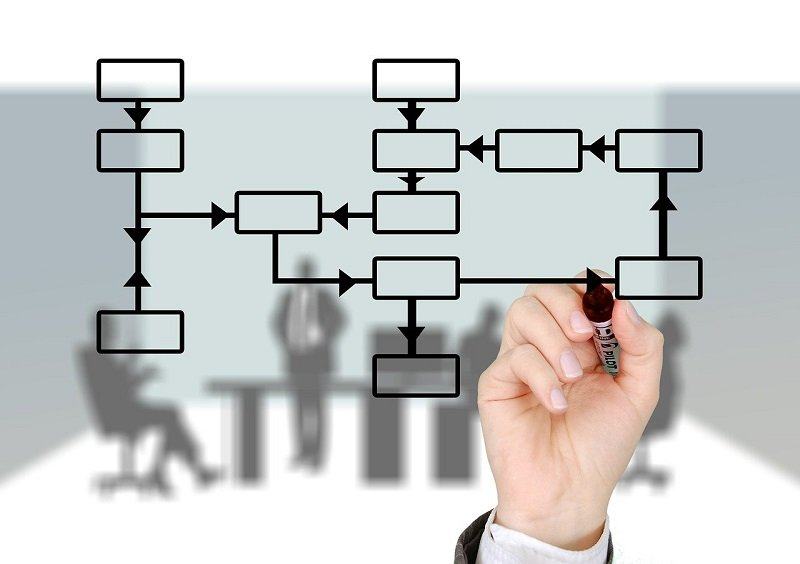
When a company's business area is not organised, in addition to the lack of communication, the lack of visibility of commercial processes is one of the main losses.
If this is the case with your company, it can be a major indicator of the need for investment in a Sales CRM.
So, evaluate:
- in your company are business lost for lack of information?
- don't you have access to the data about which customers have been approached or what they bought?
- Do customers question topics that cannot be answered for lack of knowledge about what happens in the company?
If “yes” is the answer to one of these questions, then this may be an indicator that you really need a sales CRM.
Evaluate the complexity of your business
Of course, the more positive results the greater the tendency for the company to grow and every day more people are involved in the processes. Consequently, this also makes them become more complex.
In addition, if you are acting in the B2B market, you will of course deal with more complexities than if you were acting in the B2C model. After all, in B2B sales the sales cycles are larger and involve many commercial, financial and even legal details.
Therefore, it is important to evaluate which market you are inserted in, what your business growth is expected and understand whether your company or team is prepared to deal with these changes.
After that you will know if there is a need for this investment for the progress of your business.
Evaluate your relationship with your customers
Finally, it is important to understand how your relationship with customers is throughout the purchase journey, i.e. from the first contact with your company to the moment of after-sales, where it should be trusted.
That's because, the relationship with customers, as we talked about throughout the content, is fundamental for a company. After all, customers are always willing to spend more on companies that offer excellent service.
In addition, companies that make good relationship management with their customers ensure success not only in sales but in all sectors. Trusted customers generate fewer complaints, are more willing to cooperate and still generate indications from new clients.
So it is so important to understand how your relationship with customers is, whether it can be improved, then decide whether or not to invest in a sales CRM.
How to use site and social media data to boost your CRM
A complementary strategy to CRM integration with websites is to cross-reference visitor behavior data on the site with social media interactions, such as Instagram. This combination allows you to refine the customisation of campaigns and better understand your audience's interests and habits, something especially useful for digital businesses that seek to expand their online presence.
In addition, the integrated analysis of these sources allows identifying patterns that would be invisible when channels are analyzed separately. For example, if a visitor repeatedly accesses a specific page of your site and also interacts with similar publications on Instagram, this behavior signals a strong interest in that topic. With this intelligence, you can create highly targeted content and offers, raising the potential for conversion and public engagement.
Another benefit is the possibility of automating marketing actions based on these cross-data. Modern CRM tools allow you to create automatic streams that trigger custom messages when certain behaviors are detected, such as likes in strategic posts or visits to specific landing pages. This makes the lead journey more fluid, strengthens the authority of its brand and increases the effectiveness of its campaigns, without seeming invasive or generic.
Step by step to integrate a CRM into your website
Now that you understand the importance, check out the simple step by step to accomplish this integration:
- Choose the CRM that best meets your needs, considering easy integration and technical support.
- Correctly configure the integrations offered by the CRM platform directly with your website, usually through plugins or APIs.
- Train your team to use CRM correctly, ensuring that all information is used to the fullest extent.
- Set automation streams based on user behavior, such as basket dropout, page-specific viewing and form filling.
- Constantly follow CRM-generated reports to improve your strategies and campaigns continuously.
Don't forget to test every step of the integration to ensure that everything is working as expected. Performing practical tests, such as simulating a navigation on the site and checking if the data is being correctly captured by CRM, is essential to identify possible failures and make adjustments before climbing the operation. This initial care avoids future rework and ensures that communication with customers will be accurate and efficient from the outset.
Main CRM tools to integrate with your website
There are several options in the market. Among the main ones are:
- CRM Agent: Brazilian platform focused on B2B sales, with customizable funnels, automations, open API and agile support. Ideal for teams that need a practical CRM, cost-effective and easy integration with the site and WhatsApp.
- HubSpot CRM: Easy to use and ideal for small and medium-sized enterprises. It offers practical and detailed automations.
- Salesforce: Robust solution for large companies, highly customizable, with various integration options.
- RD Station: Brazilian platform, perfect for those seeking simplicity and efficiency in digital strategies.
Choose the one that best suits your business needs and the specificities of your audience.
In addition, it is important to consider the support offered by each platform and the possibility of growth along with your business. A CRM that allows upgrades, future integrations and customizations as your company evolves ensures more longevity and efficiency to the operation. Also evaluate compatibility with other tools that you already use, such as email marketing, automation or ERP systems, to ensure fluid and strategic integration.
Conclusion
Now that you already have a lot of information about a sales CRM at your disposal, it is time to assess what the best decision is to follow and generate good results.
What you need to know is that investing in a solution like this will not solve all your company's problems. This is because it will be necessary to empower teams to use and ensure that all potential is harnessed.
But, as we have seen in the reading of this article, the use of a CRM platform is directly related to the management of the relationship that companies have with their customers and this generates greater consistency in processes, making many improvements made in commercial operations.
Now the decision is in your hands, sincerely evaluate how the relationship with customers is in your business, review the organization and level of complexity of the negotiations conducted. And if you identify the need, bet without fear on that solution!
Do you want to integrate CRM into your website form and follow each lead from the first click for sale?
FREQUENTLY ASKED QUESTIONS
What's a sales CRM?
A sales CRM is a platform that centralizes and organizes customer and lead information, helping companies to better manage their relationship with their customers throughout the entire purchase journey.
What are the main benefits of using a sales CRM?
The benefits include time optimisation, increased security in the commercial area, improved internal communication, and the ability to provide more personalised and effective service.
How does sales CRM improve the company's internal communication?
CRM centralizes all the information and working tools in a single platform, facilitating team engagement and synergy between different departments, such as marketing and sales.
How do I know if my company needs a sales CRM?
Evaluate the organization of the business area, the complexity of your sales processes, and the current status of your relationship with customers. If you identify flaws in these aspects, it may be an indication that your company would benefit from a sales CRM.

João Vicente Farias Santos is co-founder of WebSyd and operates in the areas of technology, web development, sales, automation and digital strategies. Throughout its trajectory, it has worked on the creation and optimisation of processes that help companies strengthen their digital presence and transform technology into business results. At WebSyd, it closely monitors the evolution of technologies for website creation, process automation, lead generation and digital tools. In its content, it shares experiences and knowledge about website development, SEO, technology, sales and digital transformation.
View all posts

 Estimate the cost

