
Low Conversion Rate on the Site? 6 Quick Tips to Increase Leads
Summary (TL;DR)
In this blogpost, we will talk about how to improve the conversion rate of your site and turn visitors into customers. Problems like confusing design, little visible CTAs and slow loading can directly impact the results.
With strategies such as user experience optimisation, site speed improvements and A/B tests, conversions can be significantly increased.
Constantly monitoring metrics and adjusting strategies according to public behavior is essential for sustainable growth.
Small changes, such as simpler forms and attractive incentives, can make a big difference by helping capture more leads and boost sales.
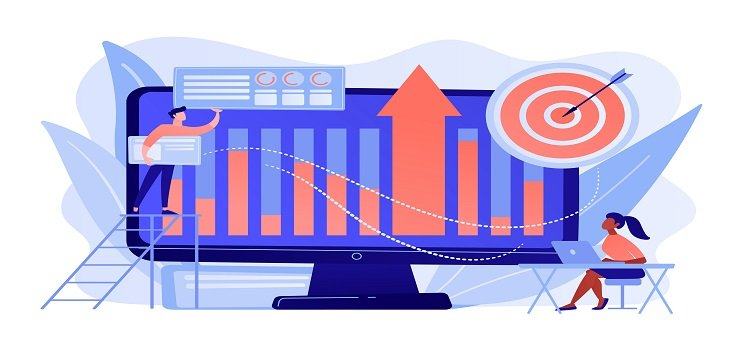
Quick answer: low conversion rate usually has five causes: wrong public traffic, unclear offer, slow mobile site, long forms and lack of proof of trust. Start by measuring where people give up on Google Analytics, correct one cause at a time and confirm with A/B test.
The low conversion rate is one of the biggest challenges for those who want to turn visitors into customers. According to 2024 Lead Generation Panorama, the average conversion of Brazilian websites was 3.15%. However, sites with better performance reached 7.51%, showing that it is possible to go much further with the right strategies.
The conversion rate measures how many people who visit your site perform important actions, such as purchases, registrations or contact requests. If your conversion rate is below average, it is a sign that even attracting visitors, your site may not be able to engage them enough to generate leads.
This can directly affect sales and business performance, leaving important opportunities along the way. The good news? There are practical solutions that can change this scenario.
Let's show how some strategic improvements can help you optimise results and raise your conversion rate. With small changes in design, in the CTAs (Call to Actions) and in the overall performance of the site, you can turn visits into real actions. Check out the tips we've prepared to identify the problems and start solving them right now!
Why is your conversion rate low?
The conversion rate is an essential indicator to evaluate the efficiency of your site in transforming visitors into customers or leads. It is calculated by dividing the number of actions performed by the total number of visitors.
For example, if 1,000 people visit your site and 30 perform an action, your conversion rate will be 3%. This number not only measures the success of the site, but also indicates the growth potential for the business.
When the conversion rate is low, several factors may be contributing to this. A confusing or unattractive design can drive visitors away, while the absence of clear CTAs makes it difficult for users to advise them to perform specific actions.
In addition, the slow loading time is one of the biggest enemies of conversion, since many users give up a site that takes time to load. Other causes include the lack of adaptation for mobile devices, unpersuasive content and complicated checkout processes.
Identify these problems on the site It's the first step to improve user experience and, consequently, increase leads on the site. The more optimised the site is, the greater the chances of turning visitors into loyal customers.
6 Quick Tips to Increase Leads on Your Website
Increasing lead generation doesn't have to be a mystery. With some layout tips to improve conversion, you can turn visitors into customers in a practical and efficient way.
♪ Be for ♪ Leads for e-commerce or services, these strategies apply to several site types. . Let's check out quick actions that can bring concrete results and help convert more visitors into leads:
1. Optimize User Design and Experience (UX)
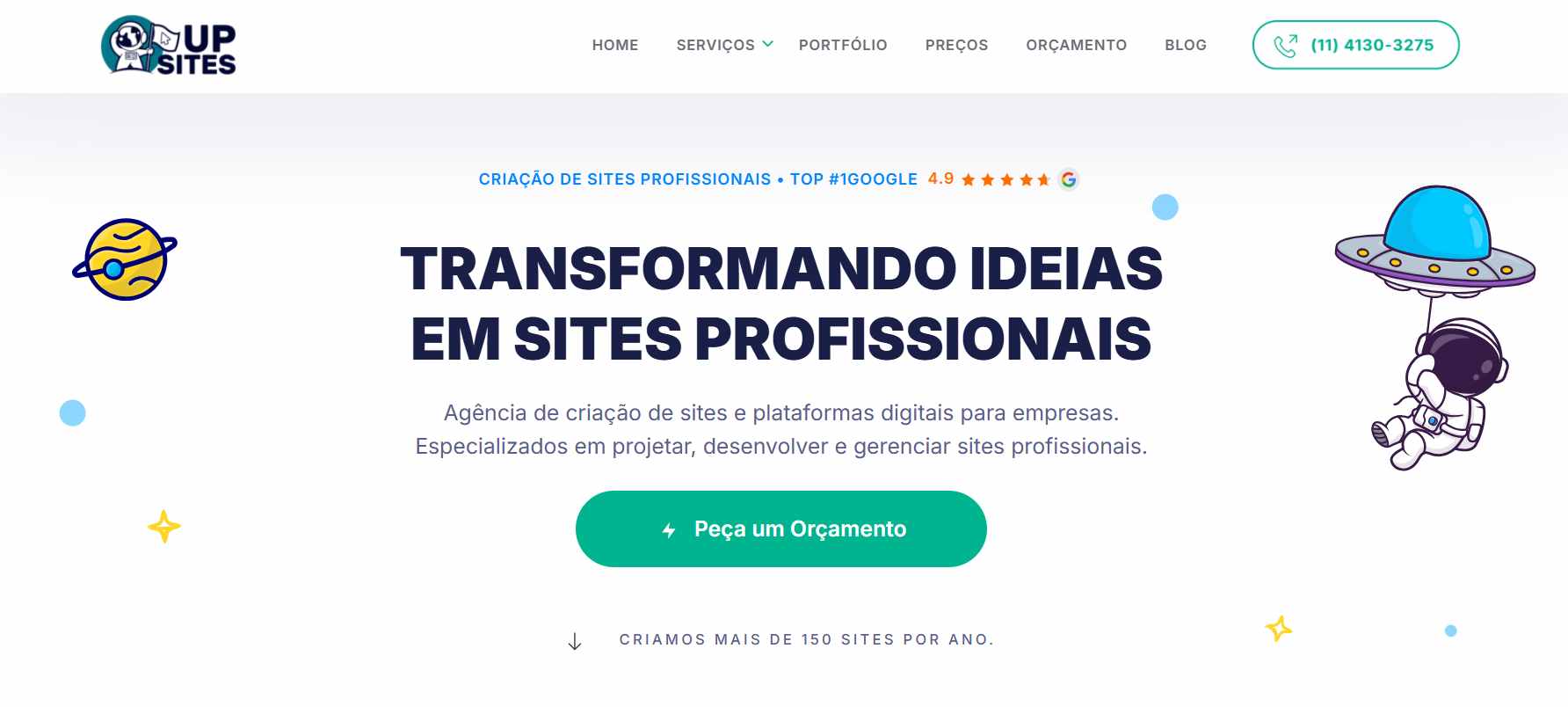
One intuitive design And a good one. user experience (UX) are essential to guide visitors through your website. Ensure that the navigation be clear, with well-structured menus and organized pages. The goal is facilitate user path to the conversion point, whether it is a purchase or a completed form.
Eliminate visual distractions such as excessive pop-ups or irrelevant information. One layout clean, focusing on the desired actions, increases the chance of engagement. . One example is our website, which uses a functional design to guide the user to the end of the purchase, keeping the experience simple and efficient.
Check it out.
2. Improve Site Loading Speed
One slow site can be the biggest villain of conversion. . Studies show that pages that take more than 3 seconds to load have very high rejection rates. This directly affects online conversions.
Tools like Google Pagespeed Insights and GTmetrix help identify performance bottlenecks and offer practical solutions. Compact images, reduce unnecessary scripts and use one quality accommodation are key steps to improve loading time.
3. Create Attractive and Visible Calls for Action
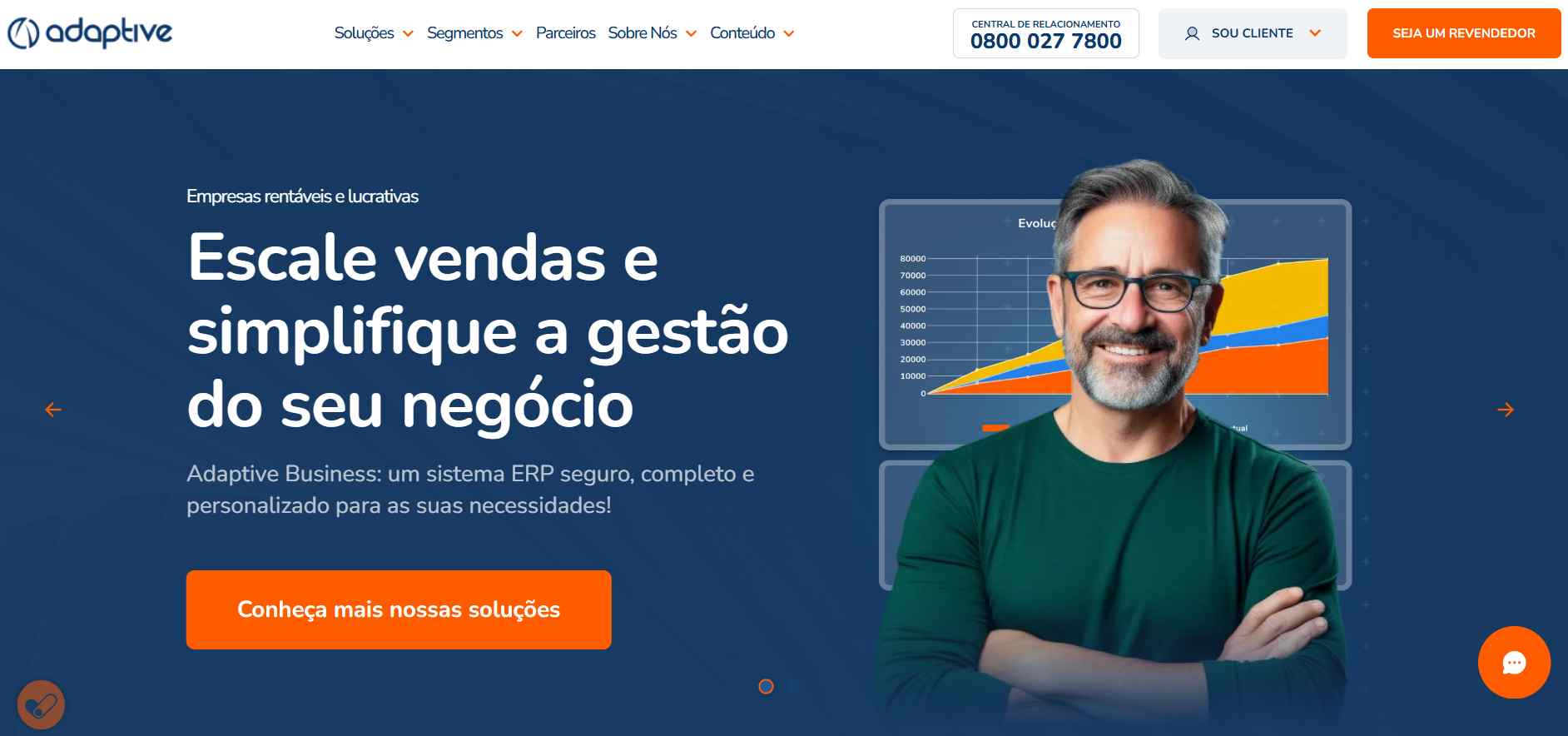
CTAs are the compass that guides the visitor on what to do on the site. . Strategically place them in visible locations, such as at the top of the page, between text blocks or at the end of a post.
Examples of CTAs that convert have phrases like “Download Now”, “Try free for 7 days” or “Check out our offers”. . Use contrasting colors and readable fonts to highlight the buttons and encourage clear actions.
Look at this example of Adaptive, a site created by WebSyd:
4. Use Simple and Objective Forms
Long forms can drive users away. Reduce required fields to request only the essential information, such as name and email. The easier the filling, the greater the chance of conversion.
Invest in the form design as well. Use appropriate spacings, clear titles and error validation messages. An example is the Netflix registration form, which focuses only on email as an initial field, simplifying the process.

5. Offer Incentives to Users
Incentives are great tools to attract leads. Example: Offer an exclusive discount for your first purchase, a free e-book or a 14-day free trial. These. digital baits they work as a trigger to convince the user to act.
Make sure to align the incentive with yours target audience. . A technology site can offer a whitepaper about industry trends, while an e-commerce fashion can create custom discount coupons.
6. Invest in Testing A/B
The A/B tests are essential for find out what works best on your website. . Test different versions of CTAs, landing pages, images and even buttons colors to evaluate which has better performance.
Analyze the results using tools such as Optimizely and implement changes based on the collected data. A practical example: change the text of a button “Find out more” for “Buy now” It can directly impact conversions.
Bonus: Useful Tools to Improve Conversion
If you want to turn your strategies into real results, some tools can be true allies. They help identify improvement points and optimise the performance of your website to generate more leads.
Check out below some indispensable suggestions for those seeking to increase the conversion rate:
Google Analytics
The Google Analytics is essential to understand the behavior of visitors on your site. It allows identify bottlenecks in the conversion funnel, like pages with high rejection rates or forms that are not being filled out. With detailed tool data, you can adjust your strategy to ensure more fluid and efficient navigation.
Hotjar
With the Hotjar, you can view exactly how users interact with your website. Tools like Heat Maps (heatmaps) show the clicks and movements of the cursor, while session recordings reveal how visitors travel their pages. This information helps to understand which elements are working and what needs to be improved.
Optimization Plugins for WordPress
If your site is in WordPress, plugins like OptinMonster and Thrive Leads are excellent for creating custom pop-ups, forms and CTAs. They offer advanced features such as A/B testing and public targeting, helping to efficiently capture leads and increase conversions.
Final Considerations: Low Conversion Rate on the Site
In this guide, we know from the importance of optimizing site design and speed to creating attractive CTAs and using incentives to increase conversions. In addition, we highlight practical tools that can help to better understand the behavior of users and improve lead generation strategies.
It's important to remember that the conversion rate is not a static number. . It is essential to constantly monitor the results and make regular adjustments to keep up with changes in public behavior and market trends. Strategies that work today may need improvements tomorrow.
Do you want to turn visitors into customers and achieve better results? Talk to the WebSyd and find out how we can help optimise the performance of your website!
FREQUENTLY ASKED QUESTIONS
What is the ideal conversion rate?
The optimal conversion rate may vary according to the market segment and type of site. On average, Brazilian websites have a conversion rate of 3,15%, but those with high performance can reach 7,51% or more. The ideal is to analyze your competitors and always seek to optimise your site to improve results.
How to improve the conversion rate?
To improve the conversion rate, it is essential to optimise the user experience (UX), create attractive CTAs (Call-to-Actions), improve site loading speed and simplify forms. In addition, A/B tests help identify what works best for your audience and increase the chances of conversion.
How to make a high conversion site?
A high-conversion site should be intuitive, responsive and fast. Invest in a clean design, easy navigation and strategic buttons that direct the user to desired actions. In addition, having persuasive content and providing incentives such as discount coupons or free materials can significantly increase your conversions.
What's more important: traffic or conversion?
Both are essential, but without a good conversion rate, traffic alone does not guarantee results. You'd better have less highly qualified visitors that actually become customers than a high volume of accesses without conversion. The ideal is to balance traffic and conversion strategies to maximize site results.

Caio Nogueira is a SEO, GEO, link building and Digital PR expert and co-founder of WebSyd, website creation agency and SEO consulting founded in 2016. It acts with organic search strategies, digital authority construction and brand optimisation for search engines and artificial intelligence platforms. Throughout his trajectory, he participated in more than 1000 projects involving SEO, website development, content marketing and authority acquisition through backlinks and Digital PR. At WebSyd, it participates in the planning of strategies to increase organic visibility, lead generation and presence of companies on Google and AI-based search engines. As an author, it publishes content on SEO, GEO, website creation, link building and digital authority, sharing analyses, strategies and practical experiences related to organic growth of companies. Its contents and contributions have also been published in companies and vehicles of technology and marketing such as Wix, HostGator, Duda, Neil Patel, Locaweb and E-Commerce Brasil.
View all posts


 Estimate the cost

