
Digital portfolio: what it is and how to do
Summary (TL;DR)
One digital portfolio is an online site or page that brings together projects, jobs and professional achievements to present skills and results clearly. It works as a digital showcase, helping professionals and companies to strengthen their authority, increase visibility on the internet and attract new customers or work opportunities. In this guide you learn what digital portfolio is, what its benefits are and how to create a professional portfolio with good design, content and SEO practices.

One digital portfolio is an online site or platform that gathers your work, projects and achievements to clearly present your skills and experiences. It works as a virtual showcase that facilitates the evaluation of your talent by recruiters, customers or business partners.
Having a well-structured portfolio is essential to gain visibility, strengthen authority and stand out in an increasingly competitive market. So we've prepared a complete content to teach you how to create your own and understand the importance of having one. Check out practical tips to differentiate from competition.
What is a digital portfolio and what is its importance?
One digital portfolio is usually developed on a website, with one or some pages, which gathers professional information, examples of projects and achieved results. It is important because it facilitates the presentation of your work in an organized way, transmitting trust and credibility to those who seek your services.
This is the WebSyd portfolio page, for example, where we highlight our main projects and the characteristics of the services we offer:
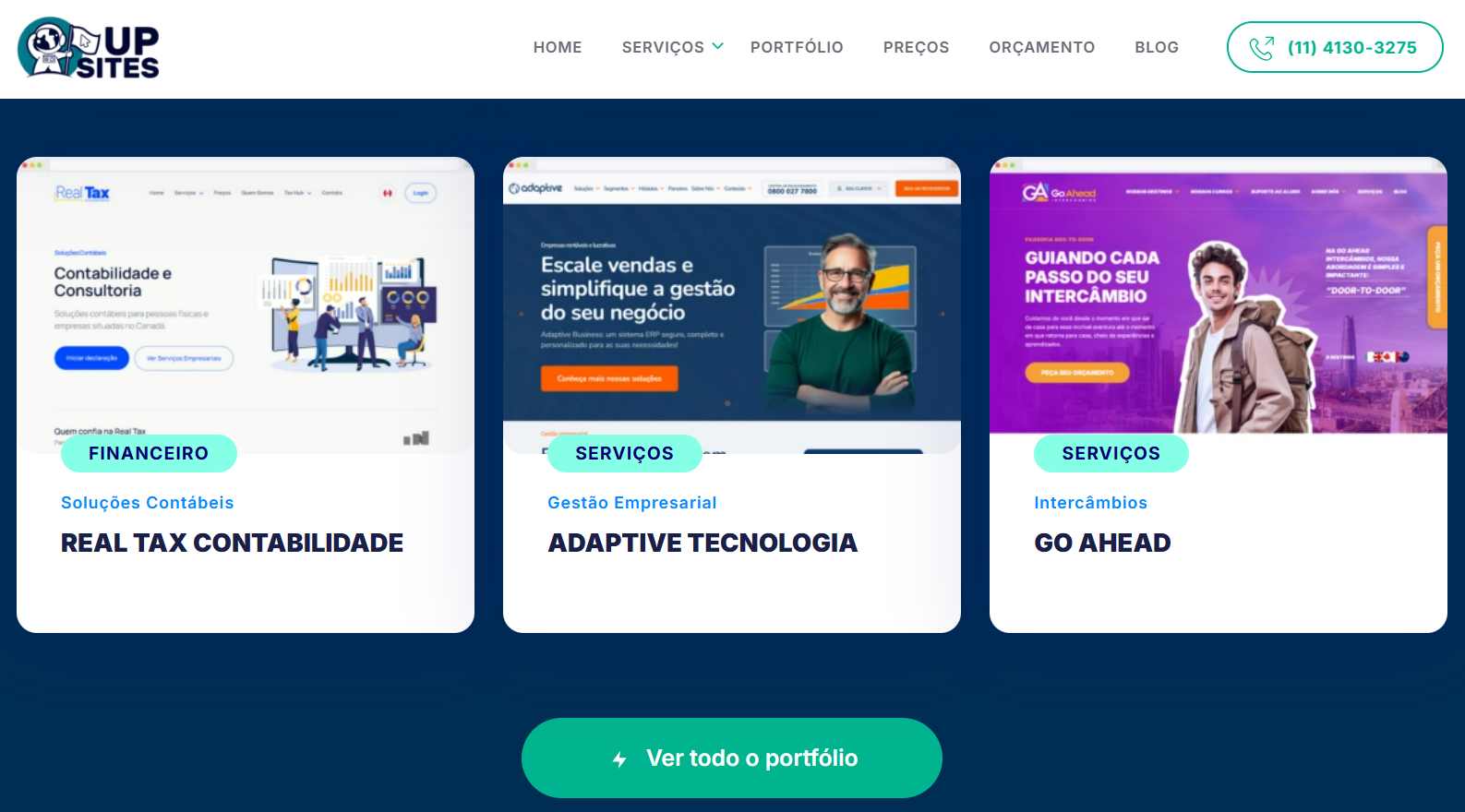
The main purposes of a digital portfolio are:
- present projects and work carried out;
- valuing technical and creative skills;
- strengthen professional credibility;
- attract potential customers and employers;
- highlighting differentials in the face of competition;
- centralise relevant information in one place;
- facilitating contacts and partnership opportunities;
- demonstrate practical experience in a visual way;
- Enlarge online presence and authority;
- support personal or business marketing strategies.
What is a professional portfolio and what does it need to have?
Professional portfolio and digital portfolio are often used as synonyms. The professional portfolio is the set of works that proves what you know how to do, and it can be in PDF, on a platform like Behance or on a website of your own. When it gets online, it becomes a digital portfolio.
In any format, some elements may not be missing:
- short presentation: who you are, what you do and for whom;
- selection of the best works, prioritizing the type of project you want to attract;
- context of each project: the challenge, what you did and the result, with numbers when the client authorizes;
- social evidence, such as statements and marks served;
- visible contact, with email, LinkedIn, WhatsApp or form;
- visual organized and consistent with your area.
The context is the most forgotten item. Whoever evaluates the portfolio better understands his work when he knows which problem he has solved.
What are the benefits of the digital portfolio?
The digital portfolio offers strategic advantages for those who wish to stand out in the online environment and gain new opportunities more effectively. Among the main benefits are:
- Enlarged visibility: increases its presence on the internet and facilitates being found;
- Professional authority: reinforces your image as an expert in the area;
- Accessibility: can be accessed at any time, from anywhere;
- Practicality: concentrates projects and contacts in a single space;
- Differentiation: shows its strengths in relation to competition;
- Generation of opportunities: attracts customers, partnerships and interviews;
- Marketing support: strengthens digital campaigns and their personal brand.
How to make a digital portfolio?
Creating a digital impact portfolio requires planning and strategy. To help, we prepared a step by step complete which shows from the choice of platform to SEO techniques to enhance your online presence. Check it out:
1. Choose the right platform
The choice of the platform is one of the most important points when creating your digital portfolio. You can hire one developer for a website fully customised or opt for intuitive tools that allow you to create professional pages without needing advanced technical knowledge. Here are some of the main options:
- WordPress: flexible, with numerous themes and plugins for customisation;
- Wix: simple and practical interface, ideal for beginners;
- Squarespace: modern design, with models ready for creative portfolios;
- Shopify: indicated for portfolios focusing on products and online sales;
- Behance: free platform aimed at designers and creative;
- Adobe Portfolio: integrated to Adobe package, widely used by photographers;
- Dribble: reference for design and illustration professionals.
2. Create good content
A digital portfolio needs to present its value proposal clearly, in addition to displaying the projects. A good content conveys professionalism, connects with the public and helps to sell your services or products. Check out some tips to better structure your pages:
- Personal history: Tell us who you are and your professional career;
- Clear mission: explain its objectives and differentials in the market;
- Selected projects: choose the best works to highlight;
- Objective descriptions: presents each project in a short and impactful way;
- Quality pictures: use photos and videos in high resolution;
- Call to action (CTA): encourage contacts and budget requests;
- Social evidence: add testimonials from customers and partners;
- Successful cases: highlighting results achieved in projects;
- Integrated blog: publish articles and show authority in the matter;
- Easy contacts: make emails, forms and social networks available.
3. Use SEO techniques
SEO (Search Engine Optimization) optimisation for search engines. . It is a set of techniques that helps your portfolio to be found in Google and other searchers, increasing visibility and the chances of attracting qualified customers. See some secrets to optimise your website:
- Strategic keyword: include terms that your public searches (example: photography service / photographer in São Paulo);
- Optimized titles: use keywords in H1 and H2;
- Meta description: write attractive summaries for each page;
- Friendly URLs: create short and easy to understand links (example: portfoliodefotografia.com.br);
- Optimized images: add alt text with relevant terms;
- Site speed: ensure fast loading;
- Responsive Design: adapt the portfolio to desktop and mobile;
- Internal links: connect different pages of the site;
- External links: cite reliable sources and partners;
- Constant analysis: use tools like Google Analytics and Search Console.
4. Think of a design
The design of your digital portfolio goes beyond aesthetics: it is the way you deliver to the user exactly what it seeks, with clarity, functionality and quality. One design well thought guides navigation, highlights his work and strengthens the perception of professionalism.
In a study of Northumbria University with health websites (Sillence et al., CHI 2004), 94% of the comments on rejected or unreliable websites dealt with design. . That is, the look weighs heavily on the first impression. Now check out the main elements of a successful design:
Logo and brand
The logo is the visual symbol that represents your professional identity. It synthesizes your brand into an image, and must be consistent in colors, shapes, and style with the rest of the portfolio. The brand includes the logo + visual personality + values, creating a unified set that reinforces who you are.
Images and videos
They are visual resources that humanize your portfolio and illustrate its results in a direct and engaging way. High-quality images and well produced videos help visitors understand their projects with more depth and credibility.
Buttons and interactions
Buttons are the action points on your site (such as “contract”, “see portfolio”, “get in touch”). The microinteractions, subtle effects such as animations, hover, transitions, enrich the experience and make navigation more intuitive, engaging and fluid.
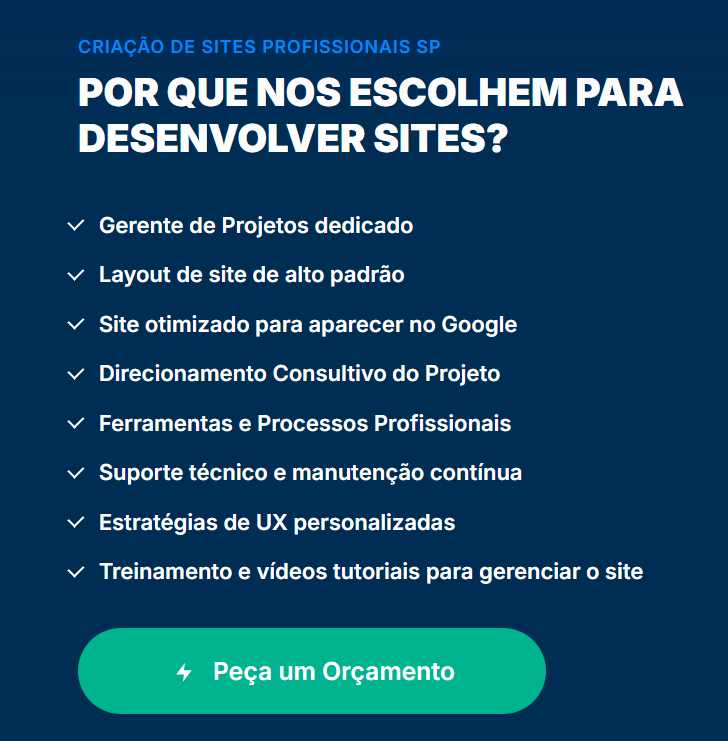
Look at this example of our portfolio page:
Colours and fonts
Colors communicate emotions and reinforce their visual identity, while sources define the legibility and textual style. . It is important to choose a harmonious palette and consistent typographies that favor reading and strengthen your brand.
Titles and contents
Titles are visual guides that guide the reader and facilitate the scanability of pages. The content, text, descriptions and explanations need to be clear, objective, show authority and direct to what really matters (projects, results and CTA).
To view these elements on a real site, see MFIT, management platform for personal trainers. The site was made by WebSyd.

5. Enter social proof
Social proof is the external confirmation that your work generates reliable results. It is important because it strengthens credibility, breaks objections and brings the visitor closer to the hiring decision. Social proofs can come in various formats, know some ideas below:
Comments on social networks
Spontaneous or customer-marked publications on social networks show real interactions. They generate identification and validate their work in the environment where many customers are already present.
Testimonials
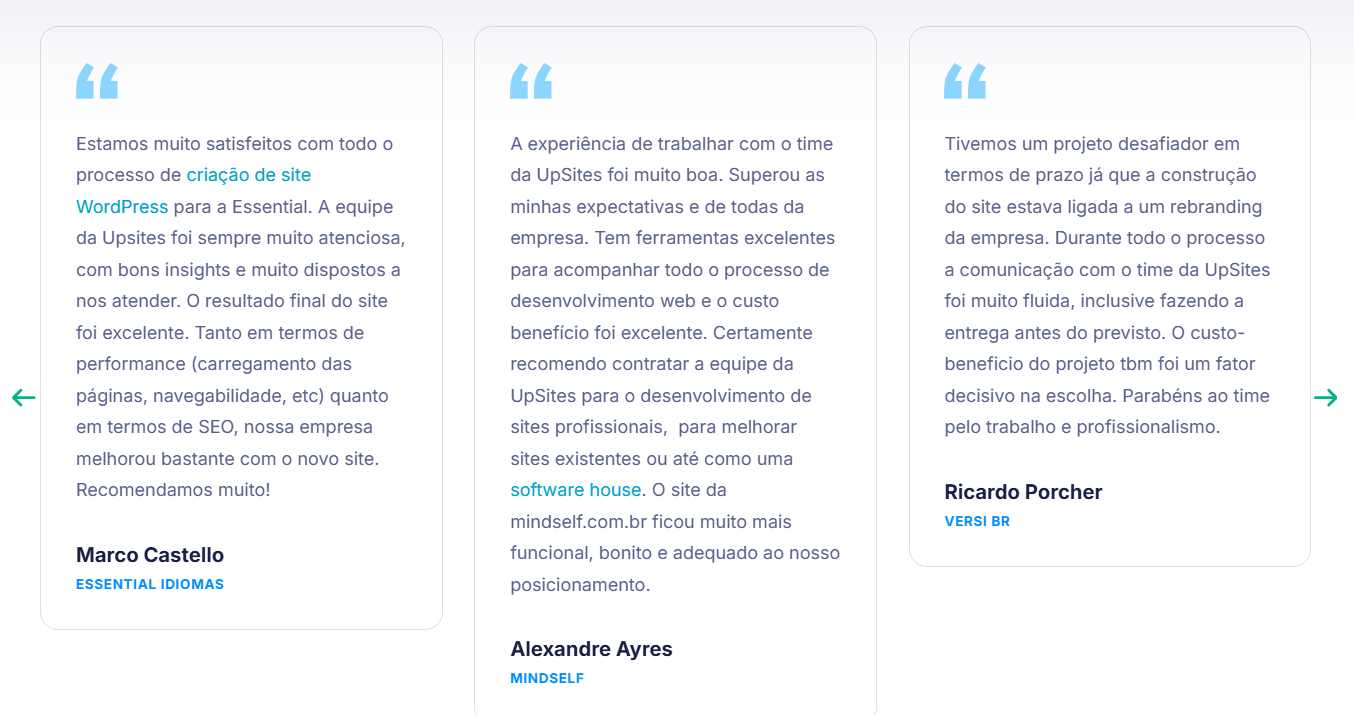
Direct accounts of satisfied customers (“name + position + sentence”) have emotional weight and connect those who visit their portfolio with real success stories. Look at the depositions on our page:
Trade marks or undertakings
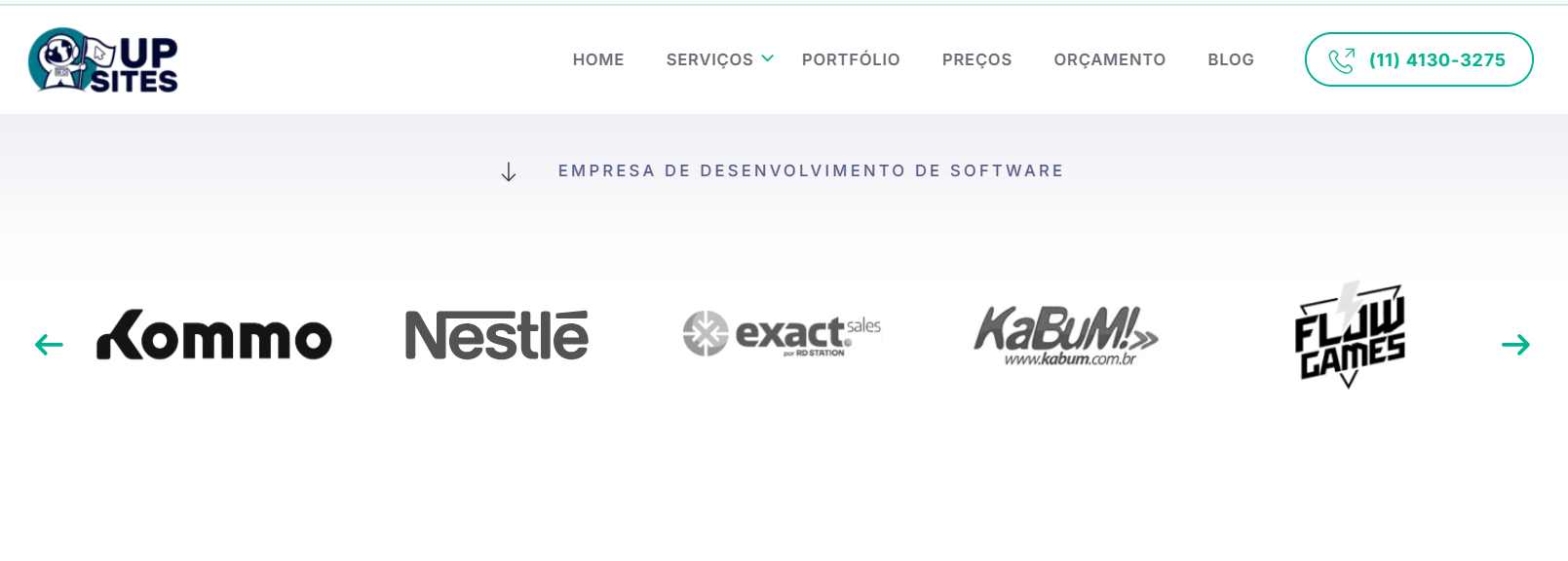
Displaying corporate logos (known) with which you have already worked passes authority. When possible, associate with the project made for them. This example below is from our software developmentLook at that cool idea for your portfolio:
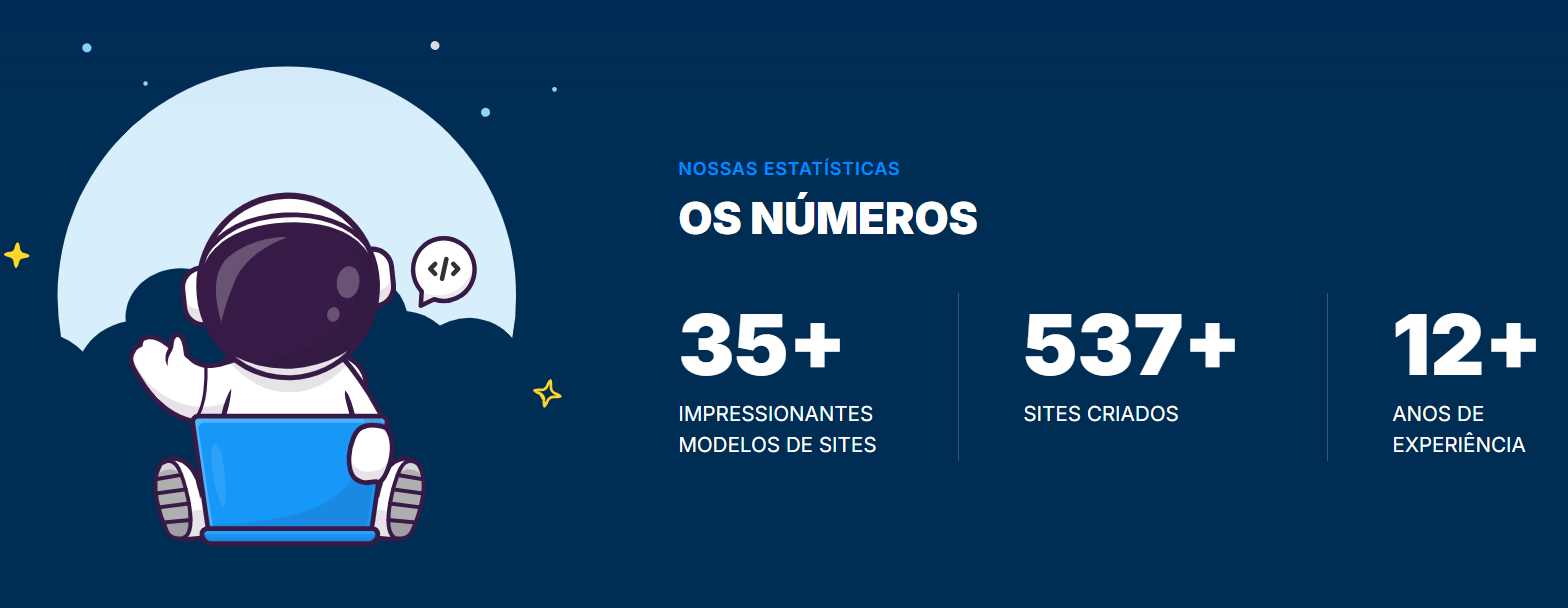
Interactive numbers
Elements such as animated project counters delivered, service provided or sales made make the results visually concrete and memorable. Look at this interesting idea we have here on the site:
6. Keep it simple and straight
“Less is more” applies fully to digital portfolios: prioritise what matters for your audience and delivered clearly, without visual or textual excesses.
Avoid doing:
- excess of entertainments that distract;
- very long texts without breaks;
- irrelevant illustrations or images;
- unnecessary or redundant links;
- conflicting colors that make reading difficult;
- illegible or divergent typography;
- confused forms of navigation;
- content that does not lead to clear action.
Who's never worked can make a portfolio?
Yes, even those who have never worked in the area can create a digital portfolio. In this case, the goal is to assemble a demonstrative skills and knowledge already acquired. . It is possible to include academic works, research, voluntary projects and even materials created on their own initiative to show their potential. Check out these tips:
Place academic work or research
Projects carried out during college, articles, monographs or applied research can be included in a portfolio. They prove their ability to study, analyze and apply knowledge in the area, besides showing dedication and professional interest.
Show your volunteer work
Voluntary activities carried out within its area of activity are excellent examples to compose a portfolio. They demonstrate commitment, real practice and willingness to apply their skills in real situations, even without remuneration.
Create content to display
Even if you have not yet done customer projects, you can create your own content such as articles, graphic pieces, example websites, photographs or videos, and add them to the portfolio. This is a practical way to show future contractors how you work and what the quality of your delivery is.

What are the main portfolio categories?
There are different types of digital portfolio, and each meets a specific goal. Knowing the main categories helps to choose the format most suitable for your profile, whether you are a student, an autonomous professional, a creator or even a company.
Academic portfolio
The academic portfolio brings together works, articles, monographs, research projects and presentations made during the training. It is important for students and researchers who wish to show evolution, organization and depth of knowledge in the field of study.
Editor portfolio
This model presents published texts, articles for blogs, advertising materials and other written contents. A good editor portfolio should include links, PDFs or screenshots that prove authorship, as well as highlighting the diversity of formats and niches worked.
Photo portfolio
A portfolio of photography brings together copyright, essays and visual projects. It should focus on quality, variety of styles and organization by categories (portraits, events, products). It can also include technical details, such as used equipment and applied techniques.
Product portfolio
This type of portfolio shows physical or digital items developed by a person or company. It is essential to include professional photos, objective descriptions, differentials and, where possible, cases of use. It may also contain feedback from customers who have used the products.
Portfolio for companies
Focused on business from different sectors, this portfolio presents projects, customers served, results achieved and competitive differentials. It is important to include case studies, testimonials, impact numbers and show the company's authority in the market.
How do you disclose your digital portfolio?
Creating a portfolio is just the first step, to attract opportunities, you need to spread it strategically. Follow a practical guide to promote your work and reach more customers or employers:
- Share on social networks: post portfolio links in professional profiles;
- Use LinkedIn: highlights its projects and achievements in the experience section;
- Add to resume: insert the portfolio link into resumes and proposals;
- Participate in communities: be present in forums and groups within your area;
- Post on Behance or Dribble: take advantage of platforms aimed at creatives;
- Invest in SEO: optimise your portfolio to appear on Google;
- Send in commercial offers: show your cases when looking for customers;
- Use email marketing: share news and new projects with contacts;
- Explore paid ads: disclose specific campaigns on Google or social networks;
- Always update: keep the portfolio alive with new jobs and achievements.
Is it worth having a portfolio on your own website?
For those who are starting, Behance, Dribble or Adobe Portfolio solve well. A site itself is worth it when you want domain with your name, control over design, appear on Google for your service and receive direct budget requests.
If you want a tailor-made portfolio site, ask for a budget WebSyd.
Do you want a professional website for your company or your self-employed work? Click the button below and ask for a quote.

FREQUENTLY ASKED QUESTIONS
What is a digital portfolio?
A digital portfolio is an online collection of works and achievements of an individual or company. It presents in an organized and accessible way various materials such as documents, projects, photographs, videos and links, demonstrating skills, experiences and competencies. It works as a digital showcase for professional talents and achievements.
How to build a digital portfolio?
To build a digital portfolio, start by selecting your best works that represent your skills and experience. Create a clear structure by dividing the content into relevant categories. Use a suitable online platform, such as portfolio sites, professional social networks or blogs. Include a brief biography, contact details and statements if possible. Make sure the design is clean, professional and reflect your personal style.
What is the importance of a digital portfolio for a professional?
A digital portfolio is important for professionals because it serves as a tangible proof of their skills and experiences. It allows potential employers, clients or employees to see the work done, evaluate the quality and style of the professional. A digital portfolio increases online visibility, facilitates networking and helps build a strong personal or professional brand on the internet.
Does the digital portfolio need to be paid?
Not necessarily. There are free platforms, such as Behance and Dribble, that allow you to create simple and affordable portfolios. However, investing in a site itself ensures more personalization, professional domain and greater credibility to attract customers and employers.
What's the difference between digital portfolio and curriculum?
The curriculum presents summarized information on training and experiences, while the digital portfolio shows practical examples of its work. The two complement each other: the curriculum gives context and the portfolio proves their skills with visual results and objectives.
How much time should I update my portfolio?
The ideal is to update whenever you complete a relevant project or acquire new professional achievements. Thus, the portfolio remains alive, current and competitive, reflecting its constant development in the market.
Can a digital portfolio have only one page?
Yeah. Many professionals opt for single-page portfolios, especially for campaigns or quick work presentation. The important thing is that the page be organized, clear and show the most relevant projects objectively.
Do I have to have a lot of jobs to build my portfolio?
Nope. Even with few jobs, it is possible to create an impacting portfolio. The key is to choose projects that show variety, quality and creativity rather than quantity. If necessary, create copyright content to complement.
Do companies also need digital portfolio?
Yeah. Companies can use the digital portfolio to present successful cases, attended customers, results and differentials. This transmits authority, strengthens credibility and facilitates the conquest of new businesses in the market.

Caio Nogueira is a SEO, GEO, link building and Digital PR expert and co-founder of WebSyd, website creation agency and SEO consulting founded in 2016. It acts with organic search strategies, digital authority construction and brand optimisation for search engines and artificial intelligence platforms. Throughout his trajectory, he participated in more than 1000 projects involving SEO, website development, content marketing and authority acquisition through backlinks and Digital PR. At WebSyd, it participates in the planning of strategies to increase organic visibility, lead generation and presence of companies on Google and AI-based search engines. As an author, it publishes content on SEO, GEO, website creation, link building and digital authority, sharing analyses, strategies and practical experiences related to organic growth of companies. Its contents and contributions have also been published in companies and vehicles of technology and marketing such as Wix, HostGator, Duda, Neil Patel, Locaweb and E-Commerce Brasil.
View all posts


 Estimate the cost

