
How long does the development of a professional website take?
Summary (TL;DR)
The development time of a professional site may vary depending on the type of site, complexity, content, design and technology used. Simple sites are faster, while custom designs require more steps and planning. On WebSyd, the Express Website is ready in up to 5 business days, and custom-made sites take an average of 60 run days (about 45 business days).
WebSyd offers from agile solutions, such as ready-made models and express site, which allow you to put a professional website on the air in a few days, to more complex models made totally from scratch. Check out all the details and find out which option makes the most sense for your project.
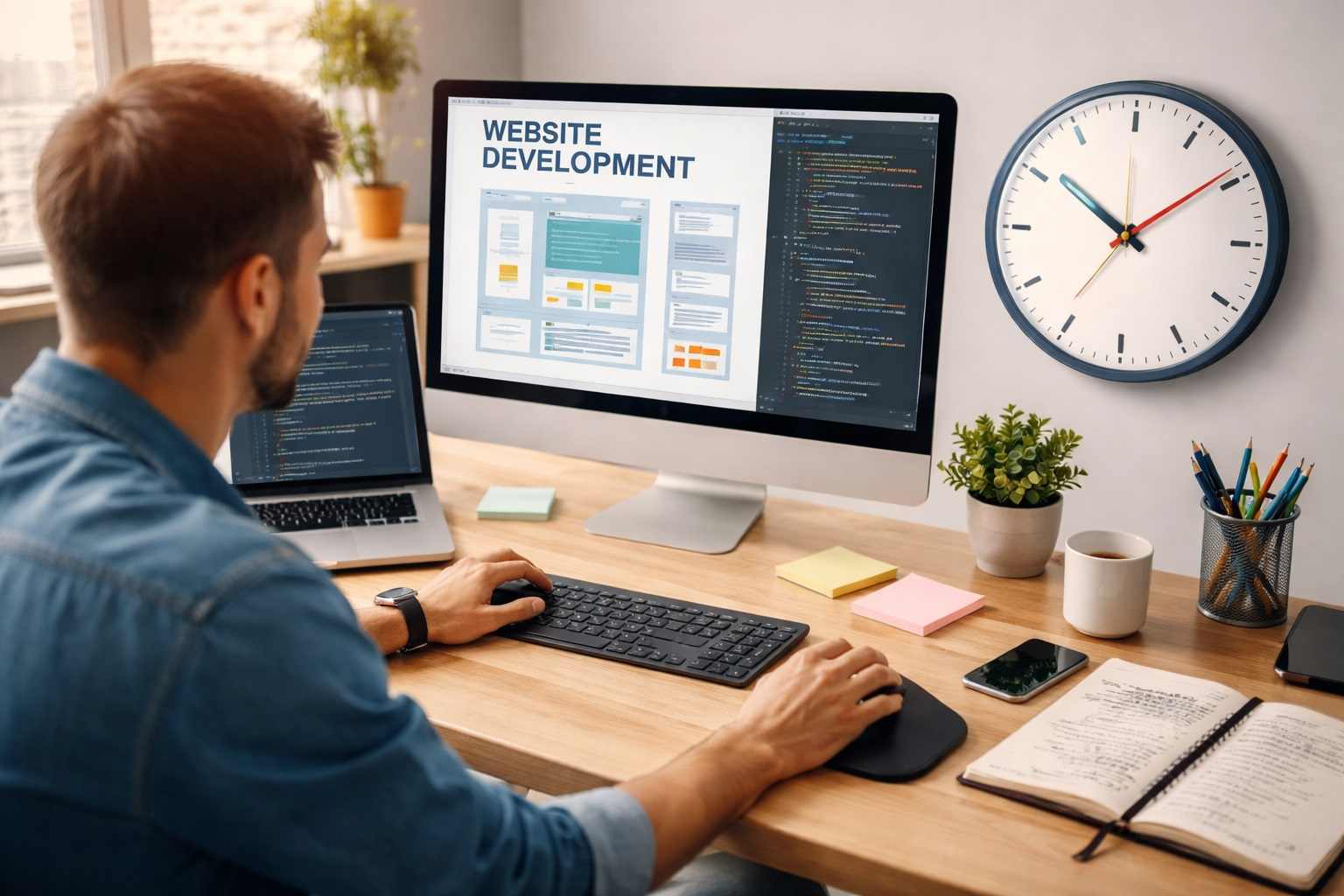
When we talk about how long it takes to develop a professional website, the correct answer is: depends. The deadline varies according to the site type, the level of customisation and the features involved. At WebSyd, custom-made sites take an average of 60 run days (about 45 business days), and the Express Website, made from a template, is ready in up to 5 business days. More complex platforms may require more time depending on the scope.
These deadlines are not random. They reflect steps such as planning, design, development, testing and final adjustments. Check out the main factors that impact on creation time and understand how long it can take for your site to be ready, according to the type of project.
How long does it take to develop a professional website by type of site
Each type of site has its own characteristics, different levels of complexity and specific technical demands. Therefore, the development time varies greatly from one project to another. See below the most common average deadlines:
Business Website
The institutional website it is indicated for small and medium-sized enterprises, liberal professionals and service providers who wish to be professional online. Usually, this type of site features pages such as “Who We Are”, “Services”, “Contact” and, in some cases, a blog.
Even with a simpler structure and few integrations, a institutional website measured takes, at WebSyd, on average 60 days running (about 45 working days), considering custom design, adaptation to mobile devices and basic SEO settings.
Blog or portfolio
Blogs and portfolios are even leaner projects, widely used by autonomous professionals, content creators, photographers, designers and companies who wish to produce content. The structure is focused on visual presentation and organization of texts, images or projects.
By demanding fewer pages and features, these sites can get ready on up to 5 business days when made from model, as in the Express Website, especially if the content is already organized. To measure, they follow the average of 60 days run from the other projects.
E-commerce
The development of an e-commerce is naturally more complex. It involves registration of products, configuration of means of payment, freight, integrations with external systems and extra care with security and usability.
One e-commerce Basics usually take 1 to 3 months, depending on the quantity of products and integrations required. More complete online stores, with specific rules, automations and advanced customizations, may require longer deadlines. At WebSyd, custom-made online stores take about 60 days. This type of website is indicated for companies and shopkeepers who wish to sell online in a structured way.
Complex platforms
Complex platforms include custom systems, restricted areas for customers, dashboards, integrations with ERPs, CRMs or other software, as well as tailor-made specific features.
Because they require more planning, detailed technical architecture, tests and validations, these projects usually take 3 to 6 months. . In more robust or highly personalised cases, development may exceed this time. This type of site is indicated for companies that need more advanced digital solutions, going beyond a traditional website.
What are the factors that influence the deadline?

The development time of a professional site does not depend only on the type of project. There are technical, strategic and operational factors that impact directly on the deadline. Understanding these points helps to align expectations, avoid delays and ensure that the site is delivered with quality. Check out the main factors that influence this schedule:
Complexity
The more complex the site is, the longer the development period tends to be. Features such as shopping cart, restricted areas for members, students or customers, scheduling systems, integrations with external software or custom logics require more planning, testing and validations, naturally increasing delivery time.
Content
The availability and quality of the content makes a lot of difference on the schedule. Texts, images and videos ready, well defined and aligned to the site's goal accelerate the process. On the other hand, contents that still need to be created, reviewed or approved can generate pauses in development and extend the deadline.
Custom design
Sites based on ready themes are usually developed more quickly, as they already have a defined visual structure. On the other hand, an exclusive design, created from scratch to reflect the brand's identity, demands more creation steps, adjustments and validations, which directly impacts on development time.
Technology
The technology chosen also influences the deadline. Consolidated platforms such as WordPress tend to accelerate simpler and more average projects. Custom platforms, tailor-made solutions or use of specific tools require more time for configuration, development and testing, especially when they involve complex integrations.
Collaboration
The customer's agility is a determining factor. The speed with which the steps are approved, feedbacks are sent and requested information is delivered directly impacts on the schedule. Collaborative projects, with clear communication and quick decisions, advance much faster.
Professionals
The experience of those who develop the site makes all the difference. Highly trained professionals work more efficiently, anticipate problems and deliver results in less time. So, web-creation agencies, like the WebSyd, stand out for the speed and professional delivery, with team, structured processes and complete infrastructure.
In comparison, professionals who work alone without a team or technical support tend to take longer to complete larger projects.
What are the stages of developing a professional website?
The development of a professional website follows a structured process that ensures organization, quality and compliance with deadlines. Each step has a strategic role to play so that the site is not only visually beautiful, but also functional, safe and aligned with business objectives. Check out the main phases of this process:
1. Planning and discovery
This is the initial stage and one of the most important. Here the full understanding of the project, with goals definition, objectives of the site, target audience, required features and customer expectations. The deadlines, scope of the project and strategic directions that will guide all the next phases are also defined.
2. Content
With the planning set, the stage of creation and organization of the content. . This includes texts for institutional pages, descriptions of services or products, as well as images and videos that will be used on the site. Having this well-structured material from the beginning avoids rework and accelerates development.
3. Design (IU/UX)
At this stage, the focus is on visual identity and user experience. . O design UI defFine colors, typography, layout and visual elements while UX ensures that the site is intuitive, easy to navigate and pleasant for those who access. The goal is to unite aesthetics and usability in a strategic way.
4. Developer
Here the site begins to come alive. The team performs the encoding, configures the chosen platform and makes the implementation of features planned in the planning, such as forms, restricted areas, integrations or specific resources. It's the most technical phase of the project.
5. Tests and adjustments
Before the launch, the site goes through a rigorous testing and validation stage. . There's a check for faults, navigational errors, responsiveness problems, performance and compatibility with different devices and browsers. Based on these tests, final adjustments and improvements are made.
6. Launch
With everything reviewed and approved, the time has come for launch. . The site is officially published, configured in domain and hosting, and is available to the public. After this, initial follow-up can be done to ensure that everything is working as expected.
Quick and cheap website, is it possible?
Yes, it is possible to unite speed, quality and affordable cost in the development of a website. At WebSyd, this happens through the Express Website, a modality designed for those who need a professional site in a short time. The project is developed in up to 5 working days by experts, from R$ 1,200 investment and R$ 114 per month (without changes to the site), with an organized process and focus on efficient delivery.
It is the ideal solution for those who want to put the site on the air without giving up professionalism. Check out below how it works:
Choose a template
The first step is to choose between a variety of website templates, all developed by our experienced designers. The layouts are modern, responsives is thought for different business objectives, which accelerates the process without compromising the visual quality and usability of the site.
Send your content
After choosing the template, you send all content you want on the site through our exclusive platform, created to facilitate the process. Texts, images, institutional information and contact data are organized in a simple way, avoiding endless exchanges of emails and delays in delivery.
Site in the air
With the chosen model and content sent, our team takes care of all the technical parts. In a few days, the site is finished, reviewed and published, ready to be accessed by the public. The result is a functional site, fast and aligned to the needs of your business.
In addition, we rely on website templates for virtually all types of niches such as blog, community, education, technology, services, events, gastronomy, business, health and more.
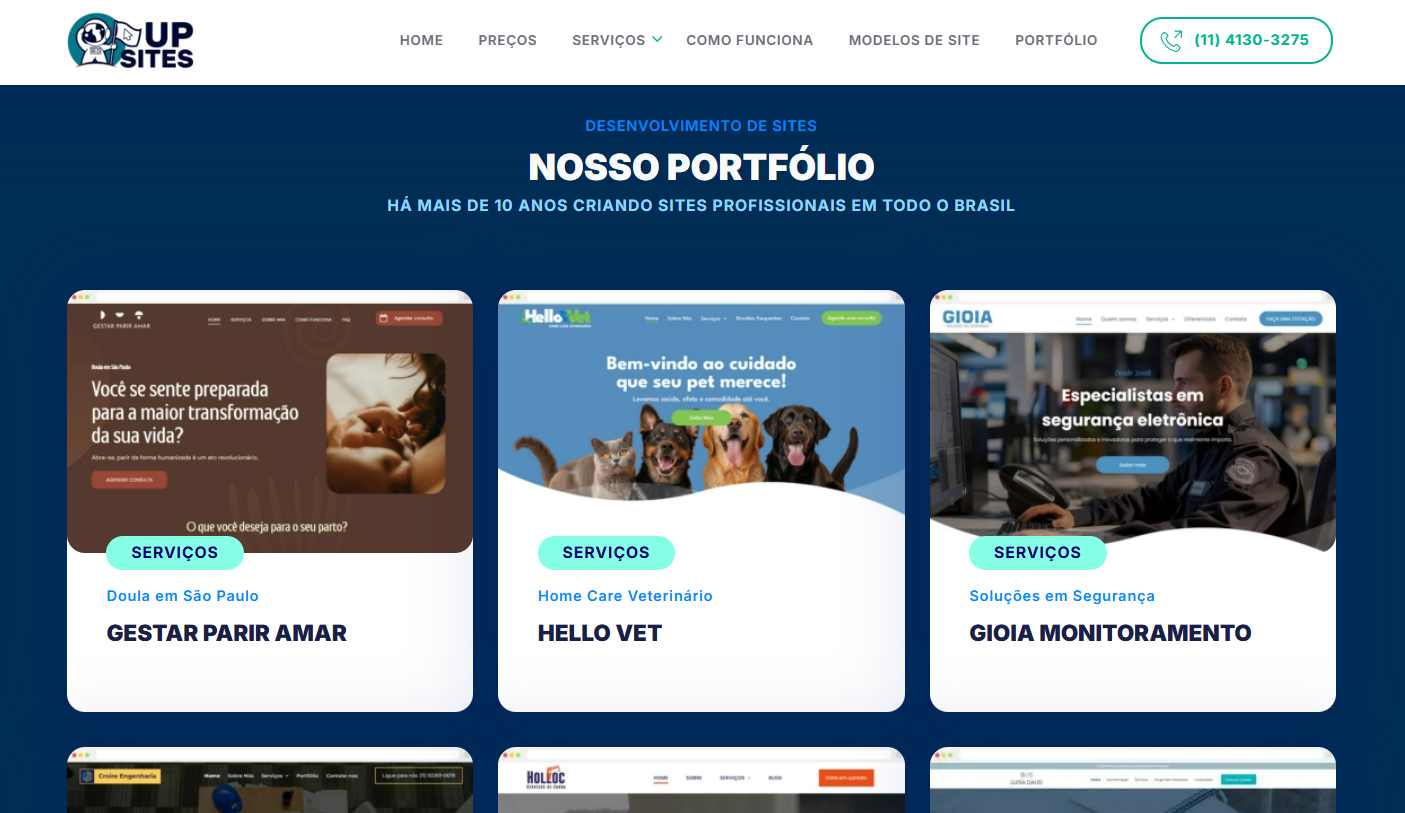
If you seek professional site development in an agile and efficient way, the WebSyd Express Website It's the right choice. Learn now how the Express Website works and put your website on the air in a few days.
Put your website on the air without complications
Creating a website doesn't have to be a long, expensive or complicated process. With WebSyd solutions, you rely on methods, experienced professionals and total focus on results. Talk to me now our experts and find out which development model is best suited for your project.
Do you want to know the deadline and cost of your project?
You want a website that manages contacts? Get a quote.

FREQUENTLY ASKED QUESTIONS
Is it possible to accelerate the site's development deadline?
Yeah. When the scope is well defined, the content is sent quickly and the client actively participates in approvals, the deadline can be reduced. In addition, solutions such as ready models and standardized processes help to significantly accelerate delivery.
Does a fast developing site lose quality?
Not necessarily. A website can be quick to develop when there is a method, experienced team and well-defined processes. What compromises quality is not the speed itself, but the lack of planning, review and trained professionals.
What is the difference between an express website and a custom site?
The express website uses pre-structured models and agile processes, ideal for those who need speed. On the other hand, the custom-made site is completely customised, from scratch, suitable for more complex projects with longer development time.
Does the content interfere with the delivery time of the site?
Yes, very much. The lack of clear texts, images and information is usually one of the main reasons for delay. The more organized and complete the content sent by the customer, the faster the site can be developed.
Does unique design increase development time?
Usually, yes. A fully customised design requires more stages of creation, validation and adjustments, which directly impacts the schedule. The use of ready layouts reduces delivery time significantly.
Is it worth hiring an agency instead of a self-employed professional?
In most cases, yes. Agencies have a multidisciplinary team, defined processes and complete infrastructure, which ensures more agility, less rework and more consistent deliveries than professionals who work alone.
After it's launched, does the site need maintenance?
Yeah. Even after publication, the site needs updates, technical adjustments, performance improvements and security. Continuous maintenance ensures that the site remains fast, secure and aligned to business needs.

Caio Nogueira is a SEO, GEO, link building and Digital PR expert and co-founder of WebSyd, website creation agency and SEO consulting founded in 2016. It acts with organic search strategies, digital authority construction and brand optimisation for search engines and artificial intelligence platforms. Throughout his trajectory, he participated in more than 1000 projects involving SEO, website development, content marketing and authority acquisition through backlinks and Digital PR. At WebSyd, it participates in the planning of strategies to increase organic visibility, lead generation and presence of companies on Google and AI-based search engines. As an author, it publishes content on SEO, GEO, website creation, link building and digital authority, sharing analyses, strategies and practical experiences related to organic growth of companies. Its contents and contributions have also been published in companies and vehicles of technology and marketing such as Wix, HostGator, Duda, Neil Patel, Locaweb and E-Commerce Brasil.
View all posts


 Estimate the cost

