
Development of SEO-focused websites: what needs to be planned
Summary (TL;DR)
The development of SEO-focused websites requires technical planning, strategic content and long-term vision.
When properly structured, the site will attract qualified traffic and generate sustainable results.
Do you want to understand how to apply this in practice? Check out all the details throughout the content.
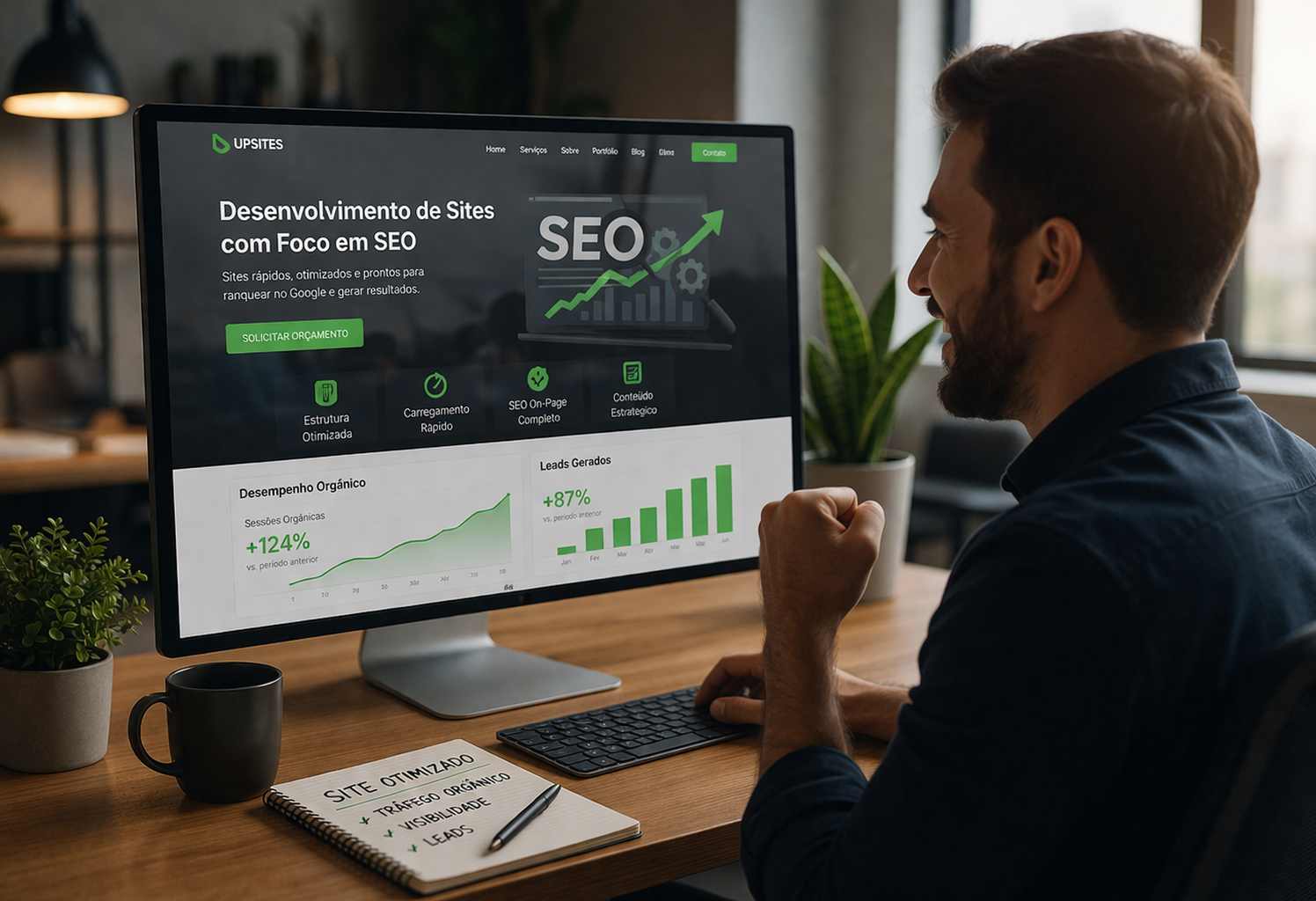
The development of SEO-focused websites requires technical and strategic planning from the beginning of the project. It is necessary to define structure of pages, information architecture, priority keywords, performance, security and user experience even before the final design. When SEO is thought from the base, the site is already born prepared to rank better on Google and attract qualified traffic.
More than applying adjustments after the site is ready, the ideal is to build each step with strategic vision. Check out the main elements that are part of site development with SEO, from planning to launch.
What is the development of SEO-focused websites?
SEO-oriented development integrates technical, structural and content aspects in a single strategy. This is not just about inserting keywords, but about creating a basis that favors tracking, indexing and user experience. Check out the essential elements of this process.
Responsive Design
The responsive design ensures that the site automatically adapts to different screen sizes such as mobile phones, tablets and desktops. This is fundamental because Google uses indexing mobile-first, prioritizing the mobile version in the evaluation of the site. In addition, an adapted experience reduces the rejection rate and improves the user's length of stay.
Loading speed
Google uses experience metrics on the page, like Core Web Vitals, in classification systems, but as a sign among many: a fast site does not compensate for weak content. Even so, a slow site impairs the experience and increases abandonment. SEO-focused development involves Image optimisation, reduction of unnecessary codes, choice of good hosting and use of cache to ensure fast and stable loading.
Security
Security is another pillar. O Google uses HTTPS as a rating sign, lightweight, and the browser shows the alert of “unsafe website” on uncertified pages, which wards off visitors. In addition to protecting data, the SSL certificate is a basic requirement for any project.
Technical optimisation
The technical optimisation involves correct URL structure, strategic use of keywords, proper organization of H1/H2, meta descriptions and friendly architecture for search engines. These elements help Google understand the content of the page and increase the chances of positioning in relevant searches.
Strategic content
SEO does not work without quality content. It is necessary to work keywords with intelligence, consider semantics, context and legibility. The focus should be on the reader, answering real questions and offering value. A well-structured, scanable and relevant content strengthens authority and improves organic ranking in the long term.
Advantages of SEO for a website
Investing in SEO brings benefits that go far beyond simply appearing in Google's top positions. Unlike paid advertising strategies, SEO builds a sustainable base of organic visibility and results over time, generating qualified traffic that can strengthen all digital presence from your company. Check out some of the main advantages:
Increased authority
One of the great advantages of a well-executed SEO strategy is the strengthening the online authority of your brand. . When a site appears consistently in the first search positions for important terms in your sector, it gives an image of trust to the public and the search engines themselves, which increases your digital reputation.
One Backlinko study with 4 million Google results showed that only 0.63% of users clicked on something on the second page. Being on the front page is what actually generates traffic.
Cost reduction
SEO can reduce long-term customer acquisition costs when compared to paid media strategies. Instead of relying on ads where you pay for each click or print, organic visibility achieved with SEO continues to attract visitors at no recurring cost per click. Over time, this can release budget for other marketing areas, increasing overall return on investment.
Long-term results
Unlike advertising campaigns that cease as soon as the budget ends, SEO results tend to be lasting. Optimized and well-structured content can continue to generate traffic and generate leads months or years after its publication. This creates a bridge to organic traffic that becomes stronger and stronger with continuous SEO updates and adjustments.
Less rework and cost after launch
When SEO enters only after the site is on the air, it is common to need to change architecture, exchange URLs, create redirections and rewrite pages. Each change of these consumes hours of development and can bring down positions that the site already had. Setting structure, URLs and SEO content since planning avoids this rework.
Advantage of competition
Many companies still treat the site as a business card. A site planned for the organic search begins first to accumulate content, links, and history, and who starts later takes time to reach that point. In time, this reduces dependence on paid ads.
Best practices for developing SEO-focused websites
For development to really generate organic visibility, good practices must be followed from the basis of the project. SEO is not a punctual adjustment, but a set of technical and strategic decisions applied in building the site. See four fundamental fronts that should be planned from the beginning:
1. Technical SEO
The Technical SEO is the structural basis that allows Google to track, understand and index your site correctly. It involves optimizations that directly impact performance and ranking.
Among the main elements are: speed and Core Web Vitals, measuring experience and page stability; security with HTTPS; mobile-first approach (responsiveness); friendly URL structure; correct configuration of sitemap XML and Robots.txt; and the implementation of structured data (schema markup) to improve the interpretation of content by searchers.
2. SEO on-page
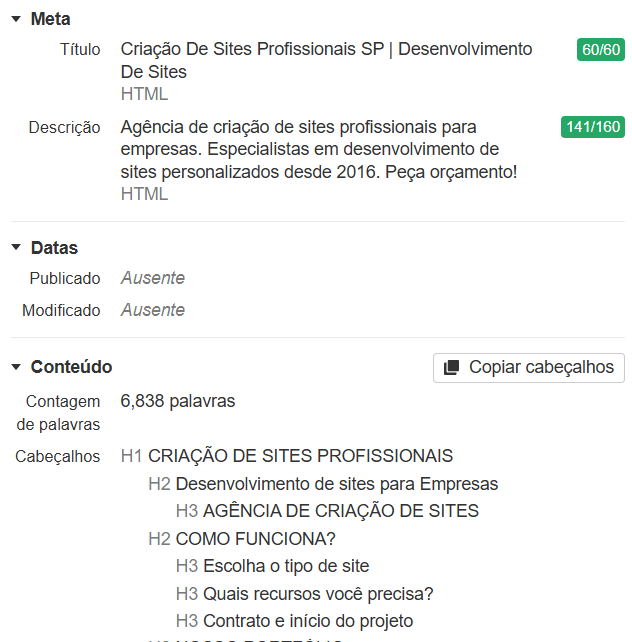
SEO on-page is directly linked to the content and internal organization of pages. He considers keyword research, search intent analysis, correct tag hierarchy (H1, H2, H3), image optimisation, strategic internal linkage, meta tags well-written and scanable structure. Here, content and structure walk together to give relevance to the reader and clarity to search mechanisms.
Checklist for on-page optimisation:
- Set main and secondary keyword;
- Align content to user search intention;
- Use only one H1 per page;
- organise subtitles with H2 and H3;
- Create attractive meta title and meta description;
- Optimize images with descriptive alt text;
- Insert internal links strategic;
- Work semantics and context throughout the text;
- Ensure good legibility (short and scanable graphs);
- Include CTAs consistent with the purpose of the page.
3. AI Experience
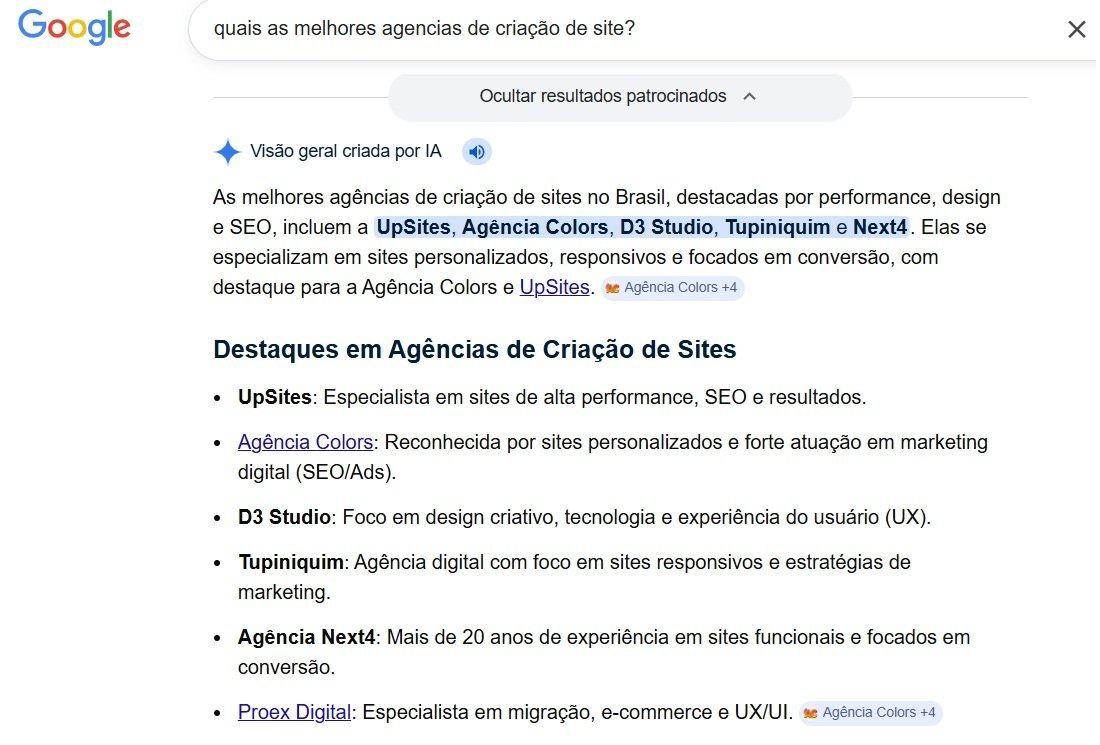
The way people research is changing. With the popularization of assistants based on artificial intelligence and AI-generated results in searchers, organic traffic has become dependent not only on traditional SEO, but also on how the content is interpreted by generative models.
You want to know if your company's already in these answers? Do it. Free diagnosis of GEO And see who the AI quotes in its place.
The summaries generated by Google's AI and the chat assistants already answer part of the searches before clicking, which changes how the pages appear and are quoted.
Concepts like Generating Engine Optimization (GEO) and the criteria for E-E-A-T (Expertise, Expertise, Authoritativeness, Trustworthiness) They've won the lead. This means that its content needs to be useful, contextualized, reliable and structured to be understood by both users and AI algorithms.
Check out the main steps:
- Produce original content, with depth and authority;
- demonstrate real experience in the topic addressed;
- Use reliable data, sources and verifiable references;
- Structure texts with clarity and good hierarchy;
- Refresh content regularly;
- Avoid excess automation without human review;
- Work semantics and context, not just keywords.
4. Launch Checklist
Before putting the site on the air, it is essential to validate all technical and strategic points. An unchecked launch can compromise months of planning. Make sure you're properly configure Google Analytics (GA4) and Google Search Console, check possible tracking errors, review redirections, avoid duplicate content and test forms and integrations.
This stage also involves final adjustments of performance, safety and usability, in addition to planning the first continuous maintenance actions.
Items to check before publishing:
- short, descriptive URLs without unnecessary parameters;
- unique title and meta description on each page;
- a H1 per page and subtitles in logical order;
- XML sitemap sent to Search Console and robots.txt without undue locks;
- no important page with forgotten test environment index;
- speed tested in PageSpeed Insights, with optimised images and active cache;
- layout checked on mobile phones and tablets;
- GA4 and Search Console configured;
- original content, no duplicate pages and canonical where there are similar versions;
- internal links working, no 404 errors;
- HTTPS active on all pages;
- 301 redirects of old URLs, if the new site replaces another.
Well-planned SEO is sustainable growth
The website development focusing on SEO goes far beyond inserting keywords. It involves technical planning, intelligent structure, strategic content and adaptation to the new requirements of artificial intelligence. . When well run, it reduces waste and optimizes the costs of a website as it generates qualified organic traffic and consistent long-term results.
Also read about 8 techniques in site development professional.
If you want a site prepared to rank and convert from the start, talk to WebSyd. At WebSyd, custom-made websites depart from R$5,000 and are ready in about 45 business days; online stores take about 60 days.
FREQUENTLY ASKED QUESTIONS
Should SEO be planned even before the layout is created?
Yeah. Ideally, SEO is considered since the planning phase, even before defining the final layout. This allows you to structure the site architecture, strategic pages and priority keywords correctly. When SEO is left for later, it often requires technical rework.
How long does it take for a website to start ranking on Google?
The deadline may vary according to competition, quality of content and authority of the domain. In general, the first signs of organic growth may appear in a few weeks, but more consistent results usually take a few months. SEO is a medium and long-term strategy.
Is it worth investing in SEO even in very competitive markets?
Yeah. In competitive markets, SEO becomes even more strategic. It is possible to work long-tail keywords, specific niches and in-depth content to gradually conquer space. Consistency is the differential in this scenario.
Can a new site compete with old domains?
It can, provided it is well structured and produces relevant content frequently. Although old domains have authority advantage, a new site can gain space with sound technical strategy and production of qualified content.
Does SEO work for any kind of company?
Yeah. B2B, B2C, e-commerce and service providers can benefit from SEO. What changes is the applied strategy, which should consider the target audience and the purchase day of each segment.
Is it possible to measure return on investment in SEO?
Yeah. Metrics such as organic traffic, lead generation, conversion rate and keyword positioning help measure the impact of the strategy. With appropriate tools, it is possible to monitor growth and results over time.
Does the content need to be updated frequently?
Yeah. Periodic updates show search engines that the site is active and relevant. In addition, updated content provides more accurate information to the reader, strengthening authority and reliability.
SEO replaces paid campaigns?
Not necessarily. SEO and paid media can work together. As ads generate more immediate results, SEO builds sustainable organic presence. The balance between the two strategies tends to bring better results.

Caio Nogueira is a SEO, GEO, link building and Digital PR expert and co-founder of WebSyd, website creation agency and SEO consulting founded in 2016. It acts with organic search strategies, digital authority construction and brand optimisation for search engines and artificial intelligence platforms. Throughout his trajectory, he participated in more than 1000 projects involving SEO, website development, content marketing and authority acquisition through backlinks and Digital PR. At WebSyd, it participates in the planning of strategies to increase organic visibility, lead generation and presence of companies on Google and AI-based search engines. As an author, it publishes content on SEO, GEO, website creation, link building and digital authority, sharing analyses, strategies and practical experiences related to organic growth of companies. Its contents and contributions have also been published in companies and vehicles of technology and marketing such as Wix, HostGator, Duda, Neil Patel, Locaweb and E-Commerce Brasil.
View all posts


 Estimate the cost

