
Website one page: full guide
Summary (TL;DR)
A one page site is a modern and efficient solution for companies that wish to transmit information clearly and directly on a single page. It is ideal for small businesses, startups and marketing campaigns, providing fluid browsing and an engaging user experience.
This type of site offers advantages such as speed of implementation, lower maintenance cost and upgrade ease. It is perfect for displaying portfolios, launching new products or promoting events, all in a single accessible location. With proper planning, a one page site can be a powerful tool to improve your online presence and engage customers.
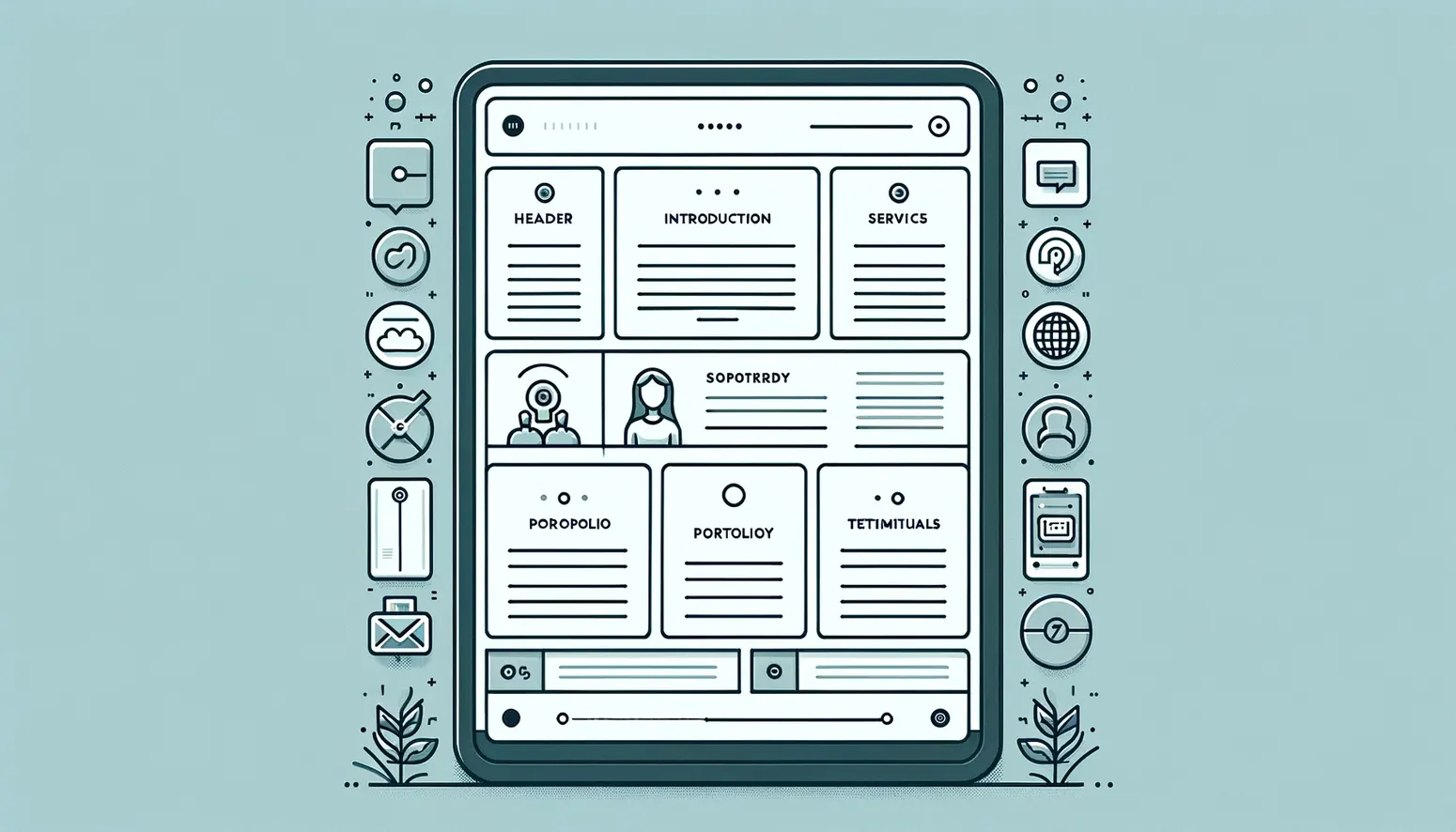
Imagine entering a store where everything you need is perfectly within reach, without the need to walk long corridors or get lost in confusing sections.
A one page site is just like that, but for the digital world!
With all the essential information from your company gathered on a single page, the visitor can explore them quickly and intuitively, just rolling the screen.
According to a Chartbeat study, 55% of visitors spend less than 15 seconds on a web page.
In a world where user attention is one of the most valuable currencies, capturing and keeping that attention is essential for online success.
This is where the concept of one page site comes in.
But what is a one page site and why can it be the key to engaging your visitors?
In this guide, we will explore all the details of the one page site, which ranges from definition and structure to its advantages and practical examples.
What is a One Page Site?
A one page site is a site type which contains all your information on a single long page. Instead of clicking on several different pages, you simply scroll down to see everything.
These sites are organized into distinct sections, such as introduction, services, portfolio and contact, all arranged vertically. Navigation is done by rolling or clicking links that lead directly to the desired section within the same page.
The idea is to make the user experience more fluid and intuitive. Instead of many clicks and uploads of pages, you find everything you need in one place.
This is great for marketing campaigns, portfolios and companies that want to convey their message quickly and clearly.
In addition, one page sites usually have a modern and clean design. They work very well on mobile devices, offering an excellent browsing experience, which is crucial nowadays when many people access the internet via mobile phones.

Structure of a One Page Site

Unlike a multipage site, the structure of a one page site is carefully planned to guide the user through a linear narrative, providing a continuous and engaging experience.
Here are the main components that generally make up the structure of a one page site:
1. Header
The headline is the first thing visitors see. It usually contains:
- Company logo: To identify the brand.
- Navigation Menu: With anchor links that lead to different sections of the page.
- Call-to-Action (CTA) Main: Like “Learn More” or “Contact Us”.
2. Introduction Section
The introduction section is where you present your company or product briefly and captivatingly. It may include:
- Attractive Banner: A featured image or video.
- slogan or Effect Phrase: To capture the visitor's attention immediately.
- Brief Description: A summary of what the site or company offers.
3. About Us
This section offers an overview of the company. Includes:
- Company History: Brief history or mission.
- Values and Vision: To connect emotionally with visitors.
- Highlights: Important awards or recognitions.
4. Services or Products
Here you detail the main services or products you offer. Includes:
- Short Descriptions: Clear and concise information about each service or product.
- Images and Icons: To illustrate and make the content more visually attractive.
- Benefits: Why choose your services or products.
5. Testimonies
Include satisfied customer statements to build credibility and trust.
5. Testimonies
Satisfied customer statements help build credibility. Includes:
- Real Testimonies: Positive customer reviews.
- Customer Photos: If possible, to customize the testimonials.
6. Team
Introduce the members of your team. Includes:
- Team Photos: Images of employees.
- Brief Biographies: Descriptions of the qualifications and functions of each member.
7. Portfolio or Projects
Show examples of previous works or projects. Includes:
- Images or Videos: High quality visions of the projects.
- Short Descriptions: Explanations of what was done in each project.
8. Blog or News
If you have a blog, highlight the latest posts. Includes:
- Titles and Summaries: From posts or articles.
- Links to Full Articles: If the visitor wants to read more.
9. Contact
Provide information for visitors to contact you. Includes:
- Address and Telephone: Physical contact information.
- Email and Contact Form: For direct communication.
- Links to Social Networks: For additional connections.
10. Footer
The footer usually contains additional links and information. Includes:
- Links to Important Pages: Like terms of use and privacy policy.
- Copyright InformationLegal and copyright details.
- Other Useful Links: Any other information relevant to visitors.
The structure of a one page site is designed to be clear and direct, offering smooth browsing and a pleasant user experience.
Each section is designed to provide all necessary information in an organized and accessible manner, keeping the visitor engaged from beginning to end.
What Is a One Page Site Served for?
One page sites are ideal for companies or individuals who want a clear and concise online presence. They are particularly useful for:
- Business website: make companies that seek a clear and impacting presentation of their services, values and differentials, organizing the information in a single page
- Landing Pages: Destination pages for marketing campaigns or ads.
- Portfolios: Artists, designers and freelancers can visually display their work.
- Events: Sites for events that need to provide information quickly and easily.
- Startups: Emerging companies that want a direct presentation of what they do.
Advantages of a One Page Site
1. Simplicity and Easy Navigation
One of the biggest benefits of a one page site is simplicity. All the contents are in one place, which facilitates browsing for the user. Instead of clicking multiple links and loading different pages, the visitor can scroll down and find all the necessary information quickly.
2. Best Mobile Experience
One page sites are usually easier to adapt to mobile devices. With the growing use of smartphones to browse the internet, having a website that works well on all screens is crucial. One responsive design on a single page ensures a fluid and enjoyable experience for mobile user.
3. Focus on Content
With fewer pages to manage, you can focus on creating high-quality and visually attractive content. This allows you to tell your company's story in a linear and coherent way, without dispersing the visitor's attention.
4. Maintenance Facility
Maintaining an updated one page site is simpler and less time consuming than a multi-page website. All changes are made in one place, which can save time and resources.
5. Focused SEO
Although a one page site has fewer pages to index, it can be optimised for specific keywords. ♪ You'll be able to improve your website, including the main keywords related to your business both in texts and also in title tags (H2, H3, H4 etc.). Also remember to optimise the images by naming them with your keyword and compressing the weight to have a light load.
Why Have a One Page Site?
1. Rapid Implementation
Developing a one page site is usually faster than creating a multi-page website. This is ideal for startups or campaigns that need a fast online presence.
2. Cost-effective
With fewer pages to draw, develop and maintain, the costs associated with a one page site are usually lower. At WebSyd, the one page is indicated for professional liberals, launches and companies with a main service.
3. Clearness in Message
Having everything on a page allows you to tell your brand's story in a linear and coherent way, without distractions.
4. User Engaging
With a well-designed design, one page sites can be very engaging, encouraging visitors to scroll and explore all the content.
Is It Good For Your Company?
When a One Page Site is Ideal
- Small Businesses: If you offer a limited number of products or services, a one page site may be sufficient for your needs.
- Portfolios and Freelancers: Perfect for displaying previous works visually attractively.
- Events and Campaigns: To provide all the necessary information in one place.
When a One Page Site Can Not Be Suitable
- Large Enterprises: If you have a wide range of products or services, a multi-page site may be more suitable.
- Extensive SEO: Sites with many pages can explore more specific keywords and topics, benefiting from a broader SEO strategy.
- Detailed Content: If your company needs to provide a lot of detailed information, a multi-page site may be more appropriate.
Tips for Creating a Professional One Page Site
1. Plan Structure
Before you begin to develop, plan the sections and order in which they will appear. Make sure the navigation is intuitive.
2. Use Responsible Design
Make sure the site looks good on all devices, especially on smartphones and tablets.
3. Focus on Speed
One page sites can get heavy with many images and videos. Optimize all elements to ensure a fast loading.
4. Efficient CTA
Include clear and visible call-to-actions (CTAs) to guide users in their desired actions, such as filling out a form or making a purchase.
5. Concise Content
While it is tempting to include a lot of information, keep the content concise and straight to the point. Use subtitles and lists to facilitate reading.
Conclusion
Opting for a one page site can be an excellent choice for many people and companies, especially those that value simplicity and effectiveness in communication with their customers.
However, it is important to consider the specific needs of your business and assess whether a one page site can actually meet all your requirements.
For larger companies or those that need a more detailed and targeted approach, a multi-page site may be more appropriate.
Evaluate your goals, the kind of content you need to present and the experience you want to offer your users before making the final decision. With the right planning and execution, a one page site can be a powerful tool to improve your online presence, engage your customers and boost your business to new levels.
If you need more information or help to develop your own one page, please feel free to contact us. An agency creation of sites such as WebSyd, can provide the support and expertise needed to create a website that meets your needs and expectations.
FREQUENTLY ASKED QUESTIONS
What is a one page site and what are its main features?
A one page site is a type of website that concentrates all its content on a single HTML page. The information is divided by sections and accessible through a navigation menu that allows the user to scroll around the page to access different content. They are known to be visually attractive, fast to load and optimised for mobile devices, providing a fluid and immersive user experience.
What are the main advantages of a one page site?
As advantages of having a website one page include increased user engagement, due to ease of navigation and attractive design; a more organized information flow, which allows better control over what visitors see; cost efficiency and time, since they are faster to develop and cheaper to maintain; and high conversion rates, thanks to the simplicity and effectiveness of the conversion funnel on a single page.
Are there disadvantages in using a one page site?
Yes, there are some significant disadvantages. One page sites may be limited in terms of SEO, as the optimisation of keywords is more restricted with less content. The nature of a single page can also complicate the detailed analysis of user behavior, as tools like Google Analytics will have less interactions to monitor. In addition, it can be difficult to keep users engaged without confusing them, especially if the page is too extensive or loaded with information.
How to decide if a one page site is the best option for my business?
The decision to use a one page site should be based on the specific needs of your business and the objectives of the website. It is important to consider the type of content you want to present and how you want to interact with your visitors. If the goal is to communicate a single and direct message, and you search high conversion rate for specific actions, a one page site may be ideal. However, if your business requires large amounts of content or complex features such as an e-commerce with multiple products, a multi-page approach may be more appropriate.
What is the value of a One Page site?
At WebSyd, a one-page site to measure part of R$ 5,000, with layout created from scratch, up to 5 sections, form, CTAs, SEO on-page, average run 60 days (about 45 business days) and payment in up to 6x. If priority is speed, the Express Website, made from model, part of R$ 1,200 + R$ 114/month and is ready in up to 5 business days. The final value depends on design, functionality and integrations. See the full table on how much a professional website costs.

Caio Nogueira is a SEO, GEO, link building and Digital PR expert and co-founder of WebSyd, website creation agency and SEO consulting founded in 2016. It acts with organic search strategies, digital authority construction and brand optimisation for search engines and artificial intelligence platforms. Throughout his trajectory, he participated in more than 1000 projects involving SEO, website development, content marketing and authority acquisition through backlinks and Digital PR. At WebSyd, it participates in the planning of strategies to increase organic visibility, lead generation and presence of companies on Google and AI-based search engines. As an author, it publishes content on SEO, GEO, website creation, link building and digital authority, sharing analyses, strategies and practical experiences related to organic growth of companies. Its contents and contributions have also been published in companies and vehicles of technology and marketing such as Wix, HostGator, Duda, Neil Patel, Locaweb and E-Commerce Brasil.
View all posts


 Estimate the cost

