
Site Static vs. Dynamic Site: Understand the Main Differences
Summary (TL;DR)
In this post, let's talk about the differences between static and dynamic sites, highlighting their advantages and disadvantages. We will discuss how fixed content and customisation affect the user experience, as well as exploring issues such as speed, performance, ease of creation and security. Finally, we will discuss how the combination of both can be an efficient solution, depending on the needs of your project.
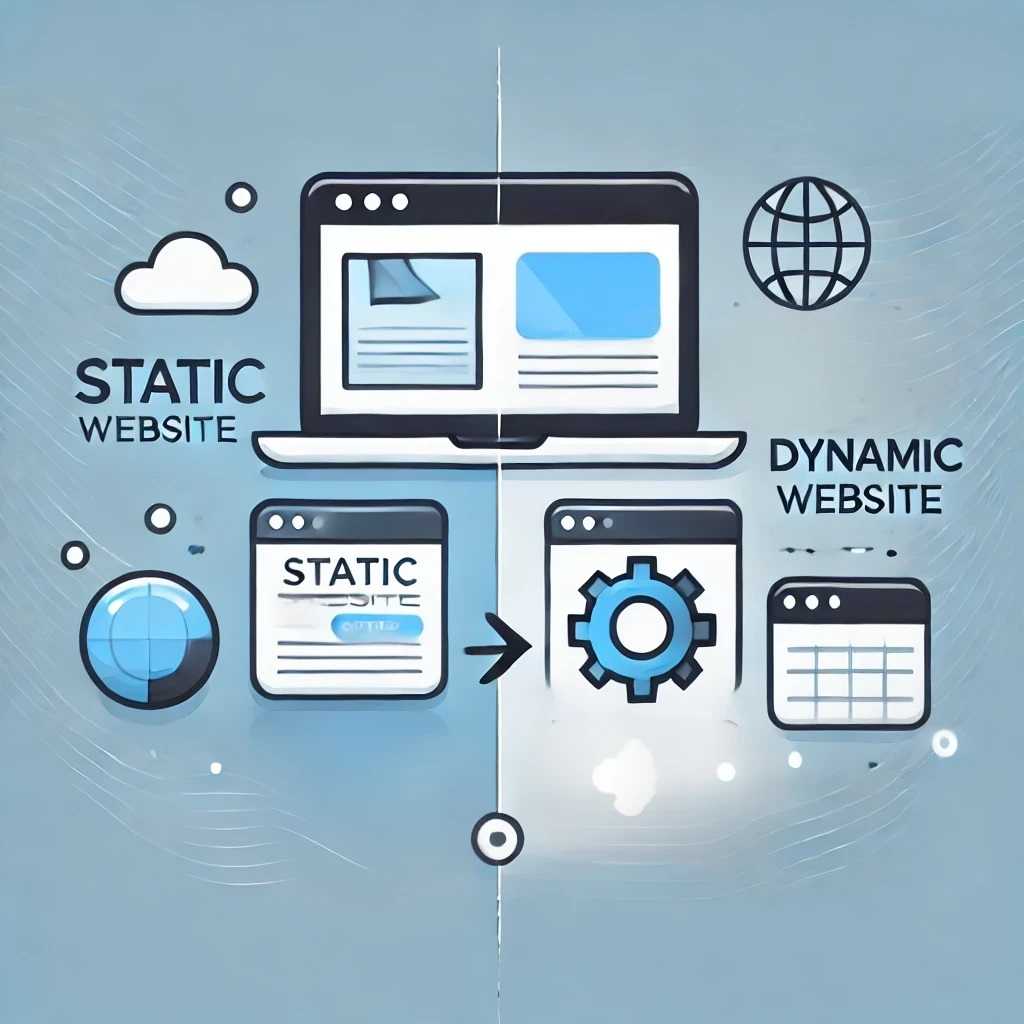
Quick answer: static site delivers ready, equal pages to all visitors: it is faster, cheaper and safer, and serves for simple institutional sites and landing pages. Dynamic site mounts the pages on time, from a database: allows blog, customer area, store and dashboard update, but requires more maintenance. Most companies use a dynamic CMS, such as WordPress, with cache to gain speed.
When considering the creation of a websiteYou've already wondered which one site type Should you choose? Today we bring you an explanation about static site vs dynamic website.
Know that this is a common issue between entrepreneurs, developers and everyone who wants to establish an online presence.
When launching a website, it is essential to evaluate several aspects, with emphasis on the performance and speed of loading, which are important differences between static and dynamic sites.
After all, almost 70% of consumers point out that page speed affects their willingness to buy from an online retailer, according to the report published by Tooltester.
Given the importance of this theme, we will explore the differences between static and dynamic sites, highlighting the characteristics that make each one shine, its strengths and limitations.
We will also discuss how the combination of both types can be the ideal solution for your specific needs. Continue with us and find out which approach fits your project best!
The main differences between static sites and dynamic websites
Among the main differences between static sites and dynamic websites, we can highlight:
Fixed content versus custom content
Static sites are made of pages with fixed content that do not change for visitors.
In other words, this means that everyone who accesss the site sees the same information and visual elements.
Dynamic sites adapt to the user, showing different content depending on the profile or actions of those who are visiting, such as browsing history, login, personal preferences or location.
The blog is an example of a dynamic website. This is because the content of the blog is regularly updated with new articles and posts, and the display of these posts may vary depending on the date of publication, categories, or even readers' interactions (such as comments).
For example, when you post a new post, it automatically appears on the blog's home page and organizes itself according to website settings. In addition, readers can interact with content by leaving comments or sharing on social networks, which makes the experience even more dynamic and personalised.
Speed x performance
Static sites are faster because they are simpler and require less from the server.
This is because they do not need to search for information or access databases constantly.
Dynamic websites, which change content in real time, need more processing, which can slow down loading, especially if the server is weak or if there is too much traffic on the site.
Ease of creation x management flexibility
Create a website static is easier and faster because it is done with simple files like HTML, CSS and sometimes JavaScript. However, updating these sites can be more complicated, as each change needs to be made manually in the code, which is not easy for those who do not understand programming.
On the other hand, dynamic websites are a little more complicated to set up at the beginning, but they get much easier to update over time. This is because changes are made to a CMS (Content Management System), a tool that allows you to change content without having to touch the code, and these changes automatically appear in various parts of the site.
What is a static site?
A static website is like a fixed poster: after you create it, it will always show the same thing to everyone.
If you want to change something, like correcting information, you need to go back to the “cartaz”, make the change and put it in place again. The site works the same way. Each page is a separate file, and when someone accesses it, the server just sends that file ready to the browser, showing the content exactly how it was created.
This makes static sites faster and easier to do, but if you need frequent updates, it can be hard work, as you need to change the code manually every time there are changes.
See also: Web Accessibility: What is it, guidelines and examples
Advantages of a static site
Among the advantages of static sites, we can mention:
Loading speed
One of the greatest attractions of static sites is their speed!
As the content is pre-built and it is displayed to all visitors, there is no need for additional processing on the server.
Basically, this translates into fast loading times that leave their happy and engaged visitors.
Who doesn't like a site that loads in a heartbeat, do they?
Ease and speed in creation
Creating a static site is like putting together a simple puzzle, so with a little bit of knowledge in HTML and CSS, you can have a functional website in no time.
Without complications with complex programming or databases, creation is usually direct and efficient.
Security
It may not look like it, but less is more when it comes to security on static sites.
Without server processing and no databases, there are fewer vulnerable points for hackers to explore.
That way, yours static site can be safer counterattacks.
Disadvantages of a static site
On the other hand, attention must be paid to some points:
Difficulty climbing
As your website grows, managing a static site can become a challenge.
Adding new pages or updating content requires manual modifications to HTML files, which can be time consuming and subject to errors.
So for growing companies, this approach can become a problem.
Job management
Without a content management system (CMS), you will need to update and maintain your website manually. And you'll need technical knowledge for that.
That is, it will be necessary to spend hours adjusting HTML, CSS and JavaScript files, a very valuable time for you, bet...
For sites with lots of content or that need frequent updates, this can become a difficult and inefficient task.
Here's an example we did for a static site client with React technology:

Go to the site to understand better: https://www.abacuscapitaladvisors.com.
What is a dynamic site?
A dynamic website can adapt the content based on the preferences and actions of each visitor, as if it were customised for each person.
For example, in an online store, it can show up-to-date prices, available product options and personalised recommendations, all based on your preferences and browsing history.
This makes the dynamic site more interactive and personalised, creating a unique experience for each user.
Consequently, the content you see may be different from what someone else will see, even by accessing the same page.
Advantages of a dynamic website
Some of the main advantages of owning a dynamic website are:
Easy and fast updates
Using a database or CMS (Content Management System), you can make changes centrally, so just log in to your CMS, edit the content and publish.
Thus, changes made in one place are reflected throughout the site, simplifying maintenance and keeping everything updated without extra effort.
Personalised experience
Dynamic sites can offer a personalised and interactive experience for your visitors as well!
Using Cookies and location data, you can adapt the content to individual user preferences.
For example, a restaurant site can show local promotions based on visitor location, making navigation more relevant and attractive.
In addition, it is possible to have a responsive site which fits different access devices.
Stabilization for the future
During site creation, it is necessary to think about the purpose of your company. Dynamic sites are designed to grow with your business, they are much more versatile.
Connected to a CMS or database, they can handle large volumes of data and increasing traffic without compromising performance.
With this, your site can expand and adapt as your needs increase.

Disadvantages of a dynamic site
Since not everything is gold, the two main disadvantages of dynamic sites are:
Development costs
Creating a dynamic website can require more resources and expertise, as the process of site design and development is more complex, requiring advanced programming and database configuration.
That is, bringing in financial terms, this can mean higher costs and the need to hire a specialised developer.
Security
With all advanced functionality comes a greater technical complexity, which can increase the risk of security vulnerabilities.
Unlike static websites, dynamic sites, because they have many components and interactions, need extra attention to protect against attacks and ensure the security of users' data.
See an example of a dynamic website made for our client Viva A Cidade:
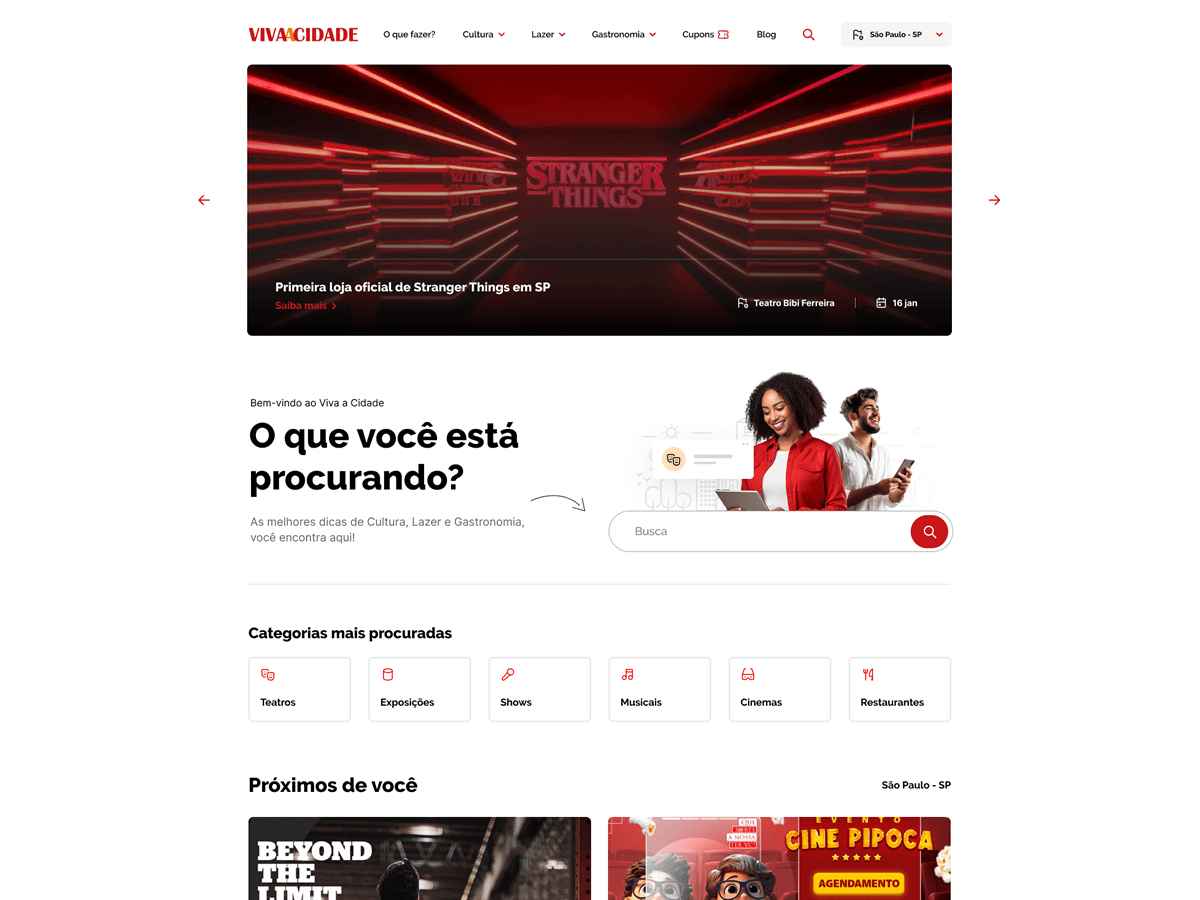
Check out the website here: https://vivaacidadenews.com.br/.
A hybrid approach: combining static and dynamic pages
Now you know the site types and its characteristics. If you are in the doubt between using a static or dynamic site, perhaps the ideal solution is a hybrid approach that combines the best of both worlds.
The idea behind this approach is to use static pages for content that does not often change and dynamic pages for elements that require constant updating or customisation.
For example, you can keep the site structure, such as institutional information, such as static pages, ensuring speed and simplicity.
By using static pages for fixed content, you guarantee fast loading times and lower need for server resources.
On the other hand, you can use dynamic pages for interactive features such as blog, login areas or user panels.
This combination not only improves the overall efficiency of the site, but also provides a richer user experience.
By incorporating dynamic pages, you can offer advanced and customised features tailored to the specific needs of users.
Static sites or dynamic websites: what is best for small and medium-sized enterprises?
When it comes to choosing between static and dynamic websites for small and medium-sized enterprises, the decision depends on various business-specific factors.
If your company does not require frequent updates and does not need complex features, a static site may be the right choice.
It is perfect for presentation sites, portfolios or basic information pages.
But if you're planning to expand your operations, invest in site optimisation (SEO) or other marketing strategies, adding features such as e-commerce, blogging or creating a membership area, a dynamic website will be the best option.
Static site or dynamic website: which is the most efficient?
When it comes to efficiency, choosing between a static and dynamic site depends on how you define “efficiency” and what your project needs.
Here, let's stick to the speed issue, okay?
As we described earlier, static sites are usually much faster because these pages are already ready.
As the server simply delivers HTML, CSS and images to the browser, then it is not necessary to process data or perform database queries.
Since you don't have to mount the page with each access, a static site usually loads faster, especially on slow connections.
According to a Portent search, the loading time of a page directly impacts on the conversion rate of a site.
The study revealed that a B2B site that loads in 1 second may have up to three times higher conversion rate compared to a website that takes 5 seconds to load!
Crazy, isn't it?
Can a static site become dynamic? How?
One of the most common ways to add dynamism to a static site is to use JavaScript to interact with external APIs.
With JavaScript, you can make requests for APIs and update the content of the page in real time without reloading the page.
For example, you can search for data from an external database or service and display them on your static website, such as weather forecast information or social media feeds.
In addition, you can use backend like Firebase, AWS Lambda, or Netlify Functions to add dynamic features to your static site.
These services allow you to run server-side code to process forms, authenticate users, or perform other functions without the need for a traditional web server.
A third option would be to add interactive components to your static website using JavaScript libraries and frameworks such as React or Vue.js.
Basically, these frameworks allow you to create dynamic and responsive user interfaces within a static site, making it more interactive without needing a traditional web server.
Conclusion: Site Static vs Dynamic Site
As you have seen so far, both static and dynamic websites have their advantages and disadvantages, and the right choice depends on your specific needs, available resources and long-term goals.
Evaluating what is most important for your project, whether speed and simplicity or advanced customisation and functionality, will help make the most appropriate decision.
Now that you have a clear view of the options, it is one step closer to creating the ideal website for your business.
And if you are looking for a solution that combines flexibility, performance and simplicity, WebSyd is the perfect choice. You can create a professional website in an easy and efficient way, without the need for advanced coding skills.
Ask for a quote and find out what's best for you. With WebSyd, you will find a practical and convenient solution that will transform your online presence.
FREQUENTLY ASKED QUESTIONS
What is a static site?
A static site consists of pages with fixed content that does not change, always displaying the same information for all visitors. These sites are quick and simple to create, but updates need to be done manually in the code.
What is a dynamic site?
A dynamic website adapts content according to user preferences and actions, offering a more interactive and personalised experience. It is ideal for websites that need constant updates, such as blogs and online stores.
What are the main advantages of a static site?
Static sites load faster, are easier and faster to create, and tend to be safer as they do not require interactions with databases. However, they may be harder to manage as content grows.
When to choose a dynamic site?
A dynamic website is the ideal choice for companies that need customisation, advanced features such as e-commerce, or that seek to offer interactive experience to users with ease of updating and scalability.

Caio Nogueira is a SEO, GEO, link building and Digital PR expert and co-founder of WebSyd, website creation agency and SEO consulting founded in 2016. It acts with organic search strategies, digital authority construction and brand optimisation for search engines and artificial intelligence platforms. Throughout his trajectory, he participated in more than 1000 projects involving SEO, website development, content marketing and authority acquisition through backlinks and Digital PR. At WebSyd, it participates in the planning of strategies to increase organic visibility, lead generation and presence of companies on Google and AI-based search engines. As an author, it publishes content on SEO, GEO, website creation, link building and digital authority, sharing analyses, strategies and practical experiences related to organic growth of companies. Its contents and contributions have also been published in companies and vehicles of technology and marketing such as Wix, HostGator, Duda, Neil Patel, Locaweb and E-Commerce Brasil.
View all posts


 Estimate the cost

