
How a well done site reduces cost per lead in paid traffic campaigns
Summary (TL;DR)
A well done site reduces cost per lead because it loads faster, improves user experience, enhances offers and facilitates conversion.
The more optimised the site, the less waste of paid clicks and the greater the return on traffic investment. Come and check out the details!

A well done site reduces the cost per lead as it improves the user experience, optimizes conversion, offers relevant content and allows better segmentation and automation. All of this makes you reduce the cost per lead and site delivered real results. . And yet, your paid traffic campaigns generate more qualified leads with less investment.
The cost per lead varies greatly by sector and channel; in general, organic channels such as SEO and remarketing for those who have visited the site come out cheaper than cold media.
The difference lies in the fact that these channels depend on well-optimised websites, with target pages focused on conversion and user experience. Do you want to understand how this directly affects your results and how to reduce that cost in practice? Keep reading!
What is cost per lead (CPL) and why does it matter?
The CPL (Cost Per Lead) is the metric showing how much it costs to buy a lead in your paid campaigns. . It is calculated by dividing the total invested by the number of leads generated. Measuring the CPL is essential to know if your investment is generating effective return. Check out the impacts of a high CPL:
- Lower return on investment
- Less scalable campaigns
- Waste of funds with ineffective pages
- Low quality of generated leads
- Higher cost per customer purchased (CAC)
How does the site influence the results of paid traffic campaigns?
A well-structured site makes all the difference in paid traffic campaigns because optimizes every step of the visitor journey: from visit to click until conversion. This means better experience, more time on the site, intuitive browsing and clear offers, all factors that push the cost per lead (CPL) down. See how each element impacts these numbers:
Loading speed
The loading speed is a decisive factor to keep visitors on the site. According to recent studies, for each second more loading, Conversion rate falls on average 17%, and the first 5 seconds have even greater impact, dropping about 32% to 3 seconds and 90% to 5 seconds as loading time.
That means websites that upload in 1 second can have a conversion rate up to 3x bigger than those that take 5 seconds.
User experience (UX)
A good user experience (UX) makes visitors navigate more, trust more and convert more. Intuitive interfaces, fluid navigation and well positioned micro-interactions increase engagement and reduce friction in user journey. . Applying quality UX directly reflects on increased conversions and retention of leads.
Clearness of supply and navigation
When the offer is clear and the navigation simple, visitors quickly understand what you offer and the next step to take, and this increases confidence and reduces the rejection rate. . Well positioned explanatory content, objective menus and transparent offers make the site more efficient for conversion.
Responsivity on mobile devices
Responsive sites offer a consistent experience on any device, something essential in a world where more than half the traffic comes from smartphones. Pages that automatically adapt to smaller screens have lower rejection rates and higher conversions.
Staying time and rejection rate
Visitors who stay longer on the site have a better chance of converting. An average longer stay and a lower rejection rate indicate relevant content and efficient navigation. On pages with good loading and layout organized, the visitor views more pages per session. High rejection rates, on the other hand, indicate that visitors leave quickly without interacting, which raises the CPL.
Main elements of a site that converts more and costs less in paid traffic
To reduce the cost per lead in paid campaigns, the site needs to be strategic. . This means that each element of the page should have a clear role in the visitor's journey, leading him from attention to action without noise. Titles, buttons, forms and visual contents should be thought to convert. Check out the elements that make a real difference in the performance of a website when the subject is paid traffic:
Clear and objective title (headline)
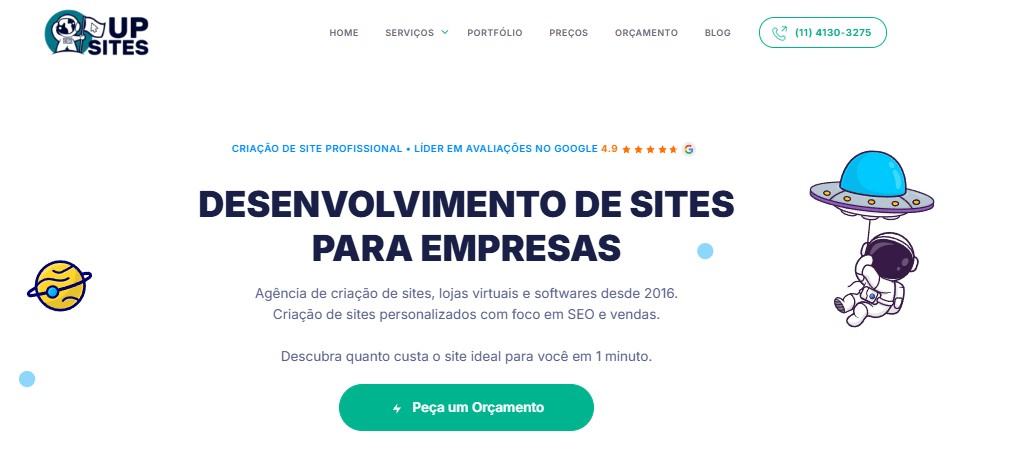
The first sentence of your website, or landing page, should be short, direct and answer the question: “What are you offering and why does it matter?”. . A good title catches the attention in the first seconds and encourages the visitor to continue.
Examples of effective headlines:
- “ Schedule your online consultation with 10% discount”
- “Customized legal solutions for your business”
- “Create your professional website in up to 7 days”
- “Digital marketing focused on real results”
- “The therapy that fits in your routine and time”
Call to action well positioned
The call to action is the button or link that invites the user to act. . It needs to be clear, visible and positioned at the most attention points on the page, such as after the headline, after presenting the services or next to the form.
For example, after submitting your proposal, a highlighted button with the phrase “I want to schedule it now” can significantly increase the click rate. The ideal is to repeat this CTA along the page in a strategic way.
Dry and functional form
Too long forms drive the visitor away. The ideal is to ask only the essential information for the first contact, as name, e-mail and at most telephone or service of interest. . Simplicity converts more.
Social proof (testimonials, seals of trust)
People trust more when they see that others have already trusted. Include testimonials, customer ratings, security seals or logos of companies served reinforces the credibility And takes unconscious doubts from the visitor.
You can insert a block with the phrase “See what our customers say”, followed by 2 to 3 short statements with name, photo and result achieved.
Destination page (landing page) with unique focus
A high conversion landing page should have a single goal: generate leads. . No extensive menus, links to other pages or distractions. It needs to guide the user directly to action, whether scheduling, downloading a material or contacting.
You need: a page with title + benefit, clear CTA, simple form and social proof. This is enough to capture leads efficiently, especially in targeted campaigns on Google or social networks.
Before and after: how an optimised site reduces CPL in practice
Imagine two companies investing the same value in paid traffic. The first directs your ads to a outdated site, slow and without focus on conversion. The second takes the user to an optimised landing page, with fast loading, clear CTA and lean form. The result? The second company pays much less for lead.
A well done site improves the user experience and makes better use of each click, and this directly reflects the cost reduction per lead (CPL). See the practical comparison:
illustrative example of a campaign before and after page optimisation:
| Element | Out-of-date website | Optimized Site |
| Loading speed: | 5 seconds | 1.5 seconds |
| Conversion rate: | 0,8% | 4,7% |
| Staying time: | 18 seconds | 1 minute and 12 seconds |
| Responsivity: | Not adapted to mobile | 100% responsive |
| Average CPL: | R$ 36,00 | R$ 9,80 |
This type of optimisation transforms low-performance campaigns into scalable and much more profitable strategies.
Practical tips to reduce cost per lead with site improvements
Reduce the cost per lead (CPL) does not just depend on well segmented ads: the site also needs to be prepared to convert each click into real opportunity. With simple adjustments to the structure, speed and user experience, it is possible to transform the performance of campaigns and do more with less. Here are some practical actions that can be applied quickly to your project:
1. Review the structure of the destination page
The landing page should focus on a single goal: to generate conversion. Distract as menus with many links, generic texts or excess information. Structure the page with direct title, clear benefits, social proof, lean form and visible CTA. Less is more, especially when it comes to paid traffic.
2. Use A/B tests to test CTAs
A/B tests allow compare different versions of the same element, such as the text or color of an action button. With this practice, you discover which version generates more clicks and conversions, making decisions based on real data. Test variations like “Schedule now” vs. “I want to book my schedule” and see which one delivers the best cost per lead.
3. Optimize images and codes for more speed
Heavy images and poorly structured codes slow down the site, and this directly impacts campaign performance. Compress Files, use modern formats (such as WebP) and delete unnecessary scripts help reduce loading time and improve user experience. A fast site is a cheaper site by lead.
4. Adapt the website to mobile first
Most of the hits come from mobile devices, and Google prioritizes websites with good performance on mobile. Adopt mobile first design means creating first thinking in the experience on mobile: readable sources, clickable buttons, adjusted images and functional forms. Sites that adapt well to mobile convert more and waste less traffic.
5. Reduce distractions in navigation
The fewer options the visitor has to deviate from the path of conversion, the better. Eliminate unnecessary links, complex menus and banners that do not contribute to the purpose of the page. A clean navigation, focusing on content and call to action, keeps the user engaged and significantly increases conversion rate, reducing cost per lead.
6. Use heat map tools to understand behavior
Heat maps show where users click, roll or leave the page. With tools like Hotjar or Microsoft Clarity, you can view the points of attention and dispersion within the site. This data helps to adjust layout, CTA positioning and page structure based on the visitor's actual behavior.
7. Integrate with automation and analysis tools
Automation and analysis are key to transforming data into decisions. Integrate the site with tools like Google Analytics, RD Station or HubSpot for monitor the performance of campaigns and nourish the leads automatically. This allows identifying bottlenecks, adjusting strategies and scaling the results more efficiently.
Conclusion: well done site reduces cost per lead
Investing in paid traffic only generates good results if the site is prepared to convert each click into opportunity. A well-structured site reduces cost per lead, improves user experience and transforms campaigns into scalable and sustainable strategies. More than attracting visitors, you need to conduct them intelligently until conversion.
If you want to create an optimised website for conversion, fast, functional and ready to receive paid traffic with real performance, Count on WebSyd.
Click on the button below and talk to our team to request a custom budget for your project!
At WebSyd, custom-made websites depart from R$5,000 and are ready in about 45 business days; online stores take about 60 days. Get a quote.

FREQUENTLY ASKED QUESTIONS
Does a well done site really reduce the cost per lead (CPL)?
Yeah. A well done site reduces cost per lead because it improves the conversion rate of campaigns. With fast loading, good user experience, clear navigation and well positioned CTAs, more visitors become leads, reducing the amount paid for each conversion.
What is the relationship between paid traffic and user experience on the site?
User experience directly influences the result of paid traffic campaigns. Slow, confusing or unresponsive sites increase the rejection rate and waste paid clicks. A site with good UX keeps the visitor engaged, increases the length of stay and improves conversions.
Does site speed really impact campaign performance?
Impacts directly. Each extra second of loading reduces the conversion rate significantly. Quick sites make better use of investment in ads, while slow pages raise the cost per lead and impair the scalability of campaigns.
Landing pages make a difference in cost per lead?
It makes a lot of difference. Landing pages focused on a single goal, with clear headline, lean form and very visible CTA, convert more than generic pages. The higher the landing page conversion, the lower the cost per lead in paid campaigns.
Can you reduce the CPL without increasing the budget in ads?
Yeah. Site improvements tend to have more impact on the CPL than increase budget. Optimize speed, responsiveness, offer clarity, forms and navigation allows you to generate more leads with the same investment in paid traffic.

Caio Nogueira is a SEO, GEO, link building and Digital PR expert and co-founder of WebSyd, website creation agency and SEO consulting founded in 2016. It acts with organic search strategies, digital authority construction and brand optimisation for search engines and artificial intelligence platforms. Throughout his trajectory, he participated in more than 1000 projects involving SEO, website development, content marketing and authority acquisition through backlinks and Digital PR. At WebSyd, it participates in the planning of strategies to increase organic visibility, lead generation and presence of companies on Google and AI-based search engines. As an author, it publishes content on SEO, GEO, website creation, link building and digital authority, sharing analyses, strategies and practical experiences related to organic growth of companies. Its contents and contributions have also been published in companies and vehicles of technology and marketing such as Wix, HostGator, Duda, Neil Patel, Locaweb and E-Commerce Brasil.
View all posts


 Estimate the cost

