
Dwell Time: How to increase the length of stay on the site?
Summary (TL;DR)
In this post, let's talk about what is the dwell time, or length of stay, and its importance as a metric to assess the quality of a website and the engagement of visitors.
The dwell time reflects the time that the user remains on a page after accessing a link of search results before returning to the search page. This indicator directly impacts Google's perception of the relevance of content and the experience provided to the user, influencing site ranking.
We also address strategies to increase the dwell time, how to invest in intuitive design, produce relevant content and optimise page loading time.
With these practices, it is possible to retain visitors for longer, improving both user experience and site performance in search results, which increases the chances of conversion and public loyalty.

Quick answer: dwell time is the time that a person spends on a page after clicking on a Google result before going back to search. Google does not confirm that it uses this metric directly in the ranking, but a low dwell time usually indicates that the page did not respond to the search. To increase it, answer at the beginning, organize the text with subtitles, use examples and internal links and leave the page quickly.
This term defines the period in which a visitor remains on a page after accessing a link in the search results, before returning to the searcher's homepage.
In short, the more time a user spends on a page, the greater the chance that the content is relevant, useful and engaging to it.
The dwell time directly impacts Google's perception of the quality of its content and experience that offers the user.
When the dwell time it is high, the search mechanisms interpret this as an indication that the site is meeting the expectations of users, which contributes to a better ranking.
This metric, therefore, not only reflects the engagement of the visitor, but can also influence the SEO and organic scope of your website.
Throughout this article, you will know practical and effective strategies to increase the dwell time, keeping your visitors longer, improving the browsing experience and increasing the chances of conversion.
Learning how to optimise the length of stay is a key step for any site that wishes to stand out in search results and gain public loyalty.
Why Dwell Time is important to your website
The length of stay on the site is an indication of quality for both users and search mechanisms. One dwell high time shows that visitors are finding useful information and are engaged.
From the SEO point of view, this sends positive signals to searchers, such as Google, about the relevance of their content.
For companies and blogs, increasing the dwell time means a greater chance of conversion, as the visitor feels motivated to explore other content and even perform important actions such as signing up or making a purchase.
Therefore, understanding how to improve this metric is fundamental for any digital marketing strategy.
How to Increase Dwell Time: Practical Tips
To improve the dwell time and maximize your site's potential in terms of engagement and SEO, it is essential to adopt effective practices that optimise the user experience.
Here are the main strategies:
1. Invest in Design and UX (User Experience)
The first impression is decisive to retain visitors. One design attractive, intuitive and easy to navigate can significantly impact the dwell time.
- Clean and Functional Design: Avoid overloaded pages of information and unnecessary visual elements. Offer a clear and enjoyable visual experience.
- Ease of Navigation: A well-structured menu and accessible links allow visitors to explore their website without difficulties, increasing the likelihood of it staying longer.
- Responsivity: As many users access the internet via mobile devices, ensuring that your website works well on mobile phones and tablets is very important. Responsiveness impacts retention and, consequently, the dwell time.
2. Produce Relevant and Updated Content
Content is the central factor for keeping visitors engaged. A site with relevant and constantly updated content encourages the user to explore more pages and spend more time browsing.
- Deep and Information Content: Create complete articles that respond to user questions and offer valuable insights. Use your niche-related keywords to improve SEO optimisation and engagement.
- Quality Images and Videos: Multimedia content, such as high-quality images and explanatory videos, enrich the user experience and increase the length of stay.
- Constant Updates: Keep your content up to date to ensure that it remains relevant and aligned with current user searches.
3. Optimize Page Loading Time
The speed of the site is a decisive factor in retaining the visitor. A slow site not only impacts the dwell time, as it also directly affects ranking in search engines.
- Image and Video Optimization: Use compressed formats and avoid excessively large files to speed up page loading.
- Light Plugins: Avoid heavy plugins that may compromise site speed. Select only those essentials for functioning and performance.
- High Performance Servers: Choose a Hosting quality and with good reputation in terms of speed and reliability, ensuring that the site offers a fast loading experience.
See the example of WebSyd PageSpeed:
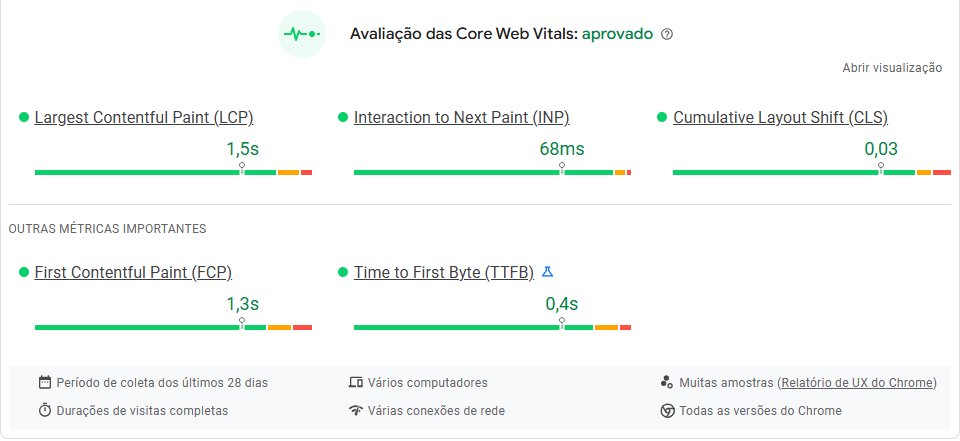
These metrics show the site's loading time. The ideal is to keep everything in the green, as is the image. For you to make this evaluation, just access: https://pagespeed.web.dev/.
4. Use Internal Links for Fluid Navigation
Internal links well positioned not only help the user to navigate, but also encourage to explore other pages, increasing the dwell time and reducing the rejection rate.
- Reading Suggestions: At the end of the posts, include links to related or suggested articles, encouraging visitors to continue browsing.
- Related Topics and Contextual Links: Include sections such as “Related Posts” and internal links along the text that guide the user to deep, relevant content.
These practices are essential to create an enriching user experience and maximize the time of stay on the site, promoting a better position in SEO and more chances of conversion.
How Dwell Time Affects SEO on Your Site
The dwell time it has a direct relationship with SEO, because search engines, such as Google, use this metric to understand the user experience and determine the relevance of a page.
Next, we explore as the dwell time affects its positioning in searches and why it is so relevant to SEO.
Better Ranking in Search Results
One dwell time high suggests that the content of the site is interesting and satisfactory for the user, which Google interprets as a positive sign.
Pages with one dwell time higher tend to obtain better positions in the search results, since the algorithm prioritizes content that demonstrate value for the visitor.
This optimised ranking increases site visibility and attracts more organic traffic.
Reduction of Rejection Rate and Quality Signals
The dwell time is closely related to the rejection rate (boome rate). While a high bounce rate indicates that the user left the site quickly, a good dwell time represents the opposite: the visitor remains and explores the content.
This metric is a quality indicator for Google, reinforcing the authority and relevance of the site. Reduce the rejection rate and increase the dwell time contribute to more solid and reliable SEO performance.
Greater Organic Engagement and Traffic
When the dwell time it is high, this reflects a higher level of engagement with the content.
Engaged users are more likely to return to the site and share the content, increasing organic traffic and reinforcing the digital presence of the brand.
This prolonged engagement with different pages also contributes to public loyalty, something Google values.
Investing in the increase in dwell time is an essential strategy to improve SEO and ensure consistent and qualified traffic, promoting sustainable site growth in search engines.
How to Measure and Monitor Dwell Time on Your Website
To optimise the dwell time, it is essential that you follow this metric regularly.
Analyzing visitors' length of stay offers valuable insights into what is working well on your site and where there are opportunities for improvement.
Next, we show how to measure and monitor the dwell time effectively.
Use of Google Analytics for Dwell Time Analysis
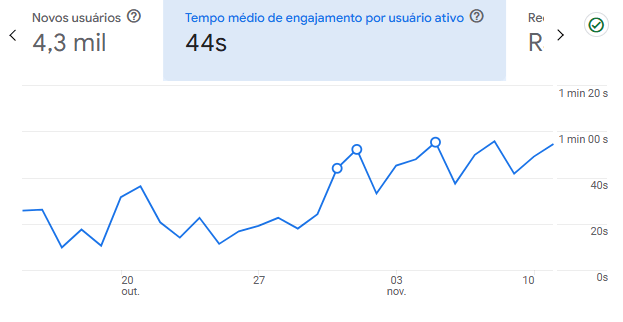
The Google Analytics is one of the most complete tools to monitor user behavior on a website.
Although the dwell time specific do not be displayed directly, you can use the “average time on the page” to get a sense of how much time visitors spend in each section of the site.
This metric, along with the rejection rate and output pages, helps to identify low engagement pages and prioritize improvements.
Content Review: Identify Pages with Larger Dwell Time
To improve the dwell time, it is useful to identify which types of content keep the user engaged for longer.
Review pages with one dwell time higher to understand the factors that attract the visitor, such as content depth, multimedia use, relevance of themes or writing style.
Replicating these elements on other pages can help increase the length of stay throughout the site.
New Approach and Continuous Monitoring Test
Testing different approaches is necessary to find out what most impacts the dwell time. . Try variations in content such as longer articles, lists of tips, explanatory videos and infographics.
Test also adjustments of layout and calls to action (CTAs) that encourage the user to explore other pages. After implementing changes, monitor the metrics to assess impact and adjust strategy as needed.
Track dwell time allows you to identify opportunities for improvement that can boost SEO and improve the overall performance of the site.
Conclusion
The dwell time it is an essential metric for sites that seek to improve user experience, increase engagement and positively impact SEO.
By investing in a good user experience, high quality content, fast loading of pages and fluid navigation, you can make visitors stay longer on your site, signaling their relevance to search engines.
A strategic approach to optimise the dwell time can be applied to different sectors, especially in competitive markets.
With gamification techniques, customisation and intuitive design, it is possible to increase engagement and maximize the permanence of visitors.
By implementing the tips addressed in this article, you have the potential to turn your site into an engaging and valuable environment for the public, improving not only retention but also ranking in searches and possibly conversion rates.
Remember: monitor the dwell time regularly it is essential to identify strengths and opportunities for improvement, helping to create an increasingly efficient and attractive user experience.
FREQUENTLY ASKED QUESTIONS
What is the dwell time and why is it important to SEO?
The dwell time is the time that the visitor spends on a page after clicking on a search result before returning to the results page. Google does not confirm that it uses this metric in the ranking, but a very short time usually indicates that the page did not respond to the search, which is worth correcting.
How can I increase the dwell time on my website?
There are several ways to increase the dwell time, including creating an attractive and easy to navigate design, relevant and up-to-date content production, use of quality images and videos and optimisation of page loading time. These practices improve user experience and encourage longer stay on the site.
What's the relationship between dwell time and rejection rate?
The dwell time And the rejection rate is related, but they're different. While the dwell time measures the time that the user spends on a specific page before returning to search results, the rejection rate indicates the percentage of users leaving the site without interacting with other pages. A good one dwell time it is usually associated with a lower rejection rate.
How can dwell time impact conversion on my website?
When the dwell time it is high, means that visitors are engaged with the content, which increases the chance of important interactions, such as exploring other contents, registering or making a purchase. Therefore, improve the dwell time it also contributes to increase the conversion and retention of the public on your website.

Caio Nogueira is a SEO, GEO, link building and Digital PR expert and co-founder of WebSyd, website creation agency and SEO consulting founded in 2016. It acts with organic search strategies, digital authority construction and brand optimisation for search engines and artificial intelligence platforms. Throughout his trajectory, he participated in more than 1000 projects involving SEO, website development, content marketing and authority acquisition through backlinks and Digital PR. At WebSyd, it participates in the planning of strategies to increase organic visibility, lead generation and presence of companies on Google and AI-based search engines. As an author, it publishes content on SEO, GEO, website creation, link building and digital authority, sharing analyses, strategies and practical experiences related to organic growth of companies. Its contents and contributions have also been published in companies and vehicles of technology and marketing such as Wix, HostGator, Duda, Neil Patel, Locaweb and E-Commerce Brasil.
View all posts


 Estimate the cost

