
What are the best AI detectors? The 10 most reliable tools in 2026
Summary (TL;DR)
The AI detectors help to identify texts generated by artificial intelligence analyzing structures, linguistic patterns and metrics as perplexity.
They are essential to ensure authenticity in academic, corporate and digital content. To choose the ideal tool, evaluate the accuracy, supported langauges and extra features.
Check out our complete list with the top 12 detectors and find out which one fits your need.

The popularization of artificial generative intelligence has completely transformed the way we create content. Today, anyone can produce texts, images and videos in minutes, and that is exactly why the AI detectors They've become so important. These tools analyze patterns and probabilities to determine whether something was done by humans or systems like ChatGPT, DeepSeek, Gemini or Jasper. Today you will know the 10 best AI detectors in the market.
Are these tools really effective? And what are the most reliable options on the market in 2026? In this article, you will understand how AI detectors work, discover their main features and know the best tools currently available to verify the authenticity of any content.
What are AI detectors?
The AI detectors are tools developed to identify if a text, image or other type of content was generated by an artificial intelligence.. . They work through algorithms that analyze linguistic and statistical patterns, comparing writing or structure with typical machine productions.
In other words, these platforms help distinguish between human creativity and algorithmic predictability, ensuring more transparency and security in academic, corporate and digital environments.
How do AI detectors work?
These tools use language templates, databases and probability calculations to identify typical traces of content created by AI. They evaluate factors such as writing style, syntactic patterns and semantic variation. The main characteristics that detectors analyze are:
- Consistency and fluency: AI-generated texts tend to be excessively cohesive and uniform, without great variations in style;
- Level of complexity: artificial contents generally maintain a simple logical structure, with predictable vocabulary;
- Repeats and redundancies: IAs often repeat expressions or ideas to strengthen coherence, something that humans rarely do in the same way;
- Deep depth: automated texts often lack critical analysis or original examples;
- Statistical standards: detectors measure the probability of certain words appearing together, something very common in AI productions;
- Perplexity: indicates how much a text surprises the model; the lower, the greater the chance of having been generated by AI;
- Structure: evaluates how sentences and paragraphs are organized, since machines tend to follow consistent and predictable structural patterns.
What are the best AI detectors?
With the advancement of artificial generative intelligences, new tools have emerged to identify machine-produced content, and some stand out for accuracy, resources and reliability. Check out a selection of the most recommended solutions on the market in 2026:
1. Copyleaks
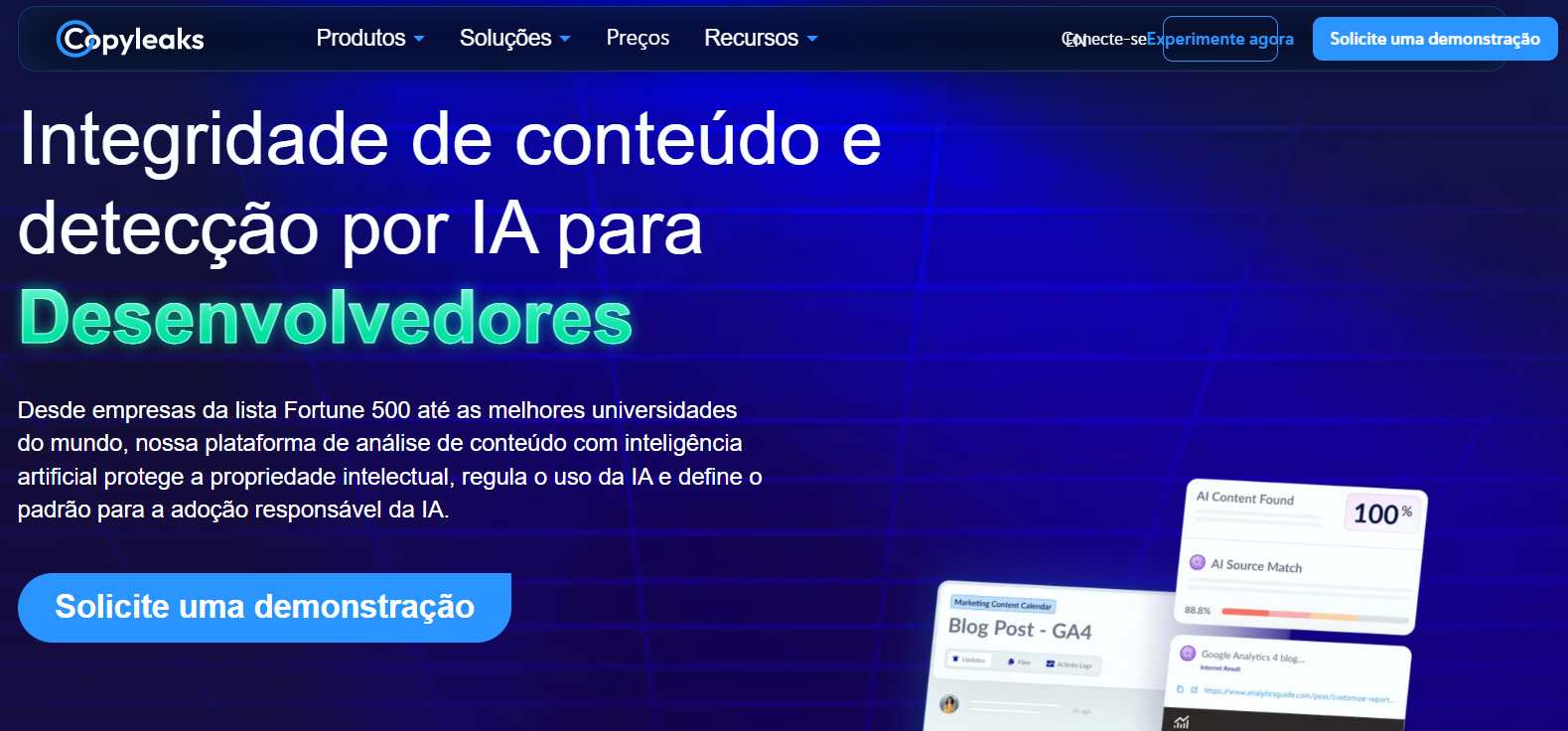
The Copyleaks it is one of the most advanced and complete AI detectors in the market, being widely used in universities, companies and agencies that need to verify the authenticity of texts. It's a match machine learning with databases robust to identify typical patterns of models such as ChatGPT, Gemini, Claude and others.
The company discloses accuracy above 99%, number measured by itself, and support more than 30 languages, which makes it extremely versatile for different types of analysis.
In addition to high precision, Copyleaks offers professional features, such as explanatory reports showing why a particular passage was marked as AI, integration with educational platforms and detailed audit options. The tool also stands out for data security, as it follows global regulations such as GDPR and has SOC 2 and SOC 3 certifications.
♪ Though ♪ do not have a free plan, its credit system allows flexibility in use, charging for volume of analyzed words.
2. GPTZero
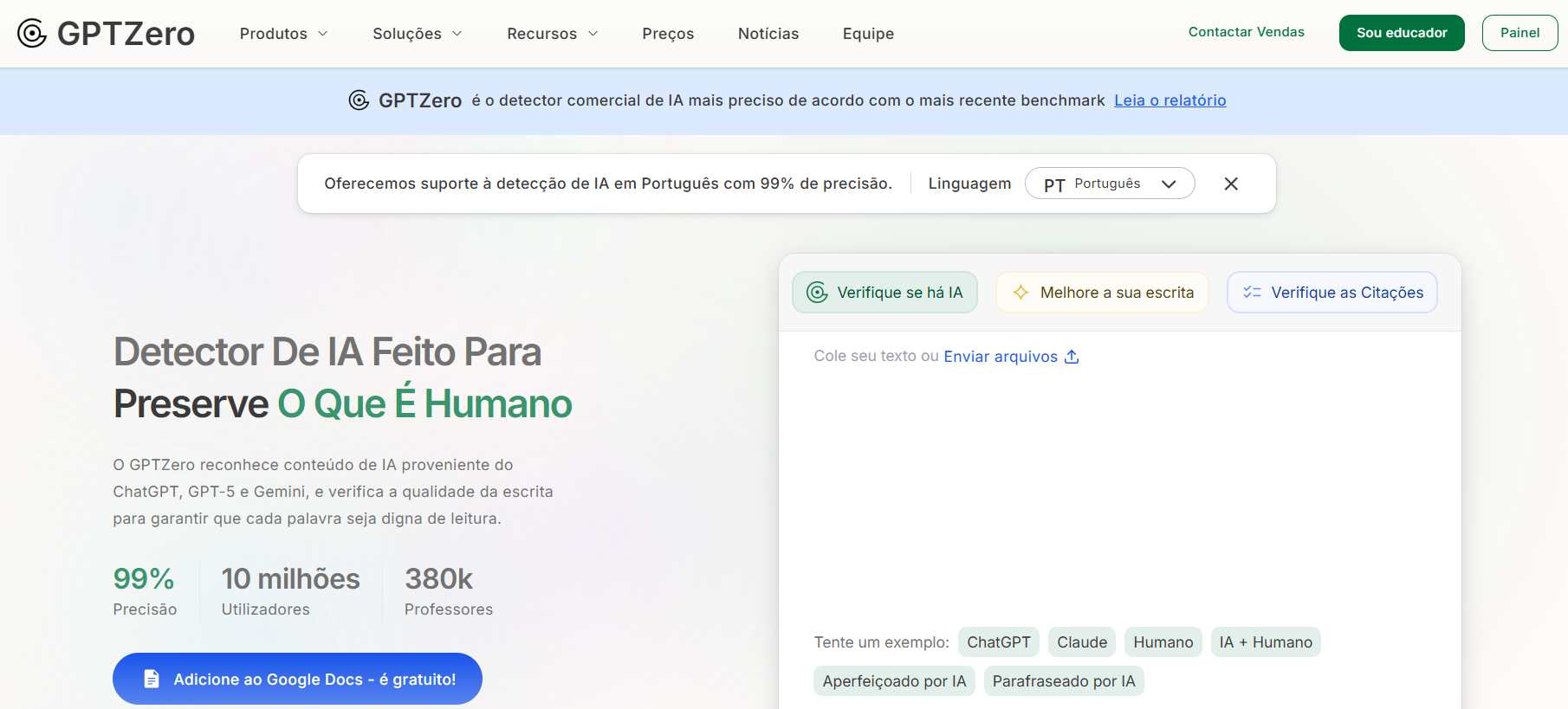
The GPTZero it is one of the most popular solutions among teachers, schools and companies that need to quickly identify texts created by AI. It detects content generated by the major models of the market, including ChatGPT, GPT-4, LLaMa, Gemini and other recent systems. His technology analyzes several linguistic and statistical components to reduce false positives, delivering reliable analysis even in long or complex texts.
Another differential of GPTZero is its simple interface and the variety of accepted formats, it is possible to paste text, send files or integrate with platforms such as Canvas, Moodle and Google Classroom.
The Free version allows analyzing up to 10,000 words per month, besides five advanced scans. He also owns integrated plagiarism detector, offering a complete analysis that unites originality, authorship and authenticity in one place.
3. Originality.ai
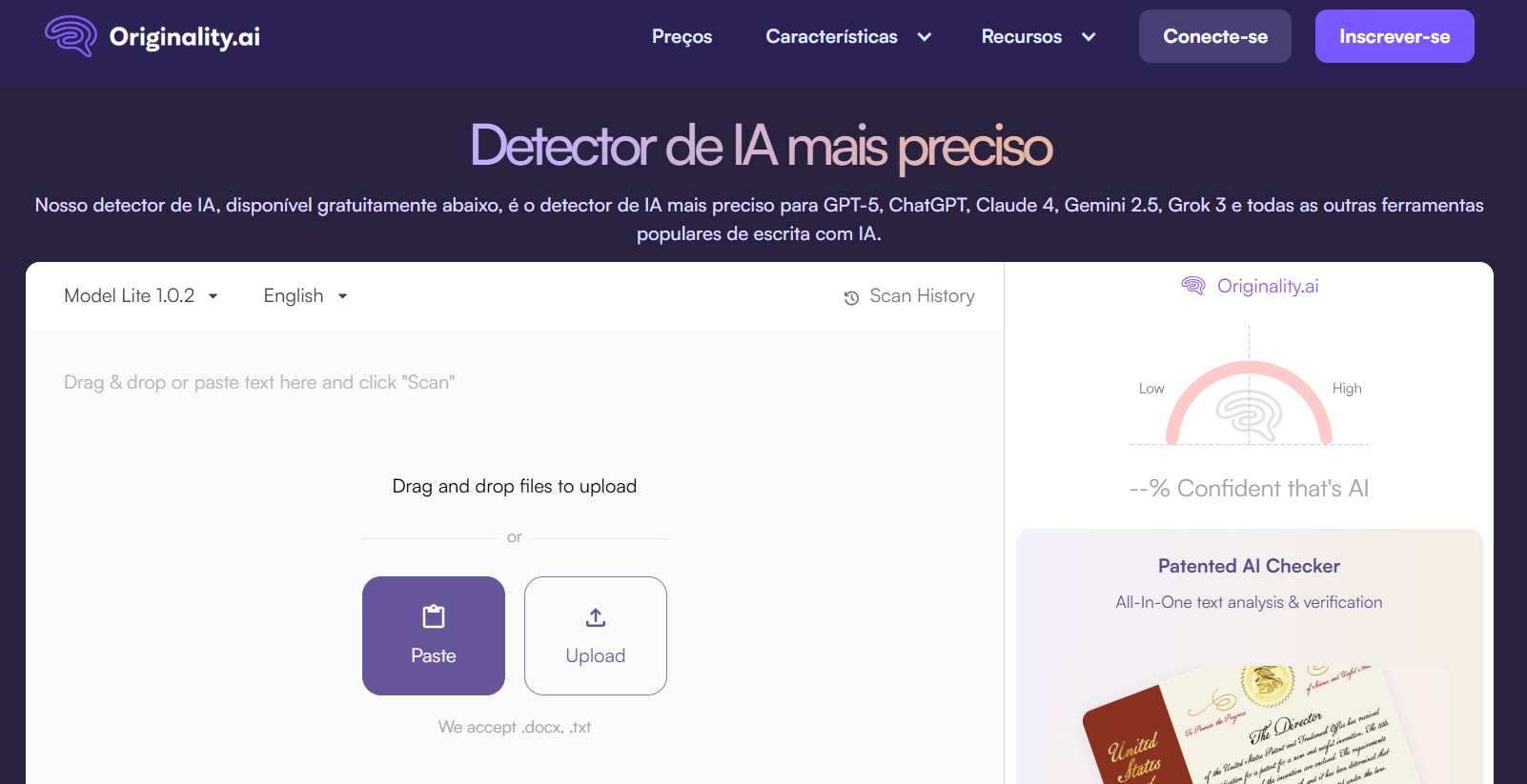
The Originality.ai it is one of the most used tools by companies, publishers and publishers who need to ensure that its content is really human. Its algorithms use advanced natural language processing techniques to identify syntactic, semantic and statistical patterns characteristic of AI-generated texts.
One of the great differentials of the platform is its fact check, which analyzes the information mentioned in the text to detect inconsistencies or invented data, something common in content created by AI.
♪ Though ♪ has no free version, the pay-per-use model makes Originality.ai an accessible option for those who need point analysis. Among its most notable features are the detection of paraphrasing done with AI, full site scanning, simultaneous plagiarism verification and one of the best accuracy rates in the market, especially for English texts.
4. Writer
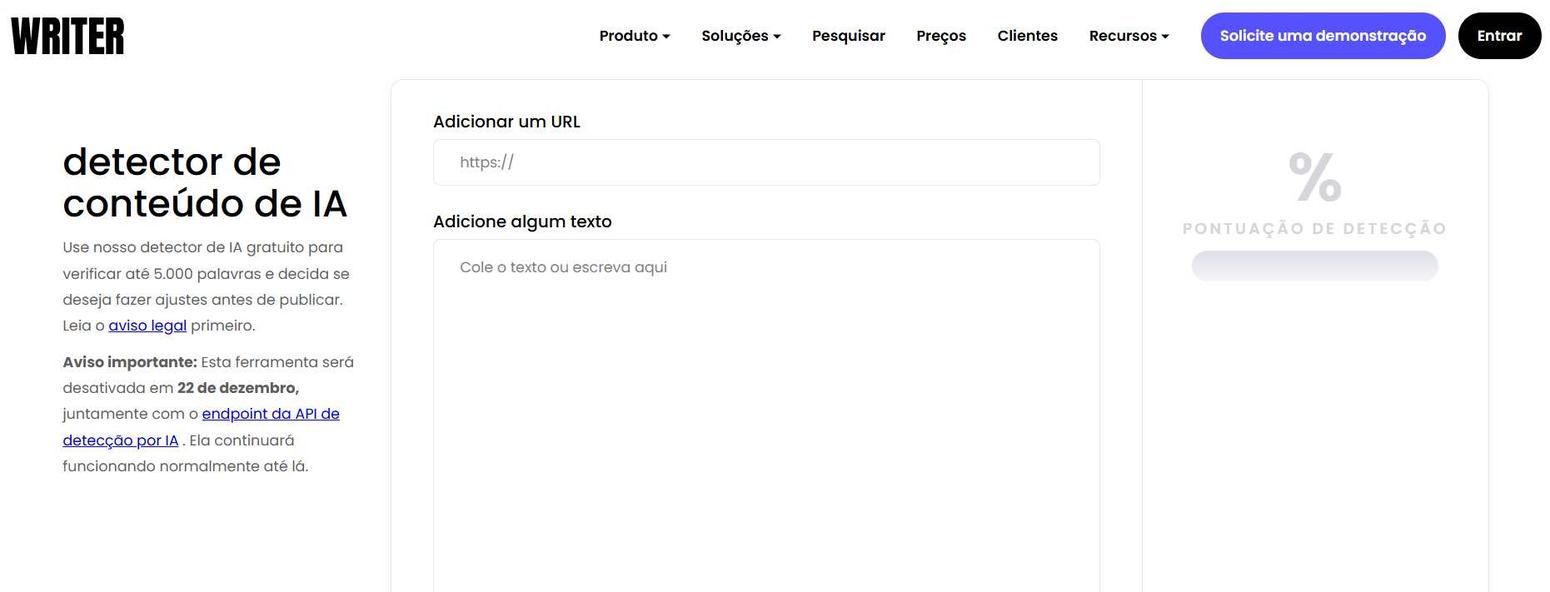
The Writer it is a solution that goes beyond the simple content detection generated by AI: it also acts as a writing wizard, offering suggestions to make the text more fluid, natural and with characteristics of human language. It is a very useful tool for content teams who wish to review texts, identify signs of AI and raise the final quality of writing. In addition, Writer performs quick and accurate analysis without requiring login for small checks.
The platform stands out for being one of the Freer AI detectors more accessible, allowing to analyze up to 5,000 words without creating account. Despite this, its full use is done via API, which makes it especially interesting for companies that want to integrate the tool into the production flow.
Among its additional features are plagiarism detection from advanced URLs and insights for style improvement, ideal for making content more original, consistent and reliable.
5. QuillBot
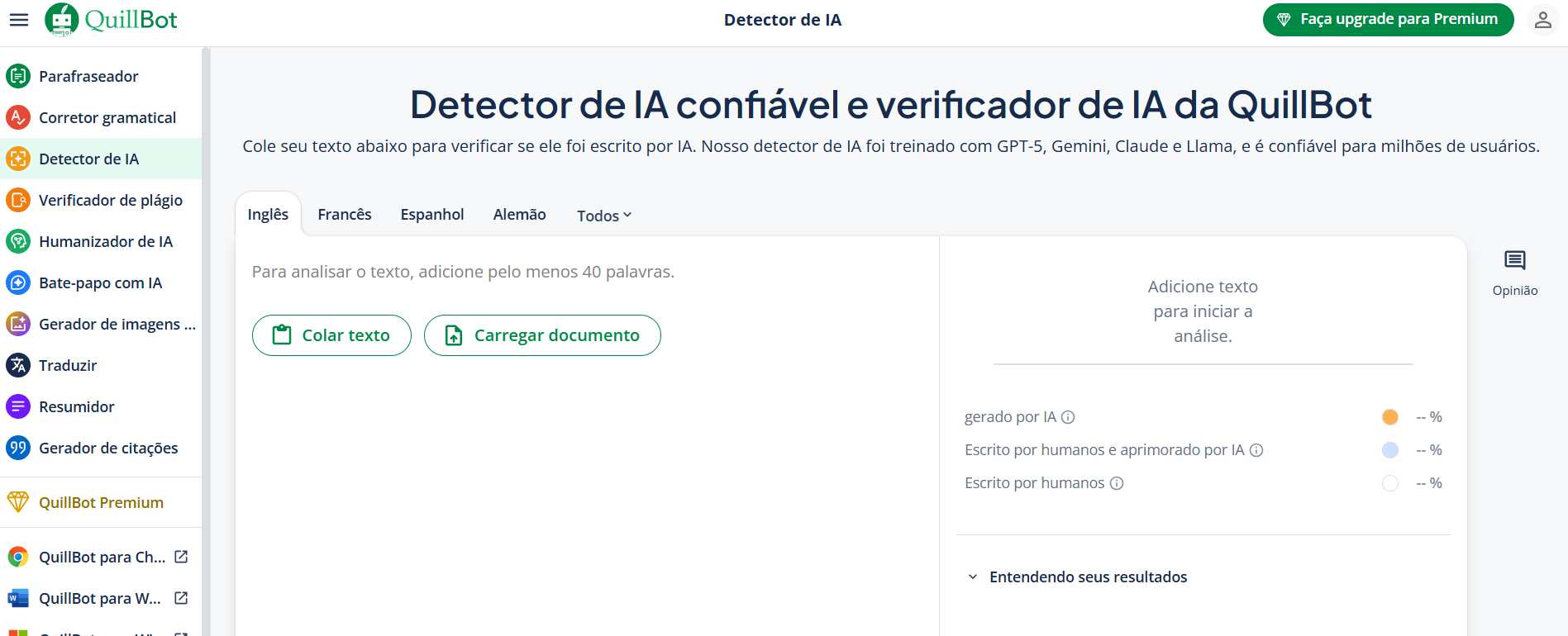
The QuillBot is one of the most popular tools among students, educators and content creators, offering a precise AI detector that identifies texts written or adjusted by models such as ChatGPTGemini and others.
Him. analyzes language patterns and grammatical structures typical of artificial intelligence, delivering clear reports with low false positives. Its simple and intuitive interface facilitates quick analysis of documents of different sizes.
In addition to the AI detector, QuillBot has several complementary features, such as orthographic broker, plagiarism detector and one of the best known paraphrase tools on the internet. It is available in several languages, including Portuguese, and accepts both pasted text and uploaded files.
The free plan it allows to analyze up to 1,200 words per document, number that can be expanded in the paid plan, excellent for those seeking a complete solution for revision and authenticity of texts.
6. CrossPlag
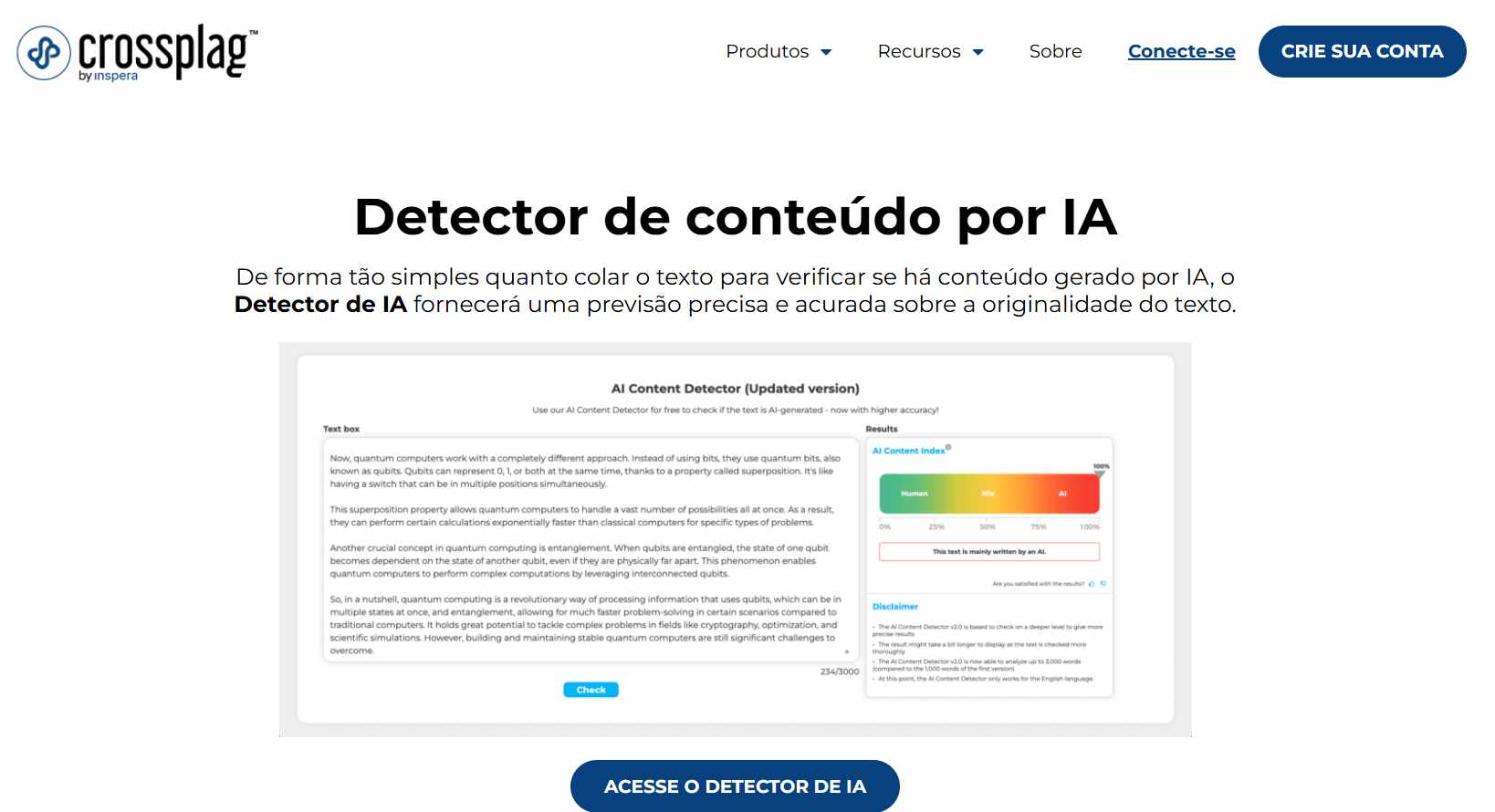
The CrossPlag it is a tool known both for plagiarism detection and the identification of content generated by artificial intelligence. Trained with advanced machine learning algorithms and natural language processing techniques, he manages to analyze texts and accurately indicate whether they were written by humans or produced by AI models.
Although it is often used in academic environments, its usefulness extends to content creators, agencies and professionals who seek to ensure originality.
Currently, CrossPlag works only in English, but still stands out for its simple interface and the ability to compare texts to identify similarities between human writing and AI patterns.
It allows you to scan documents in different formats and offers a free plan, making it accessible for those who need to quickly verify the authenticity of a content. Among its features are deep contextual analysis, integrated plagiarism verification and easy to interpret reports.
7. Hive Moderation
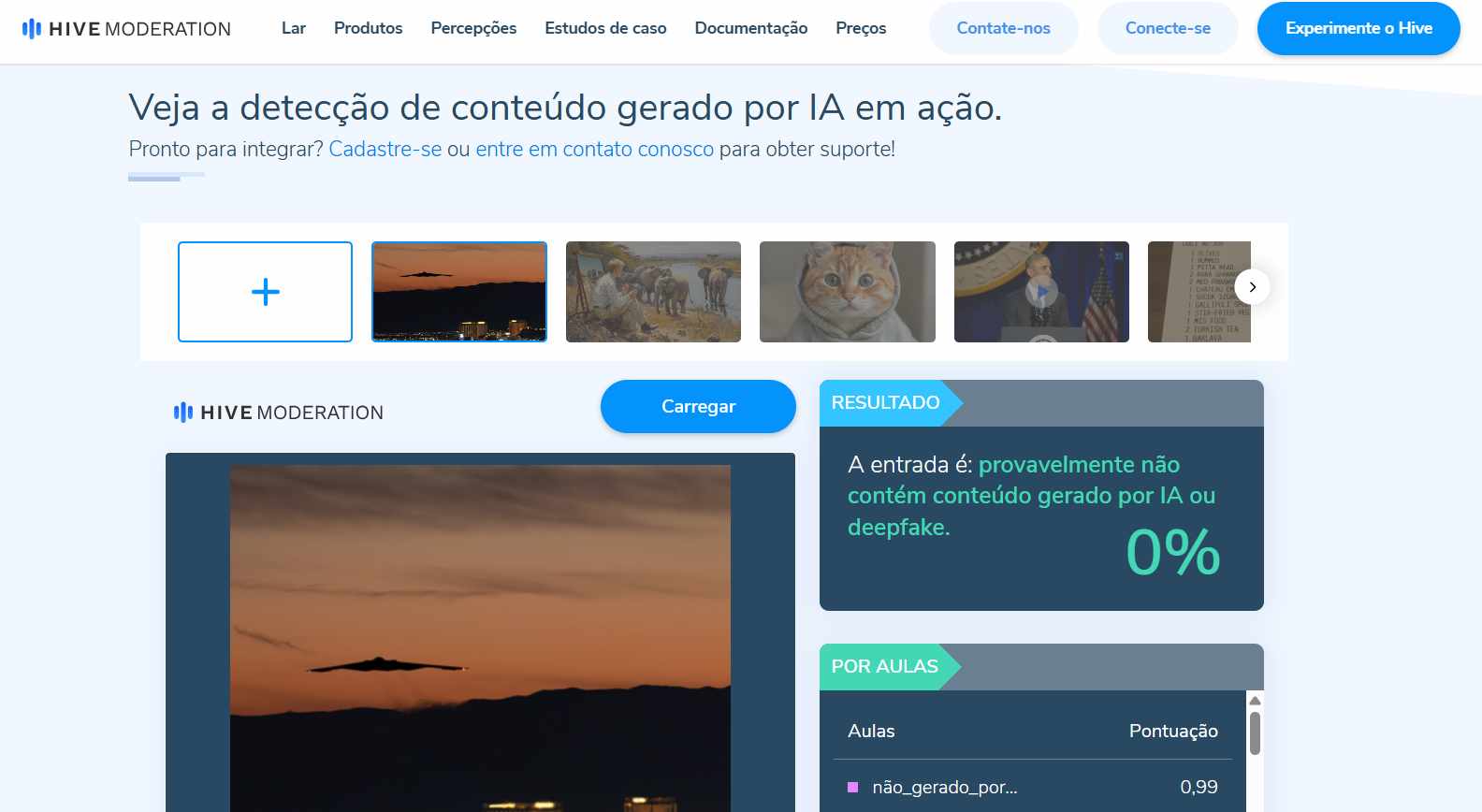
The Hive Moderation it is a very different AI detector from the others, because it was specially designed to moderate large-scale content in digital platforms like Reddit, VSCO, Quora, VEVO and others.
Its function is identify suspicious elements in texts, images, videos, audios and even live broadcasts, analyzing whether the material may have been generated by AI or created by bots. This makes it useful for companies that need to avoid spam, misinformation and policy violations.
In addition to multimedia analysis, Hive Moderation offers real-time detection, allowing platforms to apply automatic moderation based on custom criteria. Its technology evaluates originality, integrity and compliance with privacy and security standards.
The price model is based on the volume of use, ideal for teams and large projects. It is one of the most complete solutions for those working with online communities, large feedback streams and user-generated content monitoring.
8. BrandWell
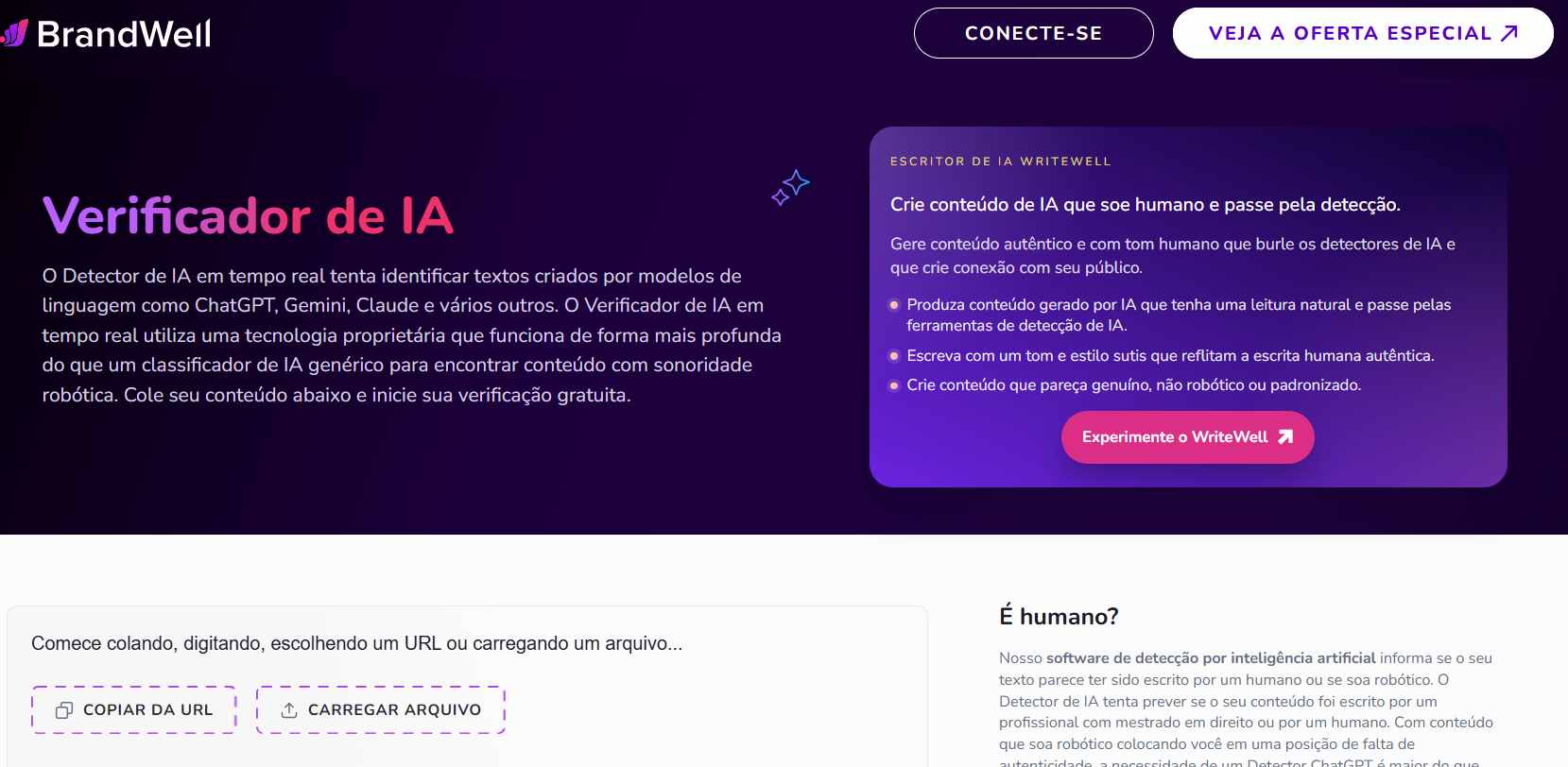
The BrandWell, previously known as Content at Scale, offers one of the most complete free AI detectors, allowing you to analyze up to 2,500 characters per query. The tool recognizes texts generated by different models, including versions of GPT, Claude Sonnet and Google Gemini. Its technology compares structural patterns and vocabulary used in human text versus AI-created texts, offering quick and reliable analysis.
The platform also allows you to manually insert text, paste URLs or send files for analysis, which makes the process quite flexible. Although it works only in English, it is widely used by content creators and professionals who need to validate the authenticity of their texts.
Its additional features include detailed reports, combined verification with plagiarism detection and analysis based on deep linguistic patterns. It's a great tool for Quick and free check.
9. Quetext
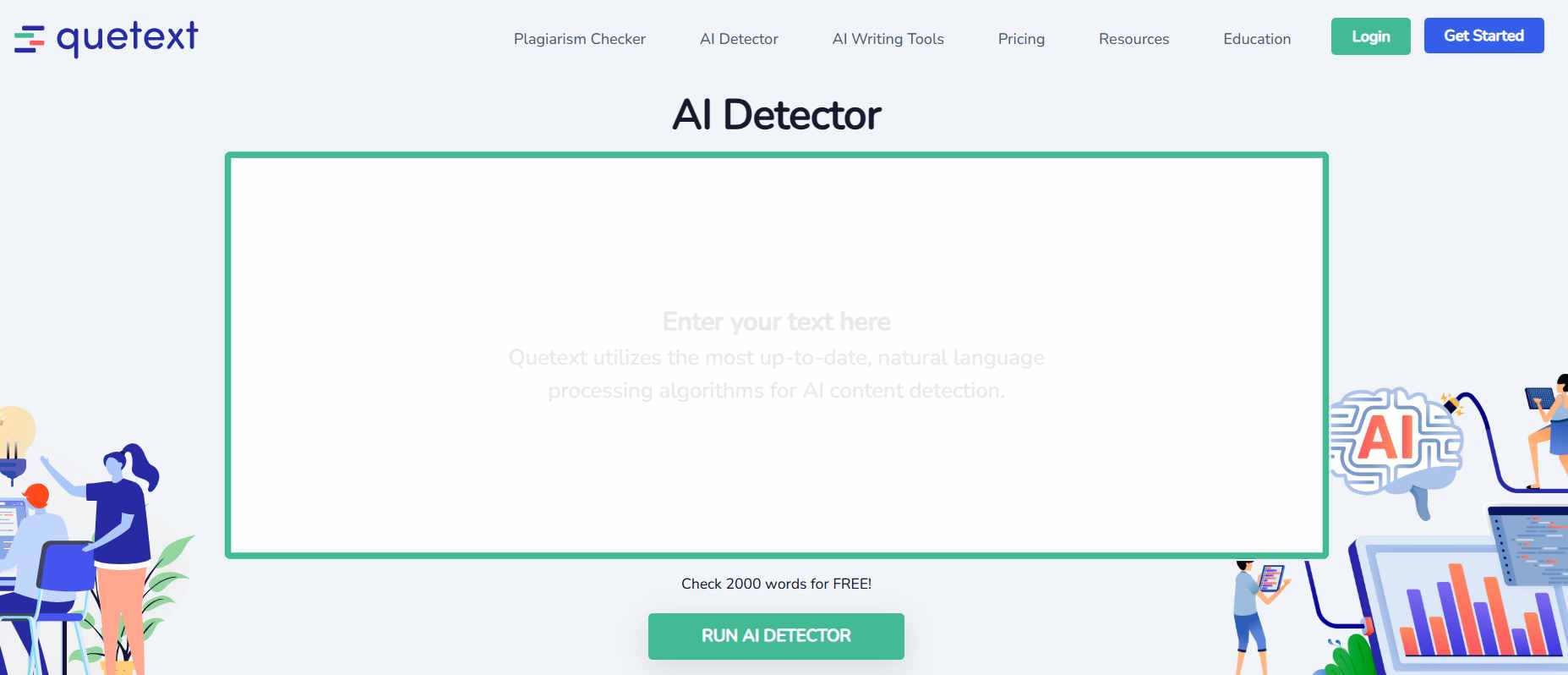
The Quetext it became famous as one of the most used plagiarism detectors in the market and recently gained advanced resources to identify texts produced by artificial intelligence. The tool analyzes each sentence individually, observing linguistic patterns, fluency and structure. This allows detecting excerpts that may have been generated by AI, even when the text was edited or partially rewritten.
Although it's a solution very intuitive and easy to use, its free version is limited to only 250 words per analysis, which can restrict more professional uses. Among its features are detailed reports on originality, authenticity scores and an extremely simple interface.
Quetext works exclusively with typed or pasted text, without uploading files, but still remains a very practical and reliable tool for quick checks.
10. GPTKit
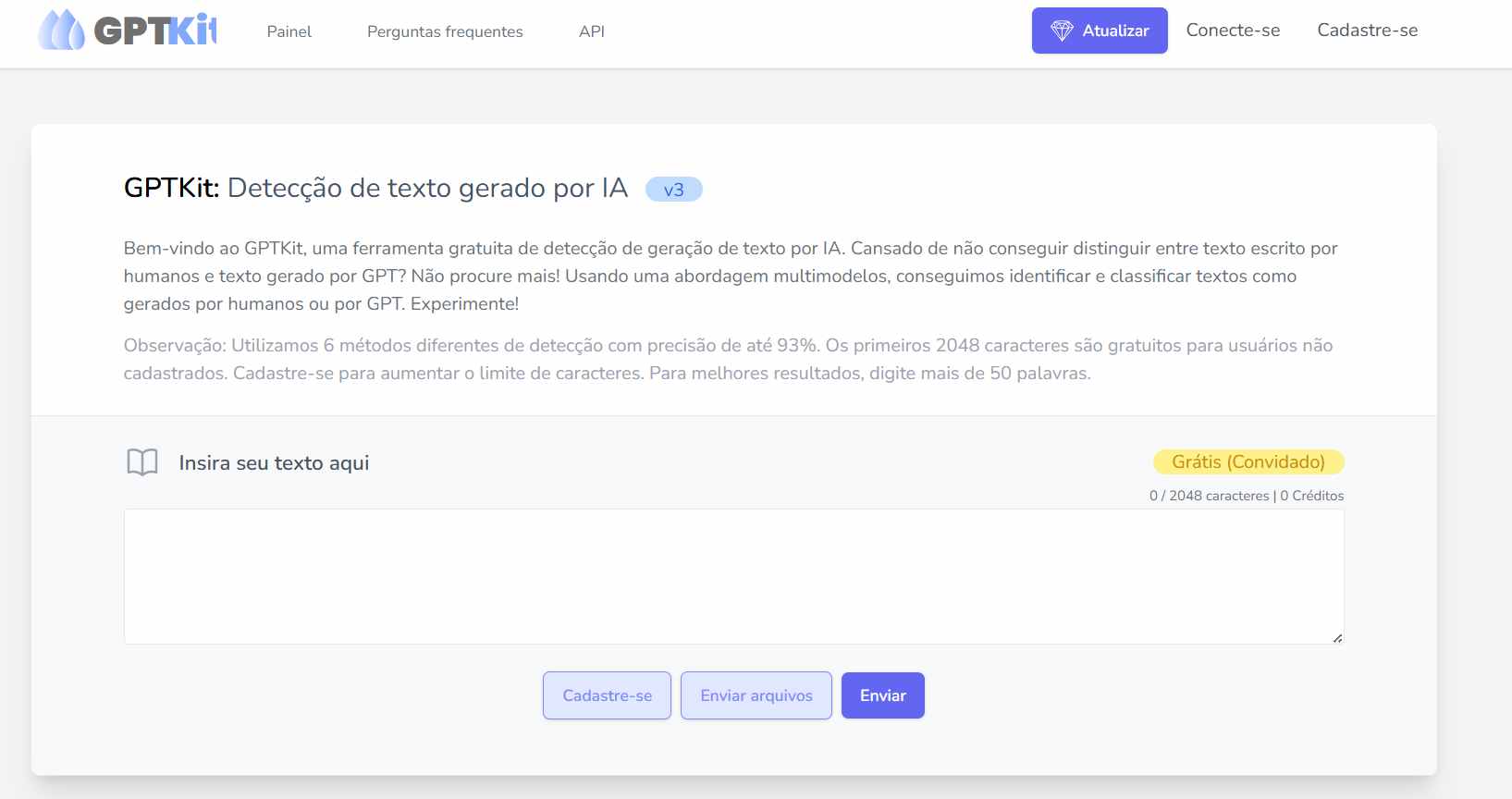
The GPTKit it is a free content detection tool generated by AI that stands out for accuracy: it uses six different methods of analysis to determine if a text was produced by artificial intelligence models, with a score of up to 93%, according to GPTKit. When inserting or loading a text, the platform generates a report with authenticity index, making it simple to identify excerpts written by machines.
Although it works only in English, GPTKit allows unregistered use (with a limit of 4096 characters), which increases when creating an account. Another positive point is that no content sent is stored after analysis, reinforcing user safety. The paid plans offer unlimited credits and are indicated for those who need to do large or frequent checks.
Content made with AI ranks on Google and appears in the AI responses?
You can rank. Google does not punish the text for having been done with AI: it evaluates whether the content is useful, correct and original, and treats as spam the automation used mainly to manipulate ranking. The same goes for the searchers with AI answers, such as AI Overviews and ChatGPT: they cite pages with clear, verifiable and own information.
So the detector serves as triage, not as a goal. Instead of trying to “pass” the detector, review facts, add data and examples of your own and organize the text with direct answers. See how to do this in our guide GEO (optimisation for generative AI) and how to structure content for AI responses.
Choose the ideal detector for each need
AI detectors have evolved rapidly and today are essential tools to ensure authenticity, transparency and reliability in a digital environment dominated by automated content.
For those who publish content on the site, it is worth knowing Google's position. Second guidance on content generated by AI, the search evaluates the quality of content, regardless of how it was produced, and the use of automation mainly to manipulate ranking is treated as spam. A text approved by the detector still needs to be useful, correct and original. See the guide to content creation, from planning to performance analysis.
If you produce, review or publish texts, knowing these solutions helps to maintain high quality standards and avoid reputation risks. Choosing the correct tool depends on your goal: identifying AI, evaluating plagiarism or validating information. The important thing is to understand that these technologies are constantly improving. and should be used as allies in the creation process.
If you want to strengthen your digital presence with original content, smart strategies and a well-structured site, the WebSyd can help. . We are. SEO experts, web design and digital solutions that raise your visibility. Contact us and find out how to turn your brand into a reference in your market.

FREQUENTLY ASKED QUESTIONS
Do AI detectors work with short texts?
Yes, but with limitations. Some detectors require minimal volume of words to generate accurate results, as statistical analyses are less reliable in very brief texts. In short texts, classification errors may be more common depending on the tool.
Can detectors identify AI in translated texts?
Identification becomes more difficult. Translations can change typical patterns of AI or humanize phrases, confusing the detector. However, some tools use semantic analysis and can detect signals even after translation, although with less precision.
Are AI detectors safe for sensitive data?
Depends on the tool. Read the privacy policy before sending the text: some say they do not store content after analysis, others may use it. For confidential documents, prefer tools with business plan and confidentiality terms.
Is it worth trying to bypass AI detectors?
Nope. Humanization tools only exchange words and can worsen the text, and detectors evolve to recognize these patterns. For those who publish on a website, what counts for Google is whether the content is useful, correct and original, not if it passes the detector.
Do AI detectors work to identify images created by AI?
Some do, but not all of them. Most are still focused on text. However, solutions specialised in moderation and multimedia analysis, such as Hive Moderation, already identify images, videos and audios generated by AI.
Do companies really need to use AI detectors?
Depends on the use. In education, journalism and legal, they help to screen texts, but err (including marking human texts as AI), so they should not be the only proof. For websites, the Google evaluates the quality of content, and not if it was done with AI.

Lucas Pelisari has specialised in SEO and content at WebSyd for more than 6 years, working on the creation and optimisation of digital strategies focused on lead generation and organic growth. With experience in website development projects, SEO on-page and link building, he works directly on structuring content and pages aimed at positioning on Google and acquiring qualified traffic. Throughout his work, he has participated in projects for companies such as Kommo, Aldanth, Physical Care, In4, Design.com, Adaptive, Clipto and Yesim, as well as several other clients attended by WebSyd. Its contents address topics such as creating professional sites, SEO, page structure, performance, user experience and digital growth strategies, always with a practical approach based on real market scenarios.
View all posts


 Estimate the cost

