
E-commerce checkout: understand how to reduce drop out of carts and increase your sales
Summary (TL;DR)
The e-commerce checkout is the most sensitive stage of the purchase journey, it is in which the customer decides whether to complete the order or abandon the cart. A complicated, slow or untransparent process can end conversion.
In this content, you will understand how to structure an effective checkout, which formats offer best results and how technology can help reduce dropouts and increase sales of your online store.
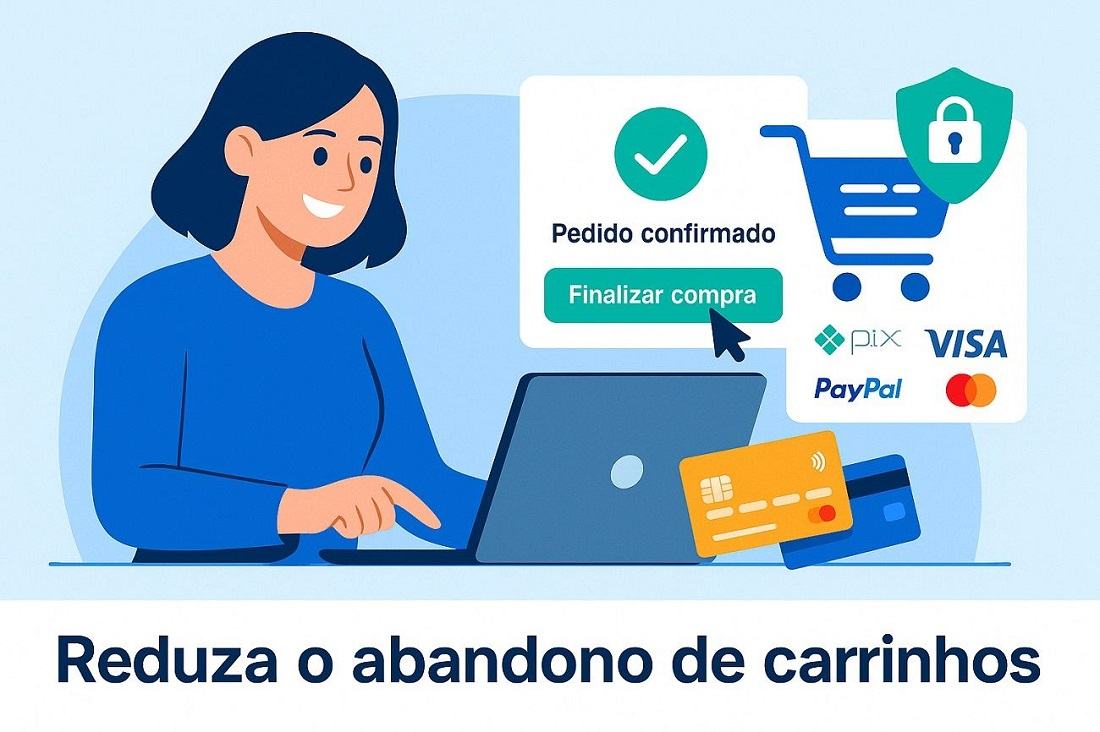
The e-commerce checkout It's the turning point between a visit and a sale.
Many online stores lose orders right now, when the customer encounters obstacles and gives up completing the purchase.
Each step needs to be simple and clear for the consumer to follow until payment without frustrations.
Unexpected costs, extensive forms or lack of options can push away those who were already ready to close the deal.
Follow this content to the end and discover practices that help reduce dropout of carts and make e-commerce checkout more direct and reliable for your customers.
What is e-commerce checkout?
Checkout on e-commerce is the time when buying really defines itself.
After browsing the store and choosing products, the customer arrives at the stage where he reviews everything and confirms payment.
That step goes beyond paying. It is part of the experience and can directly influence one’s confidence during the journey.
If the process is simple, fast and clear, the chance of quitting falls a lot.
As e-commerce platforms offer resources that help to organize this flow and make the finalization more natural for the consumer.
When well planned, checkout becomes an ally when it comes to turning visitors into sales.
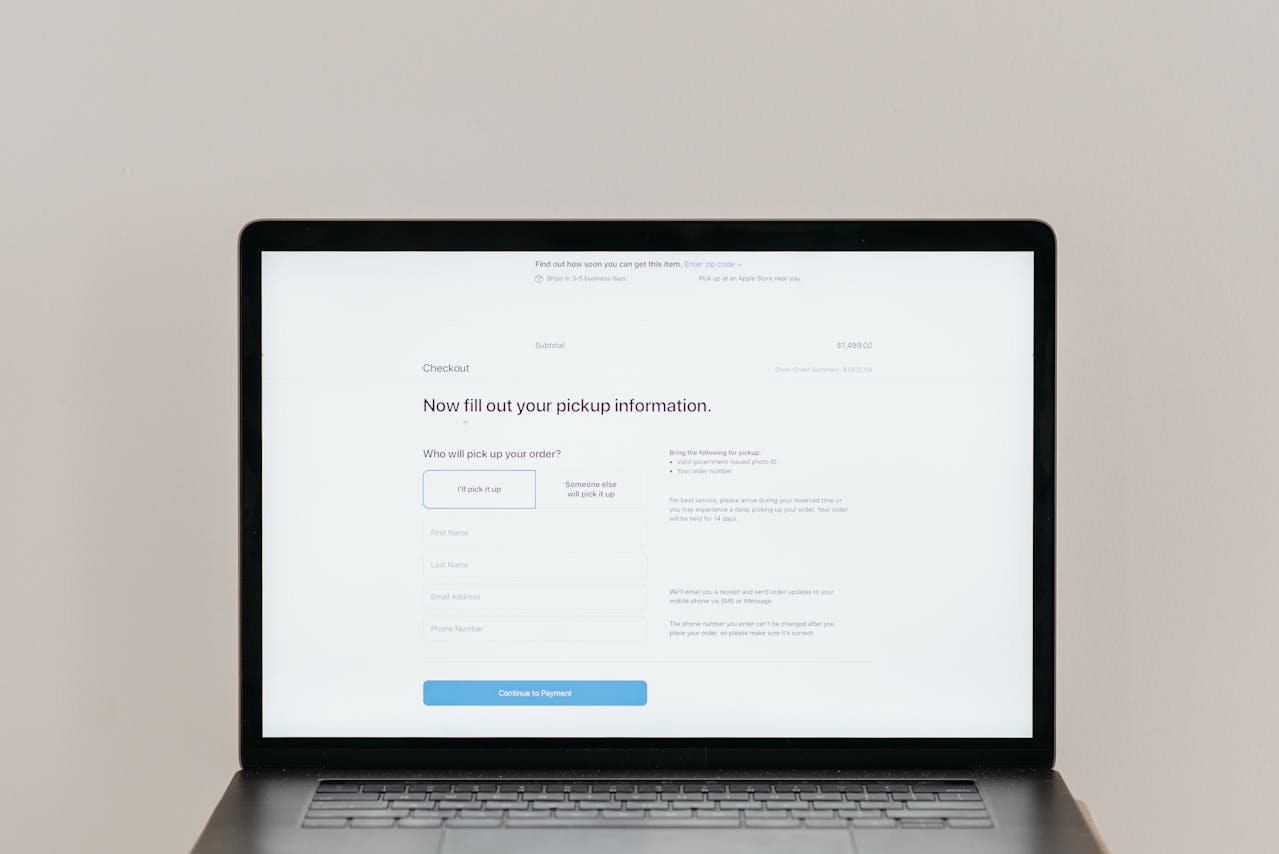
What is the importance of a good payment checkout?
A well-structured e-commerce checkout can turn visitors into loyal customers. This stage concentrates the final purchase decision and any barrier, however small, can increase the risk of stroller abandonment.
According to Baymard Institute, the documented average rate of stroller abandonment is about 70%, and a relevant part of these withdrawals occurs due to problems in checkout.
This data shows the importance of a good checkout process.
When payment takes place in a few steps, the customer feels more secure and continues to the end.
Transparency in values, short forms and variety of means of payment are practices that reduce frustrations.
Another important point is the adaptation for mobile devices (the mobile first), since most online purchases happen on the mobile phone.
Checkout strategies help create a more intuitive and simple experience.
Thus, the store minimizes the abandonment of cart and strengthens the relationship with those who buy.
Therefore, investing in the improvement of this stage is not a detail, but a decision that increases the chances of sale.
What are the types of checkout for e-commerce?
The e-commerce checkout can be structured in different ways, each with direct impacts on the purchase journey.
To understand which model fits best in your business, it is worth knowing the most common formats and their particularities.
Continue reading and see how each option works in practice.
Traditional checkout
Traditional checkout redirects the customer to an external page of the payment provider.
Among the advantages are the safety already offered by the platform and the simplicity of integration for the store.
The main disadvantage is the breakdown of flow, since the buyer leaves the store environment and can give up in this process.
Transparent checkout
In transparent checkout, all completion takes place within the online store itself, without redirecting.
This increases confidence and reduces the chance of external distractions.
On the other hand, it requires more attention in the technical integration and maintenance of payment systems.
It is considered an optimised checkout model because it keeps the customer in the same environment until the end of purchase.
One page checkout
The one page checkout concentrates all steps on a single page. The consumer fills in data, chooses freight and pays in the same flow.
It generates agility and increases conversionSince you're approaching a quick checkout.
However, when poorly structured, you can visually overload the page and leave the process confused.
Checkout by third parties
In this format, platforms such as marketplaces or digital portfolios take the payment step.
The advantage lies in the practicality for those who already have registration in these services, such as PayPal or Paid Market.
The disadvantage is that the shopkeeper has less control over the experience, since part of it happens outside the site.
What are the factors that generate dropout of a cart at checkout?
The abandonment of cart is among the main challenges of online stores.
Knowing the main reasons helps to improve the experience of methods of payment and understand how to reduce abandonment of cart in a practical way.
Among the main reasons that generate this problem, we can highlight:
- Expensive freight: high delivery values surprise the customer and increase withdrawals, especially when the cost only appears at the end of the journey;
- Member States shall ensure that the competent authorities of the Member State concerned have access to the information referred to in paragraph 1 of this Article.: to demand that the person creates account before buying makes the process tiresome. Checkout as a visitor reduces this obstacle;
- Slow loading: slow pages undermine consumer confidence and increase the risk of withdrawal, making rapid checkout indispensable;
- Excessive number of steps: many clicks and screens make the customer lose interest and abandon the purchase in the middle of the way;
- Lack of payment options: limit the available methods removes those who prefer alternatives such as Pix, digital portfolios or bank paper;
These factors are among the main reasons for trolley abandonment and show the importance of constant adjustments to improve payment experience.
How to optimise checkout and reduce drop out of a cart?
A well-structured e-commerce checkout directly influences conversion rates. This has a positive impact even on the SEO from your site, because when there is little rejection, it tends to generate more authority of your website in search engines.
When the consumer finds simplicity and safety in the final stage, the chance to complete the purchase increases.
When the process presents flaws, the abandonment of a cart grows and the business loses valuable opportunities.
Therefore, applying improvements at this stage is one of the most effective ways to expand results.
Offer transparent and responsive checkout
Transparent checkout keeps the consumer within the store environment until the order is completed.
This transmits confidence and reduces distractions, since there are no redirections to external pages.
The model also connects better with analysis and customisation, giving the shopkeeper more control over the experience.
When added to a responsive design, works well on any device, something indispensable in a scenario where most purchases happen by the mobile phone.
Reduce required steps and fields
One of the points that pushes customers away is the excess forms. Asking for unnecessary data prolongs the journey and increases the chance of quitting.
Therefore, the ideal is to request only really important information for payment and delivery.
Reduce screens and focus actions in fewer clicks makes quick checkout come true without compromising the quality of the process.
Provide multiple forms of payment
Offering credit card only no longer meets the needs of most consumers.
Today, many people prefer alternatives like Pix, digital wallets or even the billboard.
Providing different options increases convenience and shows that the store understands the varied profile of the public.
This diversity contributes to fewer customers giving up at the time of payment.
Fast loading and safety certificate
Slowness is one of the most common factors of stroller abandonment.
Pages that take time to load break confidence and pass the feeling of instability.
In addition, the lack of digital certificates can generate insecurity about the use of personal and financial data.
Keep a quick checkout and the secure website it is an investment that directly impacts the purchase decision and strengthens the image of the store.
Using integrated platforms like Tray + Bling
An optimised checkout depends not only on the user experience, but also on the internal structure of the store.
Integrated platforms such as Tray and Bling connect the payment step to inventory management, banknote issuance and order control.
This integration reduces failures and speeds up the flow of information, giving more consistency to the entire sales process.
Automate Recovery Notifications
Even with improvements, some customers still abandon products.
In this case, automation of notifications is a powerful tool.
Send reminders by email, WhatsApp or Push keeps contact active and recovers part of lost sales.
This monitoring helps reduce the impact of abandonment and reinforces the relationship with those who have already shown interest in buying.
How does the e-commerce platform impact checkout?
The choice of e-commerce platform directly influences the finalization stage of the purchase.
This is where all technical resources are found to offer a clear, simple and secure payment experience.
When the store uses a prepared solution, each checkout detail becomes more natural for the customer.
Platforms such as Tray, Bagy, Shopify and others in the market already offer features designed for an optimised checkout.
This includes integration with different payment gateways, responsive design for any device and tools that assist in recovering abandoned carts.
This set of features reduces failures, increases convenience and improves conversion rates.
Another important point is the flexibility that these platforms offer.
You can set up steps, payment methods and even customize reminder notifications for those who left items in the cart.
For those who are structuring a digital store, the ideal is to choose a technological base prepared to support each part of the journey.
What trends and technologies improve checkout
The e-commerce checkout is constantly evolving, following changes in consumption habits and technological advances.
New resources emerge to make this step faster and safer, such as the cross browser, helping shopkeepers reduce dropouts and increase conversions.
Pix payment
Pix is already part of the routine of many consumers and has become one of the most used forms of payment in e-commerce.
Immediate liquidation and practicality in use increase customer confidence and accelerate the completion of purchases.
Digital wallets
Google Pay, Apple Pay and PayPal offer the user the convenience of finishing orders with few clicks without the need to fill in data for each purchase. These digital portfolios also enhance security, as they reduce the exposure of sensitive information.
Biometric authentication
The use of biometrics, such as fingerprint or facial recognition, simplifies the validation of payment.
This technology increases agility in checkout and reduces fraud, as the data is linked to the client's device.
Payment APIs
APIs allow more flexible integrations between store and payment gateway.
With this, the shopkeeper can offer personalised experiences and keep all flow within the same environment without redirecting that generate abandonment.
Social checkout
Shopping made directly inside social networks has been gaining space.
Buy buttons on Instagram or Facebook allow the customer to finish the order without leaving the platform.
This model shortens the journey and brings the consumer's brand even closer.
Social network integrated checkouts
Native social media checkouts combine content and sale in one place.
The experience becomes more fluid, as the customer discovers the product and concludes the purchase in the same space.
This trend strengthens the concept of fast and practical purchase within the digital environment.
When the payment experience is simple, fast and reliable, the customer journey becomes more complete.
For those seeking to structure or improve a digital operation, the E-commerce School it gathers content that helps to understand every detail of this process and show practical ways to put everything into practice in everyday life.
You want a online store with well-planned checkout? Ask for a budget.

FREQUENTLY ASKED QUESTIONS
What's the best kind of checkout you're starting out for?
The traditional can be used by those who are at the beginning because it requires less technical adjustments.
Over time, migrating to transparent checkout is a good evolution, as it keeps the customer inside the store and increases confidence.
Transparent checkout really converts more?
Rates are usually higher because there are no redirections.
The consumer remains in the same environment until completion and this reduces the abandonment of carts.
How do I know if my checkout is generating abandonment?
Accompanying metrics such as dropout rate and average completion time.
When many customers give up in the same steps, it is a sign that the process needs adjustments.
Is quick checkout safe?
Yes, as long as you have up-to-date digital certificates and reliable payment gateways.
Agility can come with data protection.
Is it worth investing in cart recovery?
It is, because reminders sent by e-mail, WhatsApp or push manage to rescue part of the sales that would be lost.
An optimised checkout helps on mobile?
It helps a lot, since most online shopping happens on the phone.
A flow adapted to smaller screens improves conversion.

Caio Nogueira is a SEO, GEO, link building and Digital PR expert and co-founder of WebSyd, website creation agency and SEO consulting founded in 2016. It acts with organic search strategies, digital authority construction and brand optimisation for search engines and artificial intelligence platforms. Throughout his trajectory, he participated in more than 1000 projects involving SEO, website development, content marketing and authority acquisition through backlinks and Digital PR. At WebSyd, it participates in the planning of strategies to increase organic visibility, lead generation and presence of companies on Google and AI-based search engines. As an author, it publishes content on SEO, GEO, website creation, link building and digital authority, sharing analyses, strategies and practical experiences related to organic growth of companies. Its contents and contributions have also been published in companies and vehicles of technology and marketing such as Wix, HostGator, Duda, Neil Patel, Locaweb and E-Commerce Brasil.
View all posts
 Estimate the cost

