
Chatbot for travel agency: personalizing customer experience
Summary (TL;DR)
In this text we will explore the growing importance of chatbots in the tourism sector, highlighting how these artificial intelligence tools are transforming customer experience into travel agencies.
We start by defining what chatbots are and how they work, diving into the technology behind them and differentiating the types based on rules from those driven by AI.
We discuss the significant benefits that chatbots offer, such as 24/7 customer service, quick responses, personalization of customer experience, and reduction of operational costs.
We examine practical examples of the use of chatbots in tourism, from the automation of reservations to the provision of personalised travel and assistance suggestions during the trip, including the integration of complementary services such as eSIM.
We analyzed strategies to successfully implement chatbots and looked forward to the future, anticipating technological advances that promise to bring customisation and efficiency to new levels.
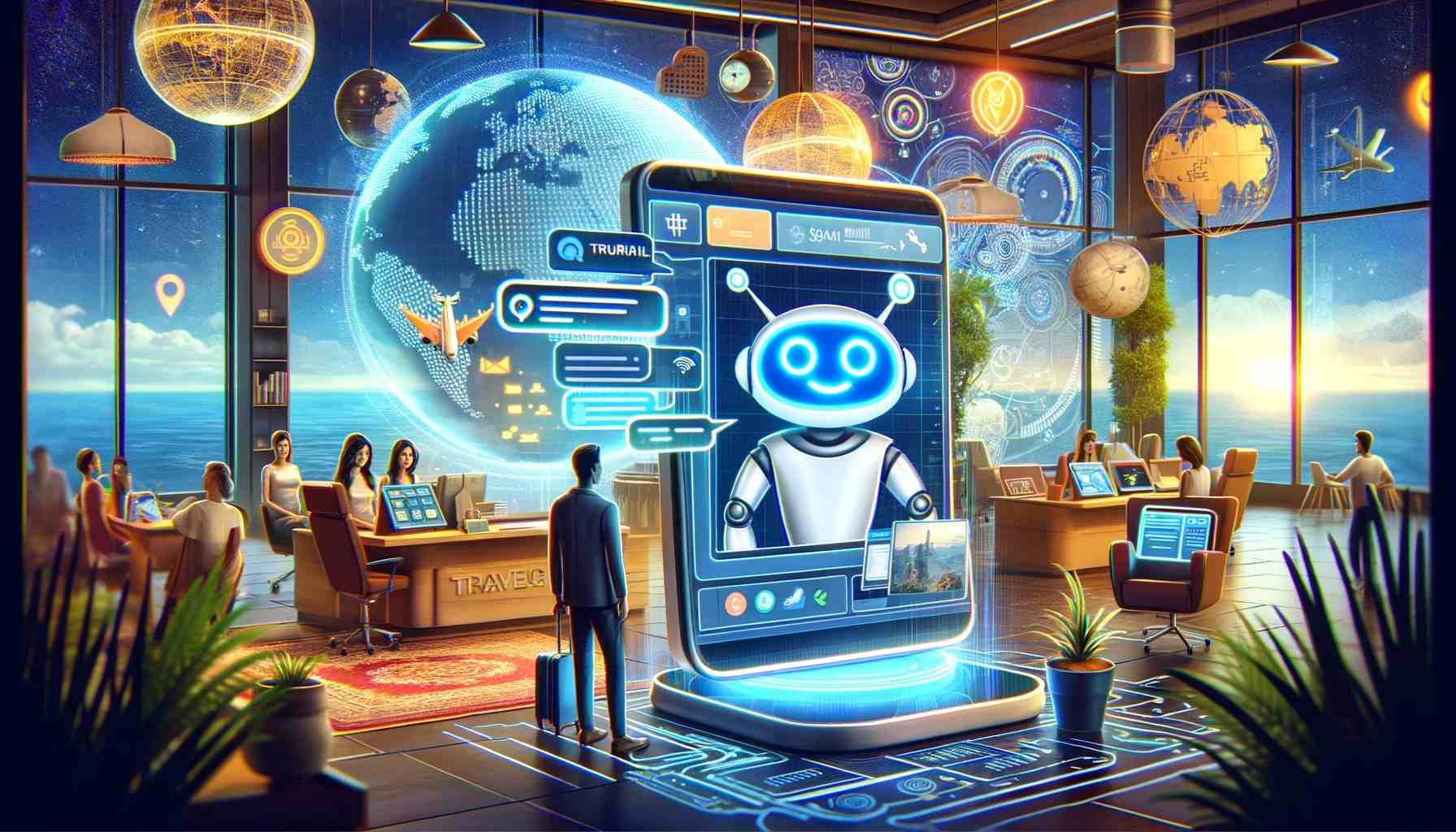
Quick answer: a chatbot for travel agency is an automatic assistant, usually on WhatsApp or on the website, who answers questions at any time, query availability and prices, help in booking, sends warnings during the trip and collect reviews later. To deploy, set the goals, choose the platform, integrate with the booking system and CRM, always offer the option to talk to an attending and review the answers frequently.
In this content we will explore how chatbots are redefining interactions between travel agencies and their customers, transforming the way travel information is consulted and managed.
What chatbots are and how they work
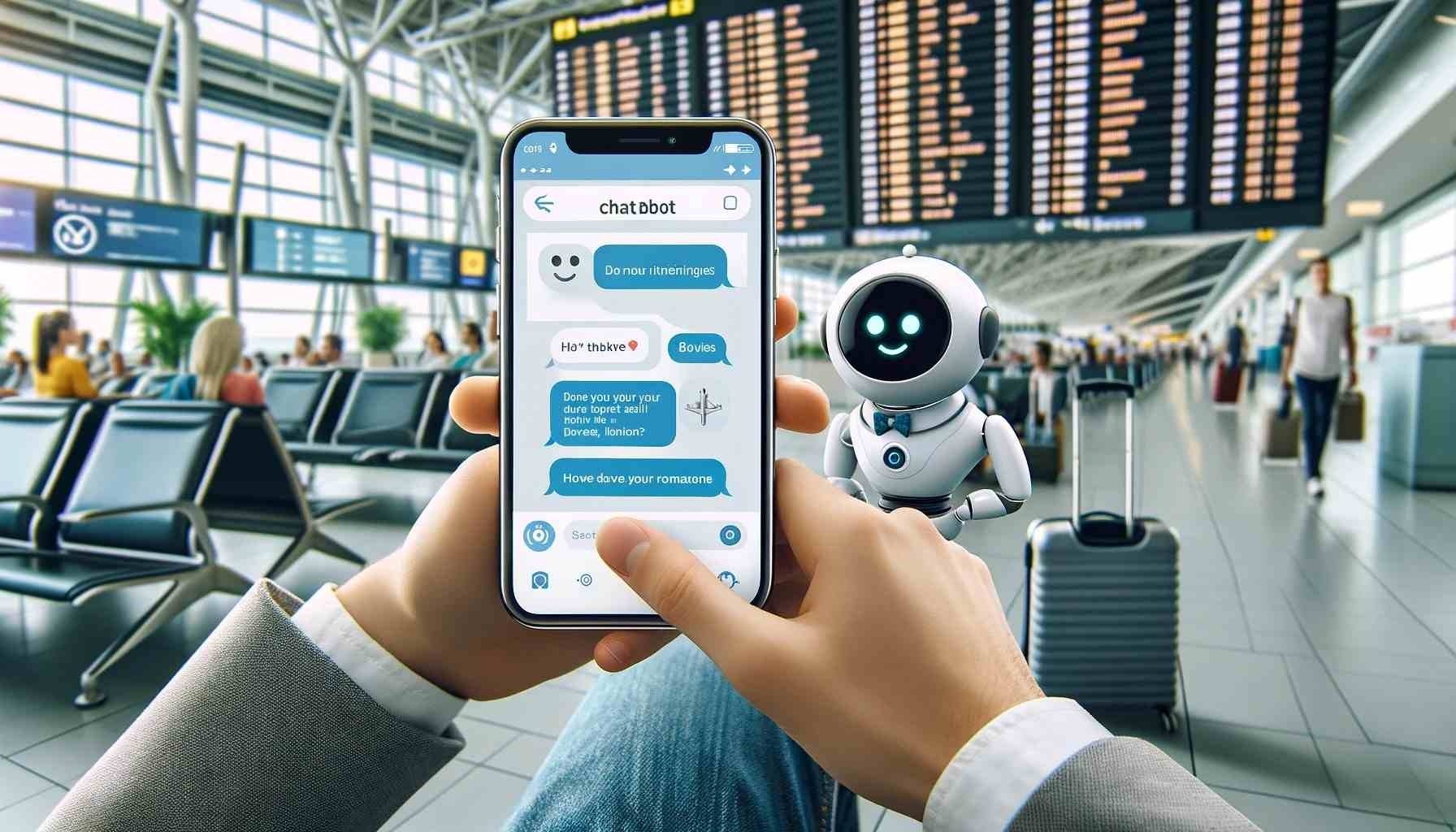
Chatbots are computer programs that simulate human conversations, allowing travel agencies to interact with customers in an automated but natural way.
Using advances in artificial intelligence (AI) and natural language processing (PLN), these systems can understand and respond to queries in text or voice, becoming an essential component for improving customer service in the tourism sector.
Definition and technology behind chatbots: Essentially, chatbots analyze user entries (questions, commands) to understand the intention behind them and then generate appropriate answers.
This process is enhanced by AI and PLN, technologies that allow understanding written questions in different ways. Continuous improvement depends on the team reviewing conversations and adjusting chatbot.
Types of chatbots and their applications in travel agencies:
- Chatbots based on rules: They work based on a predefined set of rules. They are effective for simple tasks and frequent questions, such as checking flight schedules or booking status. Simplicity is the key, but personalization is limited.
- AI-based Chatbots: These are more advanced and understand open questions to give more complete and personalised answers. As they may err, they need official agency information as a basis and the option to transfer to an attending. Ideal for travel agencies, they can offer personalised recommendations, help with travel planning and manage reservations more efficiently.
Benefits of Chatbots for Travel Agencies
The integration of chatbots into the operations of a travel agency brings a number of advantages to both customers and the company.
Here are the most significant benefits:
- Continuous availability: Chatbots are operational 24 hours a day, 7 days a week, ensuring that customer queries are attended at any time without delay. This not only increases customer satisfaction, but also puts the travel agency at a competitive advantage, offering constant support.
- Fast and efficient responses: The ability to provide instant answers to customer questions significantly improves user experience. In a sector where time is essential, especially for last-minute reservations or travel changes, the efficiency of chatbots is a great differential.
- Customization of the customer experience: By collecting and analyzing customer interaction data, chatbots can offer personalised recommendations and services. This means that each customer receives attention and offers tailored to their preferences and travel history, improving customer loyalty and satisfaction.
- Reduction of workloads and operating costs: Automating routine and often repetitive tasks, chatbots release the human team to focus on more complex and more valuable tasks. This not only increases operational efficiency, but can also result in a significant cost reduction.
- Improvement in the data collection process: Chatbots also play a crucial role in collecting customer data in an interactive and engaging way. This information is vital to better understand the needs and behaviors of customers, allowing travel agencies to optimise their offers and marketing strategies.
Chatbots represent a powerful tool for travel agencies, raising the level of customer service while optimizing internal processes.
The implementation of these technological solutions not only responds to the demand for faster and more personalised services, but also prepares agencies for the future of the tourism sector, where technology and personalization go hand in hand to create unforgettable travel experiences.
How chatbot collects personal data (name, documents, travel preferences), inform them for which they will be used and follow the LGPD.
Examples of chatbot use in tourism
The application of chatbots in the tourism sector is vast and diverse, reflecting the wide range of travellers' needs and desires.
Here are some practical examples of how chatbots are being used by travel agencies to enrich customer experience:
- Automated reservations and queries: One of the most common uses of chatbots in travel agencies is to automate the booking process. Customers can book flights, hotels and travel packages directly through a chatbot without the need to navigate through complicated interfaces or wait on the phone. In addition, chatbots can respond to queries about availability, prices and travel customisation options, significantly simplifying the travel planning process for users.
- Custom suggestions for destinations and activities: Using the data collected in previous interactions, chatbots can offer personalised recommendations of destinations, tourist activities and travel experiences. If a customer demonstrates interest in quiet beaches, chatbot may suggest exotic destinations such as the Maldives or Bali, along with specific activities such as snorkel diving or yoga classes on the beach.
- Assistance during the journey: Chatbots are not only useful during the planning and booking of trips, but also provide valuable support while travelling. They can provide real-time information about flight status, directions to points of interest, recommendations from local restaurants and even emergency assistance, all accessible via the traveller's smartphone.
- Collection of feedback and post-travel evaluations: After customer returns from their trips, chatbots can be used to collect feedback and reviews on the experience. This is an effective way to engage customers after the trip, as well as collecting valuable data that can be used to improve future services and offers.
Chatbots offer a number of practical applications in the tourism sector that go beyond simple customer service.
They facilitate the booking process, enrich the travel experience with personalised suggestions, provide continuous support during the trip and help collect valuable insights from customers after return.
Implementing chatbots is therefore an intelligent strategy for travel agencies that wish to stand out in the market, providing exceptionally personalised and efficient service.
Implementing Chatbots into your travel agency
The implementation of chatbots represents a significant advance in the way travel agencies interact with their customers, providing more efficient, personalised and automated communication.
To incorporate chatbots effectively, it is crucial to consider not only the technology behind them but also how they can be used to improve customer service and travel experience as a whole.
Here are some important steps and considerations:
- Define clear objectives: Before implementing a chatbot, it is important to define what you hope to achieve with it. Whether improving customer service, increasing sales or providing personalised travel recommendations, having clear goals will help guide Chatbot development and its implementation.
- Choose the right platform: There are several chatbot platforms available, each with its own strengths and limitations. Carefully evaluate the options, considering factors such as ease of integration, AI and PLN capabilities, and support for customisation.
- Integrate with existing systems: For a chatbot to be truly effective, it needs to be integrated with existing customer relationship management (CRM) systems, reservation systems and product databases. This allows chatbot to access information in real time to provide accurate and personalised answers.
- Provide valuable information and complementary services: In addition to basic customer service and reservations, chatbots can be enriched with complementary services that add value to the customer experience. For example, the inclusion of information on eSIM, which can be extremely useful for international travellers. eSIM allows travelers to access mobile data plans abroad without the need for a physical SIM, making the travel experience more convenient and uninterrupted.
- Test and iterate: After launch, it is vital to collect feedback from users and monitor chatbot performance. Use these insights to make continuous adjustments and improvements, ensuring that chatbot meets customer expectations and business goals.
Integrating chatbots into your travel agency not only improves operational efficiency, but also elevates customer experience by providing convenience, personalization and valuable information, such as the availability of eSIM for international travel.
For example, a Whatsapp Chatbot in travel agencies uses customer data to provide personalised travel recommendations, custom scripts and real-time assistance, making it easier and more pleasant to plan your trip.
The future of chatbots in tourism

As we advance into the future, chatbots are positioning themselves as crucial elements in the tourism sector, not only as customer service tools but as intelligent travel assistants able to offer highly personalised and interactive experiences.
Next, we explore some trends and innovations that will shape the future of chatbots in tourism:
- Improvement of AI and natural language processing: With continuous advances in AI and PLN, chatbots will become even smarter and able to understand the nuances of human language. This means more fluid and natural communications between chatbots and users, allowing virtual assistants to better understand the intentions and needs of travelers.
- Integration with other technologies: Chatbots are expected to become increasingly integrated with other emerging technologies, such as augmented reality (RA), virtual reality (VR) and Internet of Things (IoT). This could transform the way travelers explore destinations, reserve experiences and interact with the surrounding environment, offering an unprecedented level of personalization and immersion.
- End-to-end service automation: In the future, chatbots will be able to manage full aspects of travel experience from planning and booking to support during travel and post-travel feedback. This includes automating processes such as hotel check-ins and check-outs, restaurant reservations and travel alerts, creating a truly effortless and integrated travel experience.
- Deep data-based customisation: As chatbots become more advanced in collecting and analyzing user data, the customisation of travel will reach new levels. Chatbots can offer ultra-personalised recommendations based on explicit preferences and previous behavior, ensuring that each aspect of the journey is aligned with the traveler's wishes and needs.
- Global interconnection and multilingualism: Chatbots will become even more versatile in terms of multilingual support, allowing travel agencies to meet customers from various parts of the world without language barriers. This will facilitate a truly global customer experience by expanding the reach of travel agencies to new markets.
Looking to the future, it is clear that chatbots have the potential to further revolutionize the tourism sector, making travel more accessible, convenient and personalised.
As these technologies continue to evolve, travel agencies that adopt and adapt to these innovations will be better positioned to meet the growing expectations of modern travelers, creating memorable experiences that transcend conventional.
Conclusion
In the dynamic tourism sector, the Chatbot development and its integration by travel agencies is presented not only as a technological innovation, but as a strategic need.
The ability to provide real-time, personalised and efficient customer service puts travel agencies at the forefront of customer satisfaction and operational efficiency.
From simplifying reservations and queries to providing assistance during the journey and collecting valuable post-travel feedback, chatbots proved to be indispensable tools in the digital age of tourism.
For travel agencies, adopting chatbots means more than just keeping up-to-date with technological trends; it means anticipating customer needs, offering exceptional services and building lasting relationships.
As we look to the future, it is clear that site creation with integrated chatbots are more than a passing trend; they are a key part in tourism evolution.

FREQUENTLY ASKED QUESTIONS
What exactly can a chatbot do for customers from travel agencies?
A chatbot can perform a variety of tasks to improve customer experience in travel agencies. This includes providing 24/7 customer service, answering frequent questions, assisting with booking and travel queries, offering personalised recommendations of destinations and activities, and providing support during the trip. With artificial intelligence technology, some chatbots are also able to learn from past interactions to offer an increasingly personalised and efficient service.
Can chatbots really understand and answer all customer questions effectively?
Chatbots, especially those driven by advanced artificial intelligence technologies and natural language processing, have an impressive ability to understand a wide range of customer questions. Although they may not be able to respond to all complex consultations with the same level of detail as a human, they are constantly learning and adapting to improve their responses. For more complex issues, chatbots can scale the consultation for a human agent, ensuring that the customer receives the necessary assistance.
Implementing a chatbot is an expensive or inexpensive solution for travel agencies?
The cost of a chatbot varies according to the complexity, the platform chosen, the number of conversations and integrations (reserve system, CRM, WhatsApp). There are monthly entry plans for simple flows and tailor-made projects for assistants integrated into the agency's systems. Compare platform plans before deciding.

Caio Nogueira is a SEO, GEO, link building and Digital PR expert and co-founder of WebSyd, website creation agency and SEO consulting founded in 2016. It acts with organic search strategies, digital authority construction and brand optimisation for search engines and artificial intelligence platforms. Throughout his trajectory, he participated in more than 1000 projects involving SEO, website development, content marketing and authority acquisition through backlinks and Digital PR. At WebSyd, it participates in the planning of strategies to increase organic visibility, lead generation and presence of companies on Google and AI-based search engines. As an author, it publishes content on SEO, GEO, website creation, link building and digital authority, sharing analyses, strategies and practical experiences related to organic growth of companies. Its contents and contributions have also been published in companies and vehicles of technology and marketing such as Wix, HostGator, Duda, Neil Patel, Locaweb and E-Commerce Brasil.
View all posts


 Estimate the cost

