
Corporate website or corporate site: What is it and how to do it?
Summary (TL;DR)
The corporate or business website is essential for the online presence of an institution, acting as the main exhibition channel and first point of contact with the market.
Back in the day, creating a website was a costly and time-consuming task, but current technology allows even ordinary people to build their own websites. However, for professional results, it is recommended to hire a specialised company.
This article explores the ideal structure of a corporate site, its functions, benefits, and provides one step by step to create an efficient website. Readers will learn about the costs involved, how to choose a domain and hosting, optimise for SEO and promote the site on social networks.

Quick answer: a corporate website is the company's official website: presents who it is, what it does and how to contact. To create one, set the goal, register the domain, choose hosting, create the essential pages (starter, about, services and contact), optimise for SEO, install Google Analytics and Search Console, test and disclose.
The corporate website or business site represents the primary calling card of an institution. In many cases, it surpasses in visits and popularity even the physical address of the company. Currently, the site assumes the position of main channel of business exposure, being the first point of contact with the market.
It goes beyond a virtual showcase, as it gathers useful information and content about the company.
In the not too distant past, creating a website was practically a saga, costly and time consuming, reserved mainly for high-investment companies.
However, thanks to technological innovation, nowadays even ordinary people can venture into building their own websites.
Of course, this freedom is interesting, but the truth is that the path is kind of thorny, time-consuming, and the result may not be very professional. So, count on one website creation company can ensure a more efficient and professional outcome.
Currently, creating a corporate website has more accessible valuesEspecially when you entrust the mission to those who really understand it. So often the best option is to hire professionals.
According to a survey released by Veja in 2021, 9 out of 10 Brazilians search the internet before buying something.
It's a simple equation: if you don't have a business site, you're losing sales opportunities.
In this article, we will discuss the ideal structure of a business site and everything that involves this journey. Keep reading!
What is a corporate website?
A corporate website or business site is like the digital identity of a company on the web. In it, we find information about what the company does, its contacts, services or product catalogs and contact forms. It is designed to be directed at various audiences, such as business partners, customers and the press.
There are several types of website, the most common being the institutional site, e-commerce, portfolio website and corporate portal/blog website.
Functions of a corporate website
A business website works as an external platform, offering a variety of specific functions and information. All the information contained in it has clear purposes.
Attract new customers
The site acts as an advertising platform aimed at attracting new customers. It provides comprehensive answers to public doubts, effectively directing those who are in search of specific information.
Attract new partners
Maintaining a steady flow of new business partners is vital to the continued development of the company. On the site, investment offers and programs for dealers can be presented.
Recruit new employees
The creation of a corporate website also aims to recruit talent. Information on career opportunities, working conditions, schedules and social benefits is published in it.

What is the purpose of a corporate website?
In the era of social networks, a website remains the home of an online company.
A corporate website is the first place where potential customers go to get to know better about their brand, products and services.
The goal of a business website is to present a company, disseminate information and content and show who the people behind it are. It contributes directly or indirectly to the legitimacy of the business. The main objective is to build reputation, support and promote the entire company, brand, educational institution or organization with its mission and values, services and/or products it offers.
Advantages of a corporate website
The main ones advantages of having a website business are:
Makes advertising more attractive
The first benefit of the site is that it makes advertising more attractive. A company with a website is open to connecting with a larger number of people.
The other benefit of the site is to redirect users to a page, creating a way to connect with customers in a better way. You can use digital marketing services to connect your website with your potential buyers.
Cost-benefit
The next benefit of the site is that it is economical. Starting a business requires capital and promoting it on a larger scale requires more money. However, if you invest in a quality website, you can make your presence more viral and relevant on a limited budget.
Many platforms support the development of fast and cost-effective websites. Open source development made it much easier to have a website that speaks for your business.
Business credibility
The third advantage of having a website is the credibility it generates for business. Connecting with customers and loyalty is a complicated task. But with a website, it makes it easier to create this connection.
After all, the consumer relies more on companies, products and services that have an active online presence.
Easy to configure
The next benefit of having a website is the ease of configuration. In other words, having a website is no longer a complicated task.
There are many website builders, in addition to web development service providers, who can be used for creating pages at an affordable cost.
Easy access to new customers
The next reason to have a business website is that it facilitates access to new customers. With impressive presence of social media and offline marketing efforts, you can easily bring the potential customer to the site and explain to them about services and products in a better way.
That's one of the best advantages of having a website. Finding a new consumer is time consuming and expensive, but with a website, it makes it easier to connect with current and potential customers.
Availability 7 days a week for 24 hours
The next benefit of having a website is that your company is always open to serving customers. Your physical store, if you have one, is linked to a time limit and it is not possible to make it available all the time for consumers.
However, a website remains active 24 hours a day, 7 days a week, 365 days and the user can find the necessary information and details about a product, service or contact us whenever he wants.
To make this possible, you need a good hosting service. This is important because it's the hosting site that will keep the pages online. That is, good web hosting is necessary for the site to remain online.
Best marketing tool
The next benefit of having a website is that it can be used as a marketing tool. A website may be the source for finding information about the company, its policies, products, future programs and more.
That said, update the site from time to time and keep users informed about the latest changes.
Step by step to create your business website
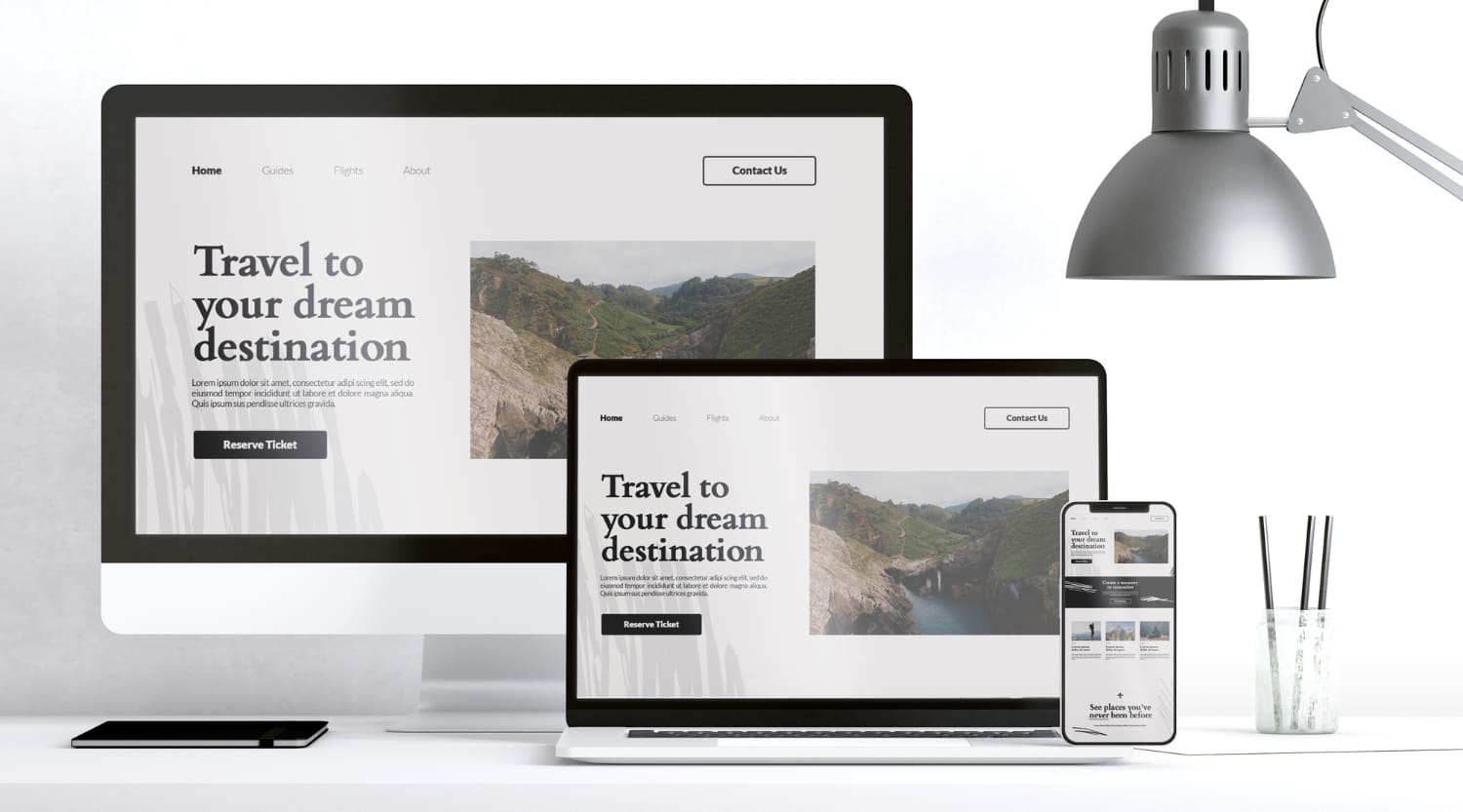
Here's a step by step that can help you create your business website and attract more customers.
1. Decide on the purpose of your website
Do you want to present collections of your artwork, sell your products or simply display your contact information? Whatever purpose you choose for your website, you must clearly demonstrate on your home page what it is trying to do. The line of action also influences this definition, and you can see examples in ours websites for companies in various sectors.
Setting a clear goal will help visitors understand what your website is about. It will also build a solid basis for a positive user experience (UX).
Why? Because the less time your visitors spend rolling around and clicking for answers, the better.
2. Choose a domain name
Choosing the right website address or domain name is almost as important as decide the name of your company. . It's usually the first thing users see about your business, so make it worth your while.
Ideally, your domain name is just the name of your company. However, if you decide to use something different, just make sure that you accurately reflect the purpose of your business and offer users a good first impression.
Below are some tips on how to choose a domain:
- Keep it short.: Short and pleasant domains are easier to remember;
- Check the price: use domain registers to check your domain price;
- Use “.com.br”‘: is the most respectable and established domain name extension;
- Search domain name: use websites like Registro.br to find out if the desired domain name is being used or contains trademarks.
To register your domain, you will need to visit a domain logger, such as Registro.br itself, or site hostings such as GoDaddy, Bluehost, among others.
3. Choose a website hosting
Web hosts (site hosting) provide a digital space for your website to be viewed on the internet. Without a host, your website will not be executed.
Some of the website hosting options are HostGator and Bluehost, but there are many other options available on the market.
Understand below what are the main types of web hosting services.
Shared Hosting
Using this type of hosting means you will share the servers and web hosting features with other websites. It is restrictive and offers little space for growth. For this reason, we do not recommend shared hosting.
VPS (Virtual Private Server): our recommendation
VPS hosting means that the server is “divided” with much fewer users than with shared hosting.
This freedom grants your website access to a greater allocation of resources, such as disk space, memory and bandwidth, which can help your site function more efficiently.
The VPS is suitable for websites that wish to grow rapidly, but do not yet require the features (or expensive fees) that come with dedicated hosting.
Dedicated Hosting
Suitable only for high-performance websites, dedicated hosting costs more than the other options mentioned.
Having your own server, allowing your company to function with full online capacity. The price is usually too high for small businesses, so we recommend that you seek dedicated hosting later.
4. Create your pages

The site design For small businesses it's all about keeping things simple.
We do not mean simple or boring, but simple in terms of helping the user navigate your site and performing the desired actions as easily as possible. In other words, don't try to reinvent the wheel with a website that runs the risk of being confusing or chaotic.
In terms of pages, your company's website should include at least:
- Start page;
- Contact page;
- About us page.
You should also consider adding a blog (we will discuss the benefits later) and a product page if you want to sell online. Below, we have some tips for creating each type of page.
Your homepage
As mentioned above, your homepage should clearly explain how your company works and what your website is there to do. In terms of design, less is more. Using minimalist design and a lot of blank space will help the user to go from A to Z without unnecessary clicks.
For example, if you are creating a website for your coffee bean subscription service, consider adding a concise description of your service. In addition, include attractive call buttons for action (CTA), such as “Subscribe” or “Request a Budget”, for example.
Many small business sites do not have a clear CTA button on the home page and lose contacts for it. Put yours in the spotlight, right at the top of the page.
In addition, a short video presentation helps the visitor to understand quickly what the company does.
It is very important that your home page impresses visitors. Otherwise, the visitor tends to leave without contact. If you don't have the skills to create a homepage with everything you want, consider hiring an expert to create one that visitors will love.
Your contact page
Again, keep it simple. The contact page is where you will probably turn site visitors into customers. So, you don't want to add any unnecessary obstacles (i.e. make your contact information difficult to find) for conversion to occur.
Your contact page should include:
- telephone;
- E-mail address;
- Physical address (ideally with an integrated map showing its location).
Your “About Us” page
Writing a “About Us” page will help differentiate your business website from competition. This page helps users understand you and the other people behind the business, which can help them choose your company over another.
Your “About Us” page should describe:
- Who you are;
- What do you do;
- Like you do;
- Where it all started.
Your blog
If you name your blog page “News”, “Press” or “Articles”, regularly add high-quality content to your website adds value to both your company and visitors.
Here are the main reasons to consider creating a blog for your business:
- Direct traffic to your website: sharing high quality content online offers users more opportunities to click directly on your website.
- Great for SEO: blogging about relevant topics that users wish to read can help improve the position of their web pages in SERPs (search engine results pages). In addition, tools like rewrite text can help improve and reformulate your content to keep it fresh and engaging.
- Reinforces your social media marketing: sharing blog posts on social media is an effective way to generate a buzz around your brand and increase traffic from the site.
5. Optimize for search engines
SEO involves applying many different tactics to help the improve the visibility of your website online. Below are the easiest rating factors to implement, helping to improve your site's position in SERPs and bring more traffic to you:
- Use keywords in your content and URL: are popular words or terms that users are searching for related to their sector. Use tools like Semrush to find these words and use them in moderation in their content and URLs (addresses of web pages) and meta titles and descriptions, which are the excerpts of content, shown in SERPs, which describe their web pages.
- Get an SSL certificate: Google ranks secure sites above unsafe websites (HTTPS is a rank sign); most hosting providers offer SSL certificates for free.
- Create mobile compatible pages: is when the page is reformatted to display clearly on mobile devices, and web designers can do this easily for you.
- Use internal links: Keep users on your website and read its content through links to your different web pages across the site.
- Compact your images: use free tools like the TinyPNG to help improve the upload speed of your page (which is a Google rating factor), keeping your images as small as possible.
- “Reduce” your code: remove any code that is not completely necessary to improve your charging speeds.
Don't you have the coding skills? Don't worry, you're not alone. You can always ask a webdesign company to reduce the code for you.
Does SEO seem like a step too far for your busy schedule? Remember, you can always find a professional to handle everything for you. After all, successful SEO tactics can help business growth.
6. Install analysis tools

We show you how to create a commercial website. Now it's time to explain how you can measure the performance of your website. This will help inform your decisions when making updates or changes to your pages.
There are several tools that help analyze the traffic and overall performance of the site, such as the Google Analytics and Search Console.
These tools allow you to visualize things like:
- Number of views on each page of your site;
- Average time users spend on their website;
- Numbers of daily, weekly and monthly visitors;
- Broken links on your site that need to be fixed;
- The keywords that led users to their website pages;
- Engagement rate: in GA4, shows the portion of sessions where the visitor actually interacted with the site.
7. Test and publish
Before sharing your business website with the online world, you need to make sure it works smoothly. A malfunctioning or locked site can be disastrous for the image of your brand, so it is vital that you do several tests.
First, make sure the site loads quickly on all major browsers including Chrome, Firefox, Safari and so on. During these checks, make sure your images and videos are loaded and that your content is formatted correctly.
If anything looks wrong, make the necessary adjustments and put your company's website back in its original form before publishing.
8. Promote your website
Things would be very easy if you could publish your website, sit and watch traffic on your site. In fact, you need to start marketing your site to attract clicks and money.
You've already learned to promote your site through SEO using keywords, but there are many effective ways to strengthen your marketing efforts, including posting on social media and using PPC advertising (click-by-click payment).
Post on social networks
More than half of the planet's population uses social media. This is how posting about your new site on these medias can help bring you a lot of traffic.
For all companies, we recommend that you take account of:
Along with your non-promotional posts, you should always update your social media followers about any changes to the site or new blog posts when they occur (with links to your website, of course). You should also include links to your social media channels on your website.
Use PPC advertising
A type of search engine marketing (SEM), PPC involves paying Google Ads or Bing Ads every time a user clicks on your link. You give the “lance” in certain keywords or phrases for your site to appear when users search these terms.
The more you pay, the higher in SERPs your links will appear. Therefore, if a user searches for “Spanish teacher in sp”, for example, his Spanish classroom service site in São Paulo will appear higher than the competition, if you bid higher for this specific research term.
You may pay little per click, but it may cost a little more depending on the popularity of the chosen keywords, for example when many other companies also want to bid these words.
You can also use Google or Bing Ads to ensure that your links are displayed only to certain users. This is called demographic segmentation, in which your web pages appear only for specific users based on metrics such as location, age and sex.
9. Analysis and testing
After publishing, you will need to keep your website to ensure long-term success. Do you remember the analysis tools we discussed in Step 6?
You should check Google Analytics and Search Console at least once a month to see the performance of your site and identify where or how you can make improvements.
We also recommend to install Optimizely to perform A/B tests. That's when you divert half of your site visitors to a page or “test” element and half to the original page.
You can see which version of your site gets the most positive reaction, judging certain metrics such as clicks, conversions and time spent on the page.
Next steps
This guide shows how to create corporate sites, from the decision on the site's goal to the analysis and testing phase.
We provide all the information and tips needed to create a business website that stands out online. But like many business owners, you may not have the time, energy or skills to create your site from scratch.
If that is the case, you can always hire a web design expert to handle technical work for you and create a professional website to highlight your business on the internet. But how much does a website developed by a website creation company? ? This is an investment that may vary, and it is important to consider the benefits of a well done site.
Keep in mind that you need to create a website that not only represents your company, but also conquers and brings visitors closer to the page. So you'll have more chances to get more customers.
FREQUENTLY ASKED QUESTIONS
What is a corporate website?
A corporate website is the digital identity of a company on the web. It provides information about the company's services, products, contacts and history, as well as functioning as a point of contact for customers, business partners and press. Common types include institutional sites, e-commerce, portfolios and corporate blogs.
What are the main functions of a corporate website?
The main functions of a corporate website include attracting new customers, maintaining a steady flow of new business partners, and recruiting new employees. It also serves as an advertising platform, providing comprehensive information about the company and its services.
What are the benefits of having a corporate website?
Benefits include making advertising more attractive, offering a higher cost-benefit, generating business credibility, facilitating access to new customers, being available 24/7, and serving as an effective marketing tool. A corporate website helps establish an active and reliable online presence.
What are the steps to create a business website?
Steps include deciding the purpose of the site, choosing a domain name, selecting a website hosting, creating essential pages (such as homepage, contact page and about us), optimizing for search engines (SEO), installing analysis tools, testing and publishing the site, and promoting the site on social networks and with PPC advertising (payment per click).

Caio Nogueira is a SEO, GEO, link building and Digital PR expert and co-founder of WebSyd, website creation agency and SEO consulting founded in 2016. It acts with organic search strategies, digital authority construction and brand optimisation for search engines and artificial intelligence platforms. Throughout his trajectory, he participated in more than 1000 projects involving SEO, website development, content marketing and authority acquisition through backlinks and Digital PR. At WebSyd, it participates in the planning of strategies to increase organic visibility, lead generation and presence of companies on Google and AI-based search engines. As an author, it publishes content on SEO, GEO, website creation, link building and digital authority, sharing analyses, strategies and practical experiences related to organic growth of companies. Its contents and contributions have also been published in companies and vehicles of technology and marketing such as Wix, HostGator, Duda, Neil Patel, Locaweb and E-Commerce Brasil.
View all posts


 Estimate the cost

