
Site Gamification: 7 Strategies to Increase Engagement
 Reviewed by
 revised
Lucas Pelisari
Lucas Pelisari has been an expert in SEO and content at WebSyd for over 6 years, working on creating ...
See full profileSummary (TL;DR)
Gamification is a technique that applies game elements in non-game-related contexts to increase engagement, motivation and loyalty of users.
Widely adopted in sectors such as education, health, business and e-commerce, it involves the use of scores, levels, rewards and competitions to make activities more attractive. The effectiveness of gamification is based on the human nature of seeking recognition and rewards.
Our article explores practical strategies to implement gamification on websites, including the definition of goals, choice of gamification elements, simplicity and continuous monitoring, as well as examples of application in different sectors.

Site gamification is a powerful technique that applies game elements in non-game-related contexts, with the aim of increasing user engagement, motivation and loyalty. In today's digital world, this strategy is being widely adopted by various industries, including education, health, business, web design and e-commerce.
In this article, we will explore how gamification can be used to increase the engagement on your website, with practical examples of different sectors.
What is Gamification?
Gamification is the process of incorporating game design elements such as scores, levels, rewards and competitions into activities or websites that are not games.
The goal is to create a more engaging and fun experience for users, encouraging them to interact more frequently and deeper with content.
Why Does Gamification Work?
Gamification works because it exploits the human nature of competing, performing tasks and obtaining rewards. When we apply game principles to everyday activities, we make these activities more attractive and motivating. Here are some reasons why gamification is effective:
- Rewards and Recognition: Gamification offers tangible and intangible rewards that encourage users to remain engaged.
- Progress and Realisation: Showing progress through levels or phases can encourage users to continue using the site to achieve new achievements.
- Competition and Community: Healthy competition with other users can increase engagement and create a sense of community.
- Fun and Entertainment: Making routine tasks more fun can transform the user experience and increase fidelity.

How to Implement Gamification on Your Website
Now that we understand the impact of gamification, let's explore some practical strategies to implement it on your site.
1. Define Your Goals
Before you start gamifying your site, it is important to set your goals. What do you want to achieve with the gamification? Increase the length of stay on the site? Improve lead conversion? Increase user participation? Setting clear goals will help guide your gamification strategy.
2. Meet Your Public
Understanding your audience is essential for efficient gamification. What are the interests and behaviors of your users? Are they competitive? Do they value tangible rewards? Use this information to create a gamification experience that resonates with your audience.
3. Choose Gamification Elements
There are several gamification elements that you can incorporate into your website. Here are some examples:
- Scores and Levels: Assign points by specific actions and allow users to advance from level based on their accumulated points.
- Badges and Conquests: Offer badges or achievements by completing specific tasks or achieving milestones.
- Missions and Challenges: Create missions or challenges that users can complete to win rewards.
- Leaderboard: Implement a leader score to promote competition among users.
- Reward: Offer tangible or intangible rewards such as discounts, free products, or recognition.
4. Maintain Simplicity
While it is tempting to add many elements of gamification, it is important to maintain simplicity. Too many elements can confuse users and dilute the effectiveness of gamification. Choose some key elements that best meet your goals and maintain the central user experience.
5. Monitor and Adjust
Gamification is a continuous process. Monitor the behavior of users and the effectiveness of the gamification elements you have implemented. Use analytics to understand which elements are working and which ones aren't. Be prepared to adjust your strategy based on feedback from users and collected data.
7 Gamification Strategies to Increase Engagement on Your Website
Gamification is a powerful tool to increase user engagement, motivation and retention on a website. By incorporating game elements, you can transform the user experience and create a deeper and more meaningful interaction. Here are seven proven gamification strategies, how to implement them and why they work.
1. Scores and Levels
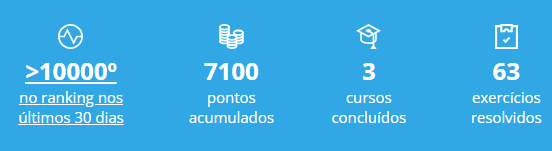
How to do it: Implement a point system where users earn points by performing specific actions on your site, such as completing profiles, commenting or sharing content. Combine this with a level system, where hoarding points allows users to advance to higher levels by unlocking new features or benefits.
Why it works: Scores and levels meet human desire for recognition and progress. When people see that they are progressing and being recognized for their actions, they are more motivated to continue participating. Regular recognition is a strong motivator for employee behavior, and this logic can be applied to users of a website. The visible progress and reward for this progress encourage users to engage more.
2. Badges and Conquests
How to do it: Create badges or medals that users can win by achieving certain milestones or completing specific tasks. Display these badges in user profiles or a section dedicated to achievements.
Why it works:
3. Leader Ranking
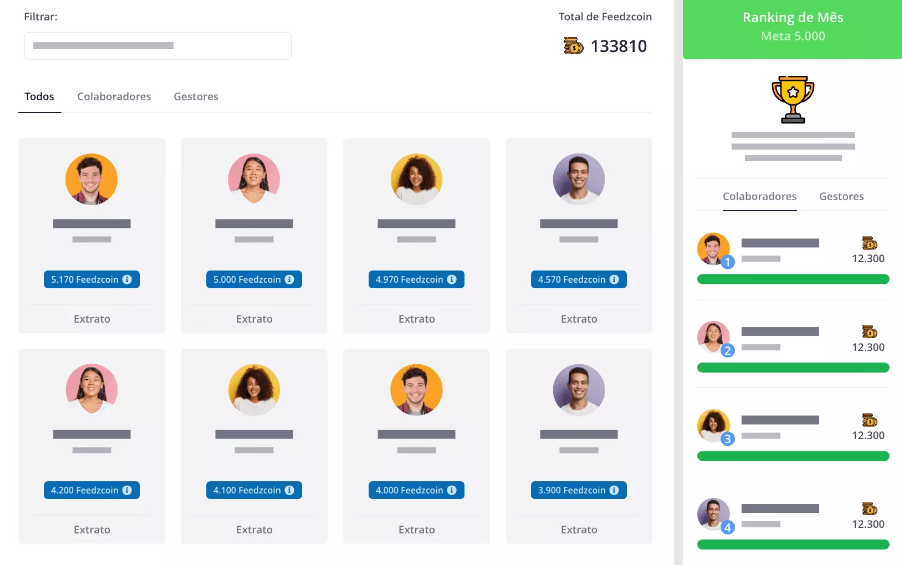
How to do it: Implement a leader ranking where users can see how they compare with others in terms of points, achievements or any other relevant metric. Update the score regularly to keep the competition tight.
Why it works: Healthy competition can increase user engagement and participation. When users compete to achieve a higher position, they are more likely to actively engage with the site to improve their rankings.
4. Missions and Challenges
How to do it: Develop missions or challenges that users can complete to earn rewards. These can be simple tasks, such as exploring new areas of the site, or more complex, such as participating in events or competitions.
Why it works: Missions and challenges create clear goals and provide a sense of purpose. Clear and specific objectives increase motivation and performance, as they provide a direction and purpose for the actions of users. Completing challenges offers a sense of achievement and progress, which are great motivators.
5. Immediate Feedback
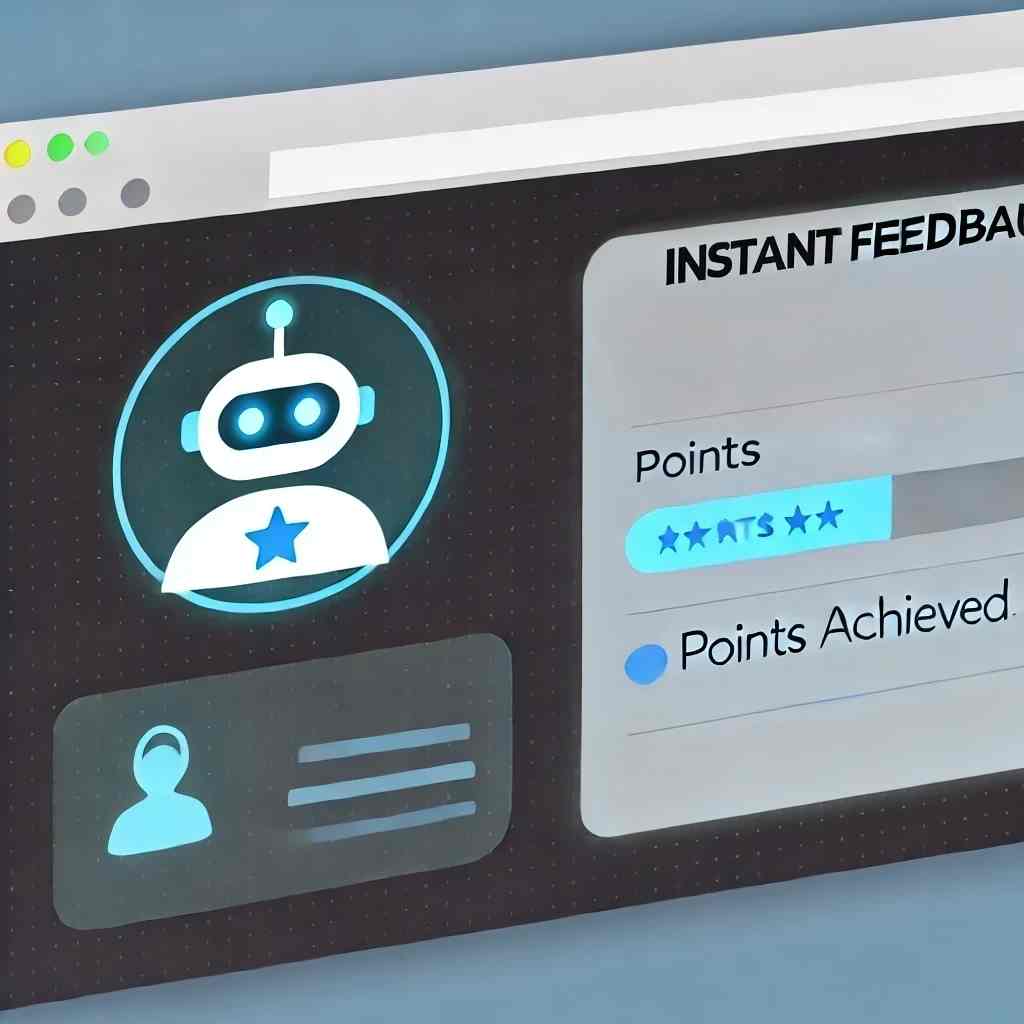
How to do it: Provide immediate feedback to users about your actions. This can be done through notifications, animations or real-time updates on points earned, levels achieved or unblocked achievements.
Why it works: Immediate feedback is essential for learning and motivation, as it can improve learning and performance by helping individuals adjust their behavior quickly. When users receive instant feedback, they immediately know the impact of their actions, which motivates them to continue interacting with the site.
6. Tangible and intangible rewards
How to do it: Offer rewards ranging from virtual goods (such as coins or exclusive items) to tangible benefits (such as discounts, free products or early access to new features). Make sure that rewards are perceived as valuable by users.
Why it works: Rewards increase extrinsic motivation and can reinforce desired behavior. Well-structured reward programs can significantly increase user engagement. There are two types of rewards: tangible ones, which provide a concrete incentive for participation, such as receiving a cash bonus and intangible rewards, such as recognition and status, that satisfy psychological needs.
7. Social and collaborative elements
How to do it: It incorporates social elements, such as the possibility of forming teams, collaborating in missions or sharing achievements on social networks. Create forums or communities where users can interact and support each other.
Why it works: Social elements promote a sense of community and belonging, increasing engagement and retention. When users can interact, compete and collaborate with others, this creates a richer and more rewarding experience, encouraging them to remain active on the site. Collaboration and mutual support help to create a more satisfying user experience.
5 Examples of Gamification in Different Sectors
1. Education
Education is one of the sectors where gamification has shown promising results. Educational platforms such as Khan Academy and Duolingo use gamification to motivate students to learn.
In Duolingo, for example, users earn points by completing lessons, receive rewards by keeping daily streaks and can compete with friends on leaderboards.
This reward and progress system helps keep students engaged and motivated to continue learning.
2. Health and Fitness
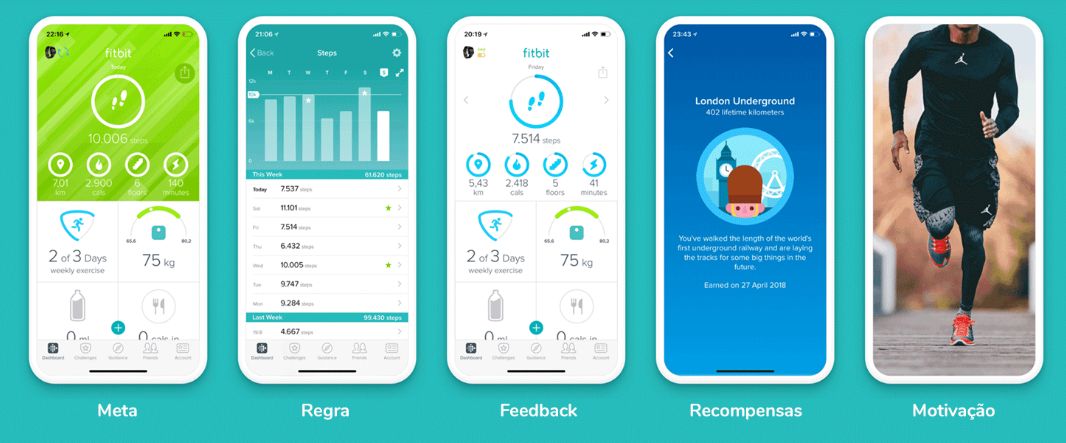
Health and fitness apps, such as Fitbit and MyFitnessPal, use gamification to encourage users to maintain a healthy lifestyle.
Fitbit allows you to set daily goals of steps and celebrates the goals hit with emblems and notifications. The challenges between friends and the adventures of the app were discontinued by Google in 2023, which shows how gamification depends on the product and changes over time.
The feeling of achieving daily goals and competing in challenges promotes healthy habits and keeps users active.
3. Business and Productivity
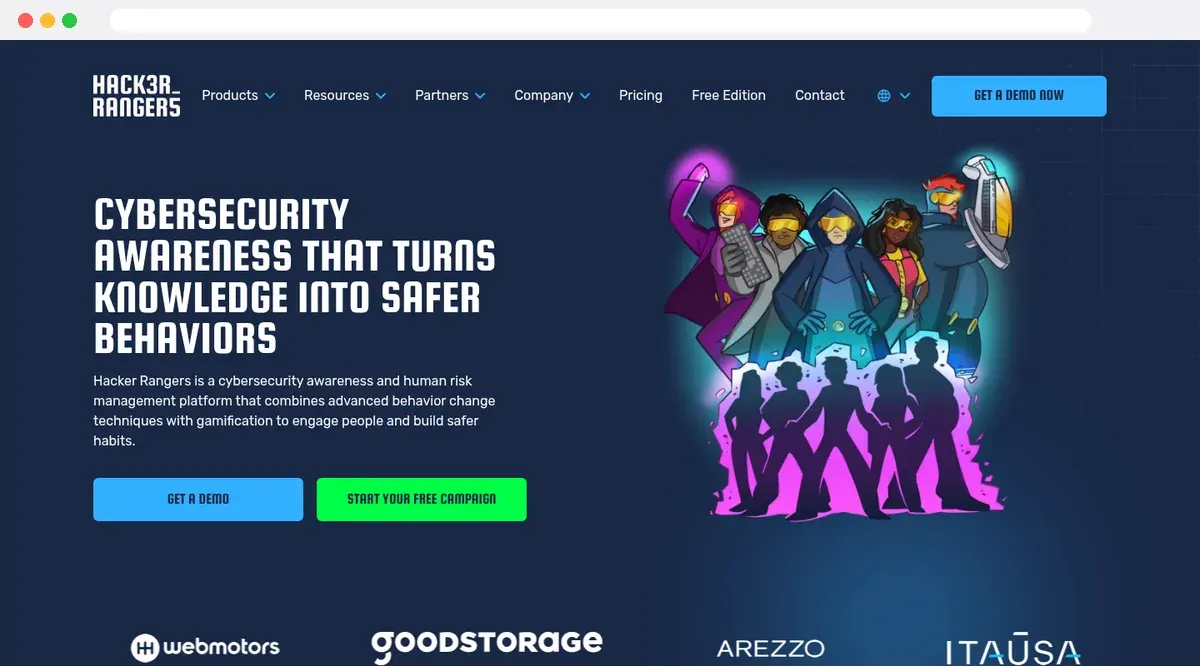
Companies are using gamification to increase employee productivity and engagement.
Tools like Trello and Asana use light gamification elements: progress bars on checklists and, in Asana, commemoration animations when a task is completed. These visual returns make task management more motivating.
4. Communities and Forums Online
Online communities also use gamification to stimulate participation and quality of contributions.
In Stack Overflow, for example, users earn reputation points when their questions and answers are well evaluated and receive badges by participation milestones. As they accumulate reputation, they release new privileges on the platform, which encourages useful and constant contributions.
5. E-commerce
E-commerce can also benefit from gamification. Sites like eBay and Amazon implement reviews and reward systems to encourage user interaction.
Loyalty programs, shopping points and product reviews are forms of gamification that increase customer loyalty and encourage repeated purchases.
There are other tools that can also be used, such as file format converters, audio transcripts with AI, and several others. Everything is valid to turn your site into an attraction to users.
Conclusion: Gamification for site
Gamification is a powerful strategy that can transform the user experience and increase the engagement on your website.
By incorporating game elements such as scores, levels, rewards and competitions, you can motivate users to interact more often and more deeply with your content.
Whether in education, health, business or e-commerce, gamification offers unique opportunities to create a more engaging and fun user experience.
To successfully implement the gamification, set your goals, meet your audience, choose the right gamification elements, maintain simplicity and be prepared to monitor and adjust your strategy.
Enjoy and also read about how Visual Storytelling Captivates Users and becomes a strong tool in conversion.
With these practical tips and examples, you will be well positioned to take advantage of the benefits of gamification and increase engagement on your website.
FREQUENTLY ASKED QUESTIONS
What is gamification and how does it work?
Gamification is the application of game design elements such as scores, levels, rewards and competitions in contexts not related to games. It works by exploring the human nature of competing, performing tasks and getting rewards, making everyday activities more attractive and motivating, increasing user engagement and loyalty.
What are the benefits of gamification for a website?
The benefits of gamification for a website include:
- Increased user engagement.
- Improved motivation and participation.
- Higher customer loyalty.
- Reduced rejection rate.
- Facilitation of social sharing.
- Best user experience, making browsing more intuitive and fun.
How can I implement gamification on my website?
To implement gamification on your site, follow these steps:
- Set your goals: What do you want to achieve with gamification?
- Get to know your audience: Understand the interests and behaviors of your users.
- Choose the gamification elements: Scores, levels, badges, challenges, leader scores, etc.
- Keep Simplicity: Don't overload the site with many gamification elements.
- Monitor and adjust: Follow user behavior and adjust strategy as needed.
Which sectors can benefit from gamification?
Several sectors can benefit from gamification, including:
- Education: Educational platforms can use gamification to motivate students.
- Health and Fitness: Health applications can encourage healthy habits.
- Business and Productivity: Task management tools can increase productivity.
- Online Communities: Forums and communities can stimulate quality contributions with reputation points and badges.
- E-commerce: E-commerce sites can increase loyalty and encourage repeated purchases.

Caio Nogueira is a SEO, GEO, link building and Digital PR expert and co-founder of WebSyd, website creation agency and SEO consulting founded in 2016. It acts with organic search strategies, digital authority construction and brand optimisation for search engines and artificial intelligence platforms. Throughout his trajectory, he participated in more than 1000 projects involving SEO, website development, content marketing and authority acquisition through backlinks and Digital PR. At WebSyd, it participates in the planning of strategies to increase organic visibility, lead generation and presence of companies on Google and AI-based search engines. As an author, it publishes content on SEO, GEO, website creation, link building and digital authority, sharing analyses, strategies and practical experiences related to organic growth of companies. Its contents and contributions have also been published in companies and vehicles of technology and marketing such as Wix, HostGator, Duda, Neil Patel, Locaweb and E-Commerce Brasil.
View all posts


 Estimate the cost

