
Digital Marketing for Restaurants: Marketing Strategies in 2026
Summary (TL;DR)
Digital marketing for restaurants has become an urgent need in the face of changes in consumer behavior, especially during the pandemic. With the migration to the digital environment, restaurants needed to invest in strategies such as creating professional websites, investing in organic traffic to get well positioned on Google, paid traffic and an active presence on social networks. However, to ensure success in this competitive scenario, it is essential to avoid traps such as irrelevant content and invasive approaches, and focus on practices such as relevant content production, genuine interaction with customers and constant innovation.
By adopting these best practices, restaurants can not only survive, but capture many new customers in the digital environment, achieving significant long-term results.
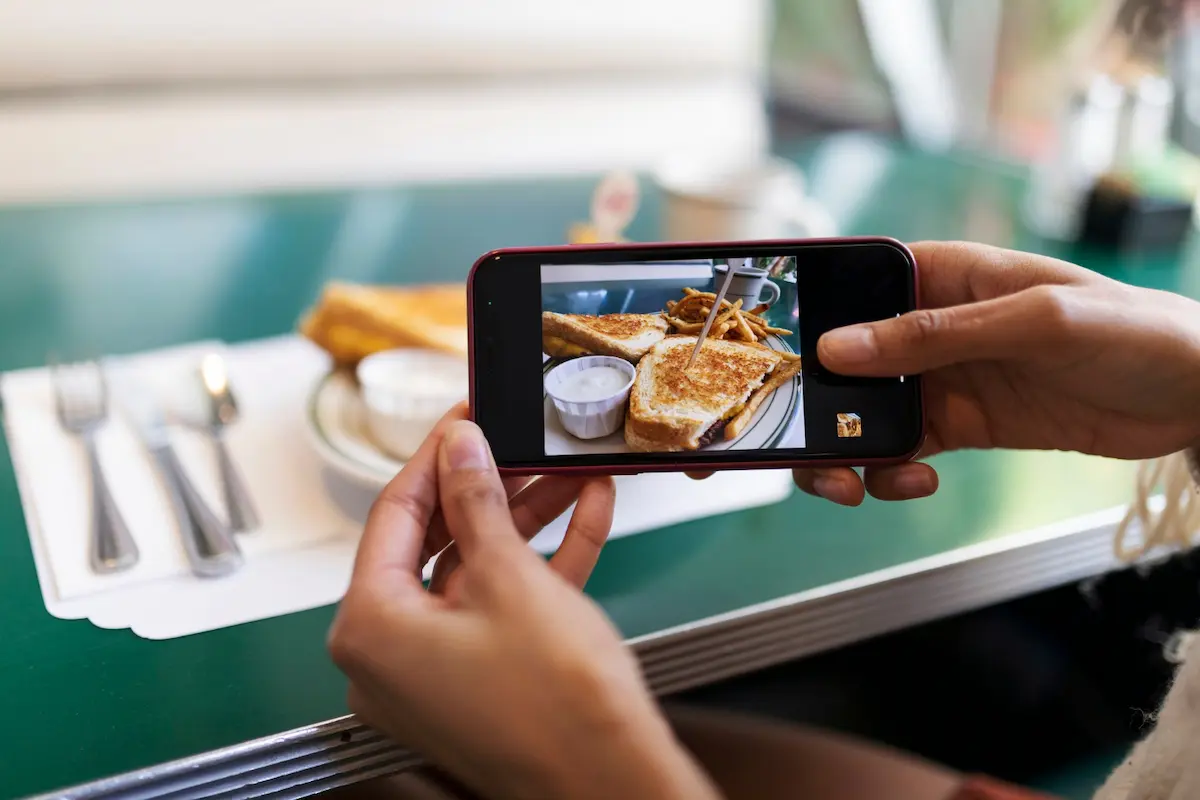
Quick answer: digital restaurant marketing combines five fronts: a fast mobile site with menu and orders, the Company Profile on Google with photos and reviews, social networks with photos and videos of dishes, WhatsApp lists and email to customers who have already purchased, and ads targeted by neighborhood. A small restaurant can start with the Company Profile and Instagram, which cost little, and use the site as a basis for orders without application fees.
Since the pandemic, ordering food for the phone has become a habit, and the customer who goes to the salon also searches the restaurant on Google and the networks before choosing.
The first step is you invest in creation of a site for restaurant. . It will be your basis for any digital marketing strategy. Of course you can succeed without having a website. But the site is your port-safe, where you will concentrate your company information, photos, contact details, content and can work your marketing in a more holistic way, along with social networks and other strategies.
If you still don't use digital marketing for restaurants and need to step up your sales, see some good ideas to make your customers grow.
Initial notions of digital marketing for restaurants

You yourself can take responsibility for the digital marketing of your restaurant. But if you have no knowledge or time for it, we recommend that you hire a web agencyHe'll take care of it.
After all, it is necessary to know how to build a website, especially if you intend to have the ordering system by your own site and by an app. Something important today is that more people connect to the internet over their phones than through a computer.
So, the call mobile first it is a concept currently widely used in the construction of websites, which means building the site thinking that the client will consult that virtual address using a mobile phone and not a large computer screen.
However, it is important that you have some concepts in mind, even if you are hiring professionals to perform the service. That way, you'll know how to charge for what you're hiring.
Importance of a website for your restaurant
The creation of a professional website It is essential for any digital marketing strategy, because it is through it that people will be able to get to know your restaurant, and they will have the opportunity to know a little more than you have to offer, so that they can become customers.
It is the place where potential customers on the Internet will be targeted, through the tools provided by digital marketing.
When talking about websites created by professionals, it is necessary that creation be carried out on platforms that allow management, SEO settings and customisation, according to the need of each client, as a site created in WordPress.
However, there are those who do not recognize the importance of the website to be created by professionals, but so that it is effective in SEO strategies and digital marketing for restaurants, it is necessary that a professional be responsible for all creation.
With the site built and a production, it is time to move on to digital marketing strategies, which will make your potential customers reach your website, increasing their traffic, and for this, some strategies can be used, such as:
- E-mail marketing;
- SEO;
- social media;
- Campaigns paid for.
In this way, it is possible to understand the importance of the site! If your site is out of date, it's like you don't have one. So invest in professional website, so you can get results for your business.
Branding actions for restaurants

For your restaurant to get an online environment positioning, it is important that some branding actions be performed.
His restaurant goes far beyond the name and logo, he tells a story that needs to talk to the public, and allow customers to have identification with their trajectory, seasoning and style.
Branding actions should encompass content, design, in addition to ads and social networks, so that it is possible to follow and meet the needs of the consumer.
So look at some important actions:
1. Bet on social media
Do you still think social networking is only for teenagers and bloggers? Second DataReport, Brazil had 150 million active profiles on social networks in October 2025, and Instagram is one of the first searches of who chooses where to eat.
This is because these platforms allow you to view the product and quickly close your purchase.
With restaurants, the dissemination of menus, dishes and even promotions is done very easily using Facebook and Instagram.
If your restaurant doesn't have these social networks yet, it's past the time for you to create professional pages on social media.
Enjoy and connect your websites to your social networks. Thus, future customers can easily place their orders.
2. Content production
Did you know that to be well positioned by Google, websites need to be optimised and have quality content production?
Exactly! You need to constantly offer your customers well-produced, informative texts that will make your customer curious to get more information about your services.
If you have an Arab food theme restaurant, for example, how about a text on the history of Arabic food? Or about the Arab culture?
If your restaurant serves international food, write texts about the cuisine of different countries or even about Brazilian cuisine if your business is focused on it.
3. Own app or iFood?
Another good way to do digital marketing for restaurants is to have an app of its own, this is a way for the restaurant to demonstrate concern for its customers by offering personalised service and with delivery option.
Although iFood is a market leader, an app of its own can offer more options to the customer.
In addition, you will not pay the fees to the app owner.
However, if your money is lower and you don't want to invest in it, having the restaurant associated with food delivery apps by delivery is a good strategy as well.
Even though individual profit is smaller, it's the easiest way for you to get your restaurant out.

Digital Marketing Strategies for Restaurants

1. Have a friendly website
Nothing pushes a customer away more than a confusing site, full of bugs, that doesn't get in or that has too heavy photos, which they don't carry either. That's the ideal recipe for failure. So, see if your restaurant site is friendly: for that, take a test yourself.
Access the page and see what it looks like:
- is the loading fast (something around 3 seconds maximum)?
- Do the photos load quickly or is there a photo that just doesn't show up?
- Are all options available? If the customer misses, can you return easily?
- Speaking specifically about orders, is the menu clear and intuitive? The forms of payment then described clearly?
- Can the customer close the order quickly and easily?
- Is it possible to contact the restaurant via whatsapp?
These are all questions you should ask yourself to check how your site is going.
2. Whatsapp Lists
Whatsapp is a conversation app that goes far beyond family groups. It also allows payments.
So, having your customers' numbers divided into lists where you can advertise promotions and your menu is a great digital marketing strategy for restaurants.
Making these strategies, your restaurant will certainly have the sales driven by digital marketing. After all, even with the hall full, digital sales cannot be abandoned, since many people will keep asking for food at home.
3. Email marketing
Email marketing is an interesting strategy in restaurants and food/food-related businesses. But the first step is to create a list of emails with all recipients, to capture all interested parties.
You can win subscribers through discounts, bonuses, among other options so you can attract them to the subscription. In addition, you can use a destination page, affiliate site, to guarantee this list with potential customers.
After ensuring customer registration, you need to have an automation for emails, so that you can send news with one periodicity, such as twice a week.
E-mails should always be attractive, in a friendly way, expressing gratitude and subtly stimulating the return of customers to the restaurant. In addition, you can offer discounts, exclusive promotions, new dishes in the restaurant, so that whenever the email is open, the customer has a pleasant surprise.
Marketing from the email, when applied correctly, can bring an interesting competitive advantage to your restaurant.
4. Explore online reviews
Before choosing a restaurant, the client wants confidence that it's gonna be worth the time and money. Evaluations in Google Company Profile, which appears on Google Maps and in search, are one of the first things he looks at.
Therefore, online reviews are interesting for restaurants, a place with good reviews, and positive comments on service, service, food quality and taste are more sought than those who do not invest in this type of marketing.
Currently, before going anywhere, we look for references in the main searchers, to get an idea about the place, type of environment, location, and the service offered. Restaurants that have good reviews, comments that encourage other customers, are welcome, and work very well.
The credibility increases considerably, allowing other customers to want the same experience as the customer of a given review in the reviews.
But how do we encourage customers to evaluate the restaurant?
Ask for the evaluation at the end of the service, place a QR code with the assessment link on the table or note and answer all evaluations, including negative ones (see Google tips for receiving reviews). Do not offer discount, toast or bonus in exchange for evaluation: a Google Maps policy prohibits encouraged evaluations and removes that content.
4. Marketing on social networks
Facebook and Instagram, from the same group, allow segmenting ads and posts by neighborhood and interest, which gives scope even with small funding when the strategy is well thought out.
How can you explore marketing using social networks?
First, you need to create a true connection with your audience, and this connection will only be possible through engagement, that is, you need to speak in such a way that your client understands and identifies himself, that's the most important step.
Then you need to arouse the interest in continuing to follow your content, and awaken the interest of getting to know your restaurant. And for that, photos and videos play a very interesting role.
But not just professional photos and videos, but those videos and photos that are shared by customers on social networks, always do the repost. This way, other customers will realize that you care about the customer's opinion and that you are always promoting true experiences in the restaurant's profile.
People are attracted to real experiences, by true comments and videos made by non-media people, as this portrays that it is a place that values and takes care of the customer, regardless of who they are.
In addition, to maintain engagement with the profile, it is to have regularity in posts, never leave without any new content, as this demonstrates that you are not worrying about social networks and that this can happen equally at the restaurant.
Always answer customer comments, try to respond as quickly as possible, directs and messages with questions, complaints, to establish a good relationship.
Using influencers and media people is also an interesting strategy to give more visibility to your dishes, but use this strategy to increase your reach, always seek to bring truth and identification with your audience.
Organic traffic x Paid Traffic for restaurants

Organic traffic for restaurants
What is it?
Organic traffic refers to the natural visits that a restaurant site receives, without the need to pay for ads.
How it works
This occurs when people find the restaurant website through online surveys or social media indications, without direct influence of paid advertising.
Organic traffic strategies (SEO) for restaurants
To increase organic traffic, it is essential to invest in SEO (Search Engine Optimization) strategies such as:
-
Include relevant keywords
- For example, a sushi restaurant in São Paulo can optimise your website including during the content of your keyword page such as “sushi in São Paulo”, “best Japanese restaurant in São Paulo”, etc.
-
Create quality content
- The same sushi restaurant can create a blog on the site with posts about Japanese culture, curiosities about sushi, tips for matching sake with food, among other topics relevant to your audience.
-
Use meta descriptions and attractive titles
- The title is the text that appears as the main title of a page in Google's search results. It's the first thing people see when they research something. For example, if someone looks for “best sushi restaurants in São Paulo”, the title of the sushi restaurant page that appears in the results will be what people see first. The importance of the title is enormous because it helps a person decide whether to click on their website or not. If the title is attractive and relevant to her research, it is more likely that she will click on your link. Optimised title example: “Sushi in São Paulo: High quality Japanese food restaurant”
- The meta-description is a short summary that appears below the title in the search results. It's a brief explanation of what the page offers. For example, you can describe the type of food the restaurant serves, its location or some special highlight from the menu. The importance of the description is that it gives more context to the title. It helps people understand better what the page is about before they even click on it. If the description is convincing and relevant to a person's research, it increases his chances of clicking on your link. Example of meta-description: “Find out the authentic flavors of Japan in the heart of São Paulo. Try our varied menu of fresh sushi and high quality sashimi. Book now!”
-
Ensure that the site is responsive and fast
- The restaurant should ensure that your website is accessible and easy to use on mobile devices, as many potential customers may be looking for restaurants while they are on the move. In addition, it is essential that the site loads quickly to provide a good user experience and improve ranking in search engines.
Traffic paid for for restaurants
What is Traffic Paid for Restaurants:
The paid traffic involves investing in ads to direct visitors to the restaurant website.
How it works
These ads can be displayed on various platforms, such as Google Ads, Facebook Ads and Instagram Ads, TikTok Ads, Pinterest Ads and Linkedin Ads, and are directed to a specific audience based on criteria such as online localization, interests, and behaviors.
Effective strategies
For results with paid traffic, some effective strategies include:
-
Precise targeting of the target audience
- A healthy food restaurant in Curitiba can segment your Facebook ads for people in the area of Curitiba interested in healthy lifestyle, organic eating, fitness, etc.
-
Creating attractive and persuasive ads
- The restaurant can create ads with vivid images of healthy dishes, called for convincing action such as “Try our new quinoa salad now!” and special offers such as discounts for new customers.
-
A/B tests to optimise ad performance
- Testing different versions of ads (e.g. with different images, texts or calls to action) and monitoring which one generates more clicks and conversions can help the restaurant optimise its advertising campaigns.
-
Monitoring and analysis of results
- Using data analysis tools such as Google Analytics to monitor ad performance, identify user behavior patterns and adjust advertising strategy as needed to maximize return on investment.
Difference between organic traffic and paid traffic for restaurants
Pros of Organic Traffic
- Cost: It does not require direct investment in advertising, making it a more economical option in the long term.
- Credibility: Organic results are generally seen as more reliable by users, which can increase the click rate.
- Sustainability: Since your site is well optimised and classified in search engines, you can continue to receive organic traffic even without continuous advertising efforts.
Contras of Organic Traffic
- Time: It takes time to build a strong organic presence in search engines, requiring constant optimisation and relevant content creation.
- Competition: Competition for positions in research results can be fierce, especially in highly competitive sectors such as restaurants.
- Scale Limitations: The range of organic traffic can be limited, depending on the size of the target audience and website visibility in search engines.
Paid Traffic Pros
- Control: advertisers have full control over who sees their ads, when they are displayed and how much they spend on advertising.
- Rapidity: Results can be achieved quickly, with the ability to instantly increase website visibility and traffic.
- Scaleability: Paid traffic can be scaled easily, allowing advertisers to increase their investments as they see positive results.
Contras of Paid Traffic
- Cost: Paid traffic can be expensive, especially in competitive sectors, and requires a continuous budget to maintain visibility.
- External Dependency: When ads stop being broadcast, paid traffic decreases, which means that results may not be sustainable in the long term.
- Distrust of the Public: Some users may be skeptical about paid ads and prefer to click organic results, which can affect the effectiveness of ads.
Care when working with Digital Marketing
However, for you to succeed in digital marketing for restaurants, it is necessary to take some care. You want to know what they are? See next!
1. Unrelevant content
The public wants to follow an interesting content, which adds some value to their day and experience, and a content an emptiness is just what they are not looking for. But for you to understand, a content without relevance is the one that brings no value.
Consider an example of empty content: “Know our restaurant! You'll love it.”
Now, a content that adds value: “Our restaurant has an air-conditioned atmosphere, perfect for families, and today our suggestion of dish is the rib baked with barbecue sauce! And today we have special discounts.”
The message is the same, but one does not bring any information that is useful to the customer, and the other, gives information about the place, comfort and the dish indicated for that day, and still gets discount!
2. Don't be invasive
In Digital Marketing, it is very important not to be invasive, and respect the customer's desire. Do not send advertisements by inbox without the client's permission, and do not use whatsapp with advertisements if the customer does not request.
Do not publish photos or videos, which are not authorized by the client, this is illegal and very disrespectful.
3. Use creativity and not repetitive
There are those who believe that if one type of content worked at some point, it must be repeated exhaustively, but the truth is another! Creativity is one of the secrets of digital marketing for restaurants.
Customers like new things, follow the evolution of the restaurant, see the opinion of customers, dishes of the day, menu among others. Always create new content.
Conclusion
In short, investing in digital marketing is part of the day to day of any restaurant. The customer searches on Google, looks at the reviews, sees the dishes on Instagram and asks for a mobile phone, and anyone who doesn't show up in those places loses orders to the competitor.
When entering digital, restaurants needed to learn how to use strategies such as SEO, social networks and content marketing to attract customers and boost their sales. The restaurant site has become the central point of these strategies, serving as a virtual business card and a platform to interact with customers.
Maintaining a consistent online presence and measuring the outcome of each channel helps the restaurant stand out in a competitive market.
Therefore, by adopting digital marketing for restaurants, it is essential to be attentive to best practices such as the relevance of content, genuine interaction with customers and constant search for innovation. By doing so, restaurants can achieve significant results and ensure their success in the digital environment.

Caio Nogueira is a SEO, GEO, link building and Digital PR expert and co-founder of WebSyd, website creation agency and SEO consulting founded in 2016. It acts with organic search strategies, digital authority construction and brand optimisation for search engines and artificial intelligence platforms. Throughout his trajectory, he participated in more than 1000 projects involving SEO, website development, content marketing and authority acquisition through backlinks and Digital PR. At WebSyd, it participates in the planning of strategies to increase organic visibility, lead generation and presence of companies on Google and AI-based search engines. As an author, it publishes content on SEO, GEO, website creation, link building and digital authority, sharing analyses, strategies and practical experiences related to organic growth of companies. Its contents and contributions have also been published in companies and vehicles of technology and marketing such as Wix, HostGator, Duda, Neil Patel, Locaweb and E-Commerce Brasil.
View all posts


 Estimate the cost

