
How to Increase Invoicing with AI
Summary (TL;DR)
In this post, we talk about how artificial intelligence (IA) can transform your business and increase billing, automating processes and improving efficiency.
We explore practical applications such as chatbots, predictive analytics and marketing automation that allow you to personalise customer experience and optimise sales strategies. We also highlight how AI can be used in e-commerce for customisation, pricing optimisation and logistics improvements.
We present popular AI tools, such as ChatGPT and Watson Assistant, which assist in customer service and process automation. Finally, we discuss how large companies such as Amazon and Netflix use AI to increase billing and optimise their operations.
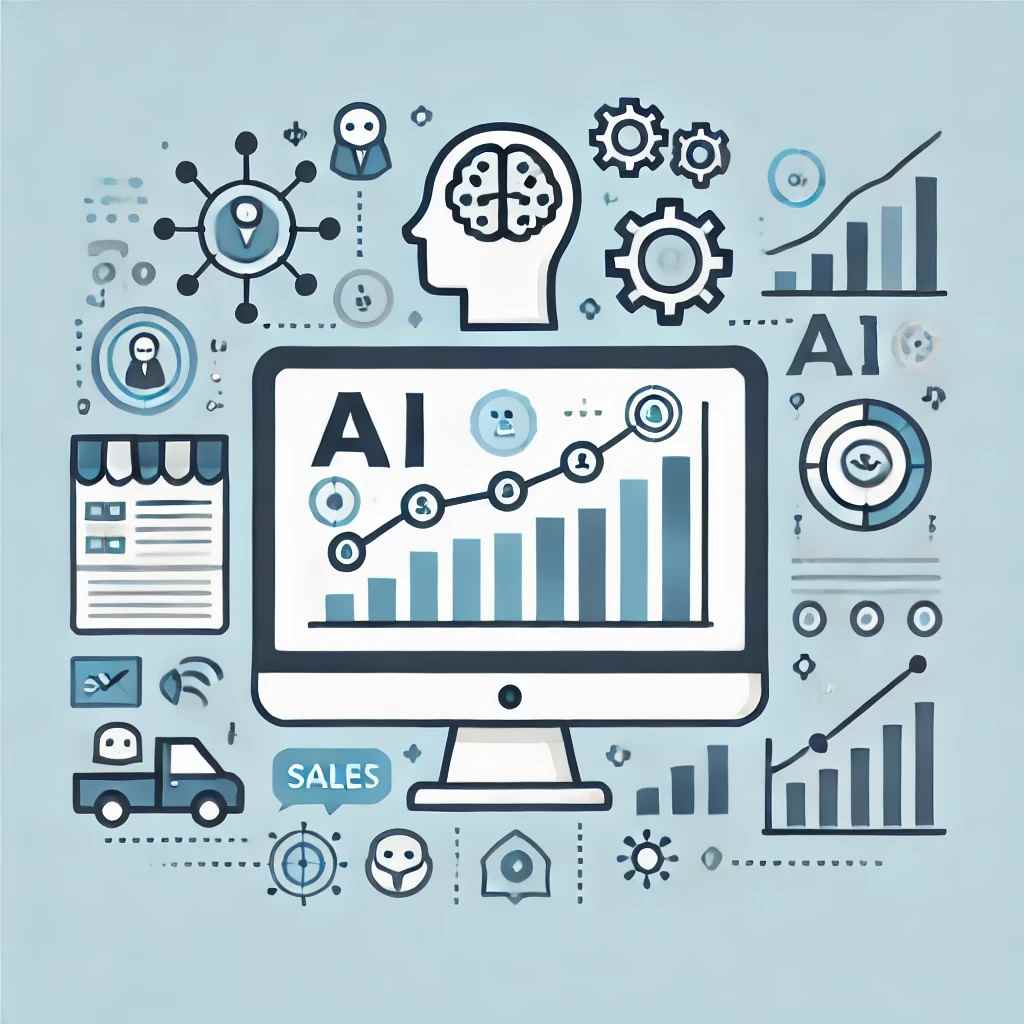
Quick answer: AI helps increase billing on four fronts: service (chatbots that respond and qualify leads at any time), sales (customised recommendations and demand forecast), marketing (targeting and content production with human review) and operation (repetitive tasks automation). Gain appears when the tool solves a measured bottleneck, not just by adopting technology.
Have you ever stopped to think about how to increase AI billing (artificial intelligence)? If the answer is no, you are in the right place, because now we will show you how that is possible and also how important it has become to companies.
This simplified chat is nothing more than the start of a productive conversation about the future of your business, certainly a high-profile subject for any and all niches that wish to stand out in the so dreamt online market.
In this article, we will explore how uncomplicated AI can be your great ally in the growth and success of your enterprise.
Prepare to discover strategies, tools and solutions that will enhance your results.
How can the AI increase its billing?
Before we dive into the practical applications of AI, it is important to understand what it is and how it can make a difference to your company. The AI refers to systems and technologies that simulate human intelligence to accomplish tasks and solve problems.
From chatbots to advanced machine learning algorithms, AI can assume a variety of functions that were previously performed by humans.
How can this increase your billing? Well, the answer is to automate processes, improve efficiency and offer a personalised customer experience.
Imagine having an assistant who never gets tired, who can answer customer questions at any time of day or night, or who analyzes data to help make more strategic decisions. That's what the AI can offer.
Goal applications to increase sales
Let's start with one of the most direct ways to use AI to increase revenue: boost sales. There are several tools and techniques that can help improve your sales and marketing strategies.
Chatbots and Virtual Assistants
Chatbots are one of the most popular AI applications. They function as virtual assistants that can interact with customers in real time, respond Frequently asked questions and even conduct transactions.
Free and paid versions are available, such as the Free GPT Chat OpenAI and Watson Assistant at IBM. Although free versions offer basic features, the pay comes with additional features such as CRM integration, advanced analysis and priority technical support.
Example: Sephora uses chatbots to offer personalised product recommendations and instantly resolve customer questions. This not only improves the user experience, but also helps boost sales, with personalised suggestions based on your shopping history and preferences.
Predictive analysis for business decisions
Predictive analysis is another powerful AI application. Using advanced algorithms, it can analyze large volumes of data to predict future trends and behaviors. This is extremely useful for marketing strategies and sales planning.
Example: Netflix uses predictive analysis to recommend movies and series to its users based on viewing history and preferences. Companies of e-commerce may use techniques similar to predict which products will have high demand, adjust their stocks and create more effective promotional campaigns.
Marketing Automation
The marketing automation is an area where AI can transform the way companies communicate with their customers. Automation tools can manage email campaigns, target audiences and optimise ads on social networks based on user behavior.
Example: The HubSpot is a platform that offers marketing automation with AI. It allows you to create custom campaigns, precisely segment leads and analyze the performance of campaigns in real time. This reduces the need for manual intervention and increases the efficiency of marketing campaigns.
6 Tips on how to increase e-commerce billing with AI
If you own an e-commerce, the AI can be a crucial ally to boost your billing. We will explore some of the most effective ways to use AI in e-commerce platforms.
1. Customization of the user experience
One of the biggest advantages of AI in e-commerce is the ability to personalize the user experience. Using machine learning algorithms, you can offer personalised product recommendations based on the behavior of navigation and customer shopping history.
2. Personalised recommendations:
Algorithms of Recommendation: They use previous purchases data and navigation behavior to suggest relevant products.
Upselling and Cross-selling: It offers complementary or higher value products based on customer preferences.
3. Automated marketing:
Custom Campaigns: Creates campaigns targeted marketing based on the customer's history of purchases and interactions.
Advanced Segmentation: Segment customers into specific groups for more effective email campaigns.
Practical example: Amazon is a remarkable example of customisation in e-commerce. The platform uses AI to analyze customers' shopping and browsing history, offering product recommendations that correspond to each user’s individual interests.
This not only improves the purchasing experience, but also increases the chances of additional sales.
4. Optimisation of dynamic prices
Dynamic pricing optimisation is another powerful AI application in e-commerce. AI can adjust the prices of products in real time based on demand, competition and other market variables. This allows you to maximize revenue and maintain a competitive advantage.
Example: The Zara e-commerce company uses AI algorithms to adjust the prices of its products according to demand and supply. This helps optimise the profit margin and adjust prices to attract more customers.
5. Improving logistics operations
AI can also optimise the logistics operations of e-commerce, reducing costs and improving efficiency.
Inventory Management:
- Demand Preview: It uses algorithms to predict product demand and adjust inventory accordingly.
- Storage Optimization: Improves layout and warehouse management to optimise space and reduce costs.
Order Processing:
- Application Automation: Automates order processing to reduce errors and speed up delivery time.
- Tracking and Delivery: Provides real-time information on order status and tracking.
6. Chatbots for Customer Service
In addition to boosting sales, chatbots are also valuable for e-commerce customer service. They can handle frequently asked questions, process orders and provide real-time support by improving customer satisfaction and reducing the workload of the support team.
Example: H&M uses chatbots to help customers find specific products, answer questions about availability and process returns. This provides a more fluid and efficient purchasing experience.
Analysis of the AI tools mentioned above
To choose the best AI tools for your business, it is essential to understand the options available and their features in detail.
We will dive into a deep analysis of the main AI tools mentioned, starting with OpenAI ChatGPT and other relevant tools.
OpenAI ChatGPT
OpenAI ChatGPT is an advanced natural language processing tool (NLP) that uses machine learning models to understand and generate human text.
This tool is extremely versatile and can be applied in various business contexts. Next, we will explore its features in more detail.
Features:
- Text Generation: ChatGPT is able to create texts in a variety of styles and formats. This includes:
- Blog Articles and Posts: It produces coherent and relevant content based on specific topics.
- Product Description: Generates engaging and persuasive descriptions for e-commerce.
- Creative Writing: He writes stories, scripts and other creative content.
- Answers to Questions: The ability to answer questions is one of the most valued functions:
- Customer Service: Provides detailed and contextualized answers to users' questions.
- Technical Support: Provides solutions to technical problems and step-by-step guidance.
- API Integration: ChatGPT can be integrated with other systems and APIs, which expands its functionality:
- CRM integration: Improves customer relationship management and automates interactions.
- Marketing Automation: Collaborates with marketing tools to create custom and automated campaigns.
- Image Generation: In combination with tools like DALL-E, ChatGPT can generate images based on textual descriptions. This is useful for creating personalised visuals for marketing campaigns and social networks.
- Research Capacity and Reports: You can conduct advanced searches and compile reports based on provided data:
- Trend Analysis: It identifies and analyses market trends based on large volumes of data.
- Reporting Generation: It produces detailed reports with insights into campaign performance and other key indicators.
- Business Context Ideas: Offers suggestions and ideas for various business contexts:
- Marketing strategies: It proposes strategies and campaigns based on market analyses.
- Product Development: Suggests new features and improvements for products based on customer feedback.
Watson Assistant from IBM
Watson Assistant from IBM is another robust AI tool that stands out in the field of chatbots and virtual wizards. We'll explore your capabilities in detail.
Features:
- Chatbots Creation: Watson Assistant allows you to create highly customizable chatbots that can:
- Interact with Users: Provide instant and accurate answers to frequently asked questions.
- Run Tasks: Automate tasks such as scheduling appointments and processing orders.
- Sensitivity Analysis: Uses sentiment analysis to better understand the emotions of users:
- Feedback Monitoring: Evaluate customer feedback to adjust responses and improve user experience.
- Insights on Attendance: It offers insights into how customers are reacting to service and what areas need improvement.
- Multichannel Integration: Watson Assistant can be integrated into various communication channels:
- Social networks: Facilitates customer interaction on platforms such as Facebook Messenger and WhatsApp.
- Sites and Applications: It easily integrates with websites and applications to provide real-time support.
- Analysis and Reports: Provides detailed analysis tools and reports:
- Performance Reports: Generate reports on chatbot performance and customer interactions.
- Trend Analysis: It identifies patterns and trends in users' questions and feedback.
- Developer Support: Provides resources for developers:
- Extensive Documentation: It offers extensive documentation and tutorials to help create and customize chatbots.
- Development Environment: Provides an integrated development environment to test and adjust features.
10 companies that have successfully used AI
To illustrate the effectiveness of AI, here are 10 case studies by companies that successfully used AI to increase revenue and improve their operations.
Amazon: Uses AI for personalised recommendations, demand forecasting and price optimisation. It results in a significant increase in sales and customer satisfaction.
Netflix: It implemented recommendation algorithms that analyze the viewing history to suggest new content, increasing viewing time and retention of subscribers.
Sephora: It uses chatbots to offer product recommendations and customer support, improving user experience and boosting sales.
Zara: It adopts AI for dynamic pricing optimisation and inventory management, increasing efficiency and maximizing revenue.
H&M: It implements chatbots for customer service and real-time support, reducing the workload of the support team and improving customer experience.
Tesla: It uses AI for the development of autonomous vehicles and performance data analysis, innovating in the automotive industry and improving safety.
Spotify: It adopts AI to create custom playlists based on users' listening behavior, increasing satisfaction and engagement.
eBay: Implements AI to search for custom products and recommendations, improving the purchasing experience and increasing sales.
Shopify: It offers AI tools for optimizing marketing and data analytics campaigns, helping shopkeepers increase their sales and operational efficiency.
Microsoft: It uses AI to offer productivity and collaboration solutions, improving efficiency and innovation in various sectors.
Conclusion: How to increase AI billing
Finally, artificial intelligence offers a range of tools and features that can transform the way you do business. From automation of tasks and customer service to customisation and optimisation of processes, opportunities are vast.
Undeniably, by adopting these technologies, you can increase efficiency, improve customer experience and finally increase your business billing.
Remember, choosing the right tools depends on the specific needs of your business and how you intend to use AI to achieve your goals.
With the right information and tools, you will be well positioned to make the most of the advantages offered by artificial intelligence.
Do you want to learn more from our blog? Read about Site Ready.
Do you want a new site or rephrase the current one? Get a quote.

FREQUENTLY ASKED QUESTIONS
How can the AI increase a business billing?
AI can increase billing by automating processes, customizing customer experience and optimizing operations such as sales, marketing and logistics. This results in greater efficiency and better business decisions.
What are the main AI applications to increase sales?
Key applications include customer service chatbots, predictive analysis to predict future behavior, and marketing automation for custom campaigns.
What are chatbots and how do they help businesses?
Chatbots are virtual assistants that interact with customers in real time, answering questions and processing orders automatically. They improve the customer experience and reduce the need for human intervention.
How can the AI be applied to e-commerce?
AI can be used in e-commerce to customize product recommendations, optimise real-time prices, automate marketing campaigns and improve logistics management such as stock control and order tracking.

Lucas Pelisari has specialised in SEO and content at WebSyd for more than 6 years, working on the creation and optimisation of digital strategies focused on lead generation and organic growth. With experience in website development projects, SEO on-page and link building, he works directly on structuring content and pages aimed at positioning on Google and acquiring qualified traffic. Throughout his work, he has participated in projects for companies such as Kommo, Aldanth, Physical Care, In4, Design.com, Adaptive, Clipto and Yesim, as well as several other clients attended by WebSyd. Its contents address topics such as creating professional sites, SEO, page structure, performance, user experience and digital growth strategies, always with a practical approach based on real market scenarios.
View all posts


 Estimate the cost

