
Information Security: See 4 tips to help protect your business
Summary (TL;DR)
In this text, we talk about the importance of protecting the integrity and security of information on websites, highlighting that this concern is fundamental for companies of all kinds, not just digital ones.
With the increase in cyber attacks, companies from various sectors, including physical stores, should invest heavily in information security.
We present four tips to improve data security: using encryption on storage devices, performing regular backups, adopting VPNs for unsafe connections, and investing in an efficient firewall program.
These measures help protect against data leaks, ensuring security for both the company and its customers.

Quick answer: to protect your business information, start with four fronts: encryption (HTTPS on site and sensitive encrypted data), automatic backups outside the server, secure access (VPN on public networks, password manager and two-factor authentication) and firewall with systems always updated. This goes for physical stores as well, which store customer data on connected systems.
After all, no one wants to enter into a major data leak controversy, including harming their users/clients.
Often people tend to think that this is an exclusive threat of companies that have 100% digital performance, but that's not really true.
Physical stores also usually store customer and product data within an automated system, and with this, are vulnerable to attacks by hackers and crackers Likewise.
For this reason, most companies invest very heavily in the information security segment. Because of this, we have selected here 4 tips on how to use the principles and security mechanisms that you can apply in your business and avoid future problems. Check it out:
Use encryption on devices that store your customers' data
Data encryption has become a key technology for the operation of any service that stores data considered “sygilous” from third parties. This can go from document data, addresses, to Credit Card and passwords.
Financial transactions and sending information through digital means, for example, would be much more open to hackers if it weren't for security protocols that encrypt the communication channels used in these media.
Large retailers, banks and any serious website use the TLS protocol to encrypt what the visitor type. Google treats the HTTPS as a sorting sign, lightweight, and Chrome shows the “unsafe” warning on uncertified pages. See also the risks of selling on unprotected websites.
The truth is that for a common site without customer payment data, good SSL/TLS encryption can be enough to store data, at first, banal when it comes to case by case.
For payments, use consolidated and certified gateways in the PCI DSS standard, such as those of known banks and intermediaries. So the card data doesn't go through your server.
What is SSL/TLS?
SSL, this confused acronym for those who do not work with the web design, but much talked about, means Secure Sockets Layer, a type of digital security that allows encrypted communication between a website domain and a browser.
Currently, the technology, despite being widely spoken, is giving space and gradually being completely replaced by TLS, although some commonly still call both SSL for a matter of ease, such as customer service for hosting websites.
The TLS is an acronym that represents Transport Layer Security and certifies data protection in a manner similar to SSL. As SSL is going into disuse, this is the correct term that should be used.
HTTPS is a secure extension of HTTP. Websites that configure an SSL/TLS certificate may use the HTTPS protocol to establish secure communication with the server.
Know the importance of having a good backup
It is essential to have a backup of your files, so that they will not be lost in the future. Therefore, it is recommended that business managers make recurring backups.
Among all existing and safe mechanisms to store your data, the main one used is cloud computing, as it reduces risks of information violation, in addition to being flexible to suit any company size.
However, it is worth remembering that services used on corporate websites like WordPress and Shopify, they have their own forms of backup via plugins or “embedded” on their own system.
Adopt VPNs for Unknown Connections
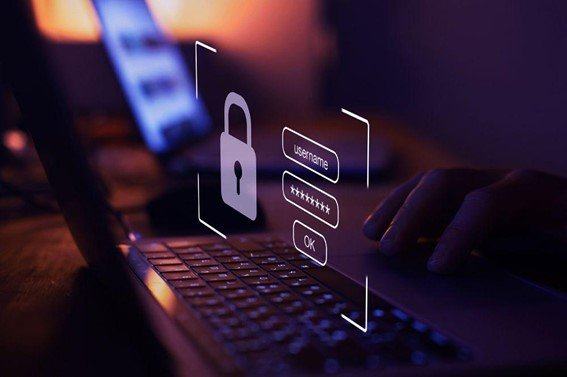
VPN offers a form of protection widely used in business. On public networks such as Wi-Fi networks of hotels or airports, information exchanged between companies and employees may be available to others, enabling unauthorized persons to have access to information.
It is in this context that the VPN enters, because it is responsible for creating a protection “tunnel” between two or more encrypted machines, thus reducing the risk of someone outside getting access to your company’s information.
If it got hard to understand at first, think it's like a thief was trying to break into a house and suddenly find out that he just broke into a vacant lot and not his real goal.
How to protect yourself realistically (and not only theoretically)
On a daily basis, these measures reduce most of the risks:
- Reduce your exposure. . Remove accounts and permissions from applications you no longer use and review who has access to the company's systems.
- Connect to the internet only via a VPN. . A VPN creates an encrypted connection and reduces the risk of data interception, mainly on public Wi-Fi networks. Prefer reliable suppliers with clear privacy policy, and keep the app up to date.
- Use trusted password managers. No repeating “password123”. A different password for each service, automatically generated.
- Trust everything. An e-mail with an urgent tone? A link with typing errors? A “bank” message? Check. Always.
- Update your devices. Yeah, that annoying update notice matters. It may contain critical security glitch corrections.
- Monitor your data. . Services such as Have I Been Pwned They're warning us if an e-mail came up in known leaks.
Passwords are the past. What about biometrics... too?
Don't just trust the digital or facial recognition. . These technologies have been tested by AI on several occasions. Hackers have been recreating 3D fingerprints, simulating facial expressions with fake videos, and duplicating authentications with cloned voices.
So, what to do?
Multifactorial authentication (MFA) is still effective, especially when it combines something you know (password), something you have (a token or verification application) and something you are (biometry). Combining MFA with other layers of protection, such as VPN and password manager, reduces the risks of improper accesses, automated attacks and human errors.
Invest in an efficient Firewall program
The firewall works as a security device that protects your “doors” in a local computer environment, for example, from threats of the most diverse involving an external attack coming online or not, and may also be by devices.
The tool filters the input and output of data packets, whether or not to authorize information traffic.
Investments in protection software is always a good and simple way to get security on your machine. Therefore, having a good Firewall, as well as good Anti Spam filters, can prevent scams and frauds that occur through the internet.
Another important tip is to always keep your software and programs up-to-date. The reason is simple: updates can not only fix security failures and mitigate the possible risks of attacks from third parties.
Therefore, investing in Firewall programs as well as security software can provide much more reliability and be of great value for your business operations both physically and on a machine that accesses your virtual business.
If your website does not yet have HTTPS, backups and updates on time, WebSyd can handle this in the project or maintenance. Get a quote.
FREQUENTLY ASKED QUESTIONS
Why is information security important to my company?
Information security is crucial to protecting sensitive data from your company and its customers against cyber attacks and leaks. This avoids controversy and financial losses, as well as maintaining customer confidence in your brand. Regardless of the type of company, ensuring data security is a priority to prevent future problems.
What is encryption and how can it help my company?
Encryption is a technology that encodes data so only authorized parts can access it. Using protocols like SSL/TLS, your company can protect sensitive information such as credit card data and passwords during transmission. This is essential to maintain data integrity and ensure secure transactions, even being recommended for common websites.
What is the importance of performing regular backups?
Backups are backups of your company's data, essential for recovery in case of cyber loss or attack. Performing regular backups, especially in cloud, reduces the risk of data loss and ensures that your company can quickly recover from incidents while maintaining continuity of operations.
How can the use of VPNs protect my company?
VPNs (Virtual Private Networks) create an encrypted “tunnel” for data transmission, protecting sensitive information on public networks such as Wi-Fi from airports or hotels. This prevents unauthorized third parties from accessing the data, providing an additional layer of security for communications between employees and the company.

Caio Nogueira is a SEO, GEO, link building and Digital PR expert and co-founder of WebSyd, website creation agency and SEO consulting founded in 2016. It acts with organic search strategies, digital authority construction and brand optimisation for search engines and artificial intelligence platforms. Throughout his trajectory, he participated in more than 1000 projects involving SEO, website development, content marketing and authority acquisition through backlinks and Digital PR. At WebSyd, it participates in the planning of strategies to increase organic visibility, lead generation and presence of companies on Google and AI-based search engines. As an author, it publishes content on SEO, GEO, website creation, link building and digital authority, sharing analyses, strategies and practical experiences related to organic growth of companies. Its contents and contributions have also been published in companies and vehicles of technology and marketing such as Wix, HostGator, Duda, Neil Patel, Locaweb and E-Commerce Brasil.
View all posts

 Estimate the cost

